A Paradigm Shift in Kidney Dialysis: Eliminating Systemic and Cardiovascular Harm Through Advanced Process and Equipment Redesign
Abstract
Conventional renal replacement therapy (RRT) for end-stage renal disease (ESRD) imposes substantial systemic and cardiovascular harm, driven by intradialytic hemodynamic instability, chronic inflammation from bioincompatible circuits, mechanical erythrocyte damage, and suboptimal fluid/electrolyte management. This necessitates a paradigm shift towards integrated, advanced technologies and process redesign aimed at achieving cardiovascular neutrality and eliminating iatrogenic harm.
Key advancements center on comprehensive, real-time hemodynamic monitoring, utilizing both invasive and increasingly sophisticated non-invasive methods, including AI-driven predictive analytics, to guide dynamic ultrafiltration and prevent intradialytic hypotension. Biocompatibility is enhanced through novel materials science, employing natural/biomimetic polymers, surface modifications, and biomolecular anticoagulant platforms to mitigate immune activation and reduce thrombogenicity. Precision thermal control, via closed-loop blood temperature matching, actively prevents thermal stress and improves hemodynamic tolerance.
Optimized dialysate composition, informed by real-time multi-biomarker analysis and kinetic monitoring, facilitates dynamic sodium flux regulation and adaptive fluid management, transitioning to saline-free protocols to reduce fluid burden. High-efficiency membrane technology, often integrated into hemodiafiltration, maximizes the clearance of middle molecules and protein-bound toxins, further augmented by binding competition strategies. Vascular access design is evolving with NO-releasing nanomatrix gels and optimized geometries to minimize shear stress and ensure longevity.
Process automation and artificial intelligence orchestrate these complex interventions, enabling personalized dialysis protocols that adapt to individual patient physiology. While significant manufacturing, regulatory, and training challenges persist, this integrated approach fundamentally redefines RRT, aiming for superior patient outcomes, improved quality of life, and sustainable healthcare economic models through proactive harm mitigation.
TABLE OF CONTENTS
- 1. Current Hemodialysis Induced Cardiovascular Stressors
- 2. Systemic Inflammatory Response in Conventional Dialysis
- 3. Pathophysiology of Hemodynamic Instability During Dialysis
- 4. Mechanisms of Catheter-Induced Erythrocyte Damage
- 5. Fluid and Electrolyte Imbalance in Traditional Dialysis
- 6. Integrated Blood Volume Homeostasis Control Systems
- 7. Precision Blood Temperature Matching Technologies
- 8. Advanced Vascular Access Design for Reduced Shear Stress
- 9. Closed-Loop Biofeedback for Hemodynamic Regulation
- 10. Real-time Multi-Biomarker Analysis Integration
- 11. Autologous Blood Reservoir Priming and Volume Management: Minimizing Systemic Perturbations in Advanced Extracorporeal Therapy
- 12. Saline-Free Dialysis Protocols and Their Implementation
- 13. Dynamic Dialysate Composition and Sodium Flux Optimization
- 14. High-Efficiency Membrane Technology for Rapid Solute Clearance
- 15. Advanced Anticoagulation Strategies for Minimizing Systemic Effects
- 16. Intelligent Catheter Materials and Geometry for Hemolysis Prevention
- 17. Arterial-Arterial Blood Flow Management in Single-Needle Dialysis
- 18. Miniaturized Sensor Integration for In-Line Diagnostics
- 19. Process Automation and AI for Personalized Dialysis Protocols
- 20. Enhanced Uremic Toxin Removal Mechanisms and Kinetics
- 21. Achieving Cardiovascular Neutrality in Kidney Dialysis
- 22. Mitigation of Systemic Inflammatory and Immunological Responses
- 23. Optimization of Dialysis Treatment Time and Patient Workflow
- 24. Improvement of Patient Quality of Life and Experience
- 25. Comprehensive Financial Benefits and Healthcare Economic Models
- 26. Global Health Impact and Patient Population Reach
- 27. Regulatory Pathways and Clinical Validation Strategies
- 28. Scalability and Manufacturing Challenges for Advanced Dialysis Systems
- 29. Training and Adoption Strategies for Healthcare Professionals
- 30. Future Directions and Emerging Technologies in Renal Replacement
- Appendix
1. Current Hemodialysis Induced Cardiovascular Stressors
Hemodialysis (HD) therapy, while life-sustaining for patients with end-stage renal disease (ESRD), invariably imposes significant physiological challenges, particularly on the cardiovascular system. The dynamic nature of extracorporeal blood purification, coupled with the inherent cardiovascular vulnerabilities of this patient population, results in a complex interplay of stressors that contribute to a heightened risk of morbidity and mortality. Noninvasive hemodynamic monitoring is paramount for HD patients due to the considerable stress placed on the heart and peripheral vasculature 1 2 .
1.1 Pathophysiological Mechanisms of Cardiovascular Harm
1.1.1 Hemodynamic Instability and Volume Shifts
Hemodynamic imbalance is a hallmark of HD sessions, contributing substantially to cardiovascular stress 1 3 4 5 . The acute and chronic fluctuations in intravascular volume directly impact cardiac preload, afterload, and myocardial work, culminating in structural and functional cardiac adaptations over time.
1.1.2 Arteriovenous Access-Induced Cardiac Remodeling
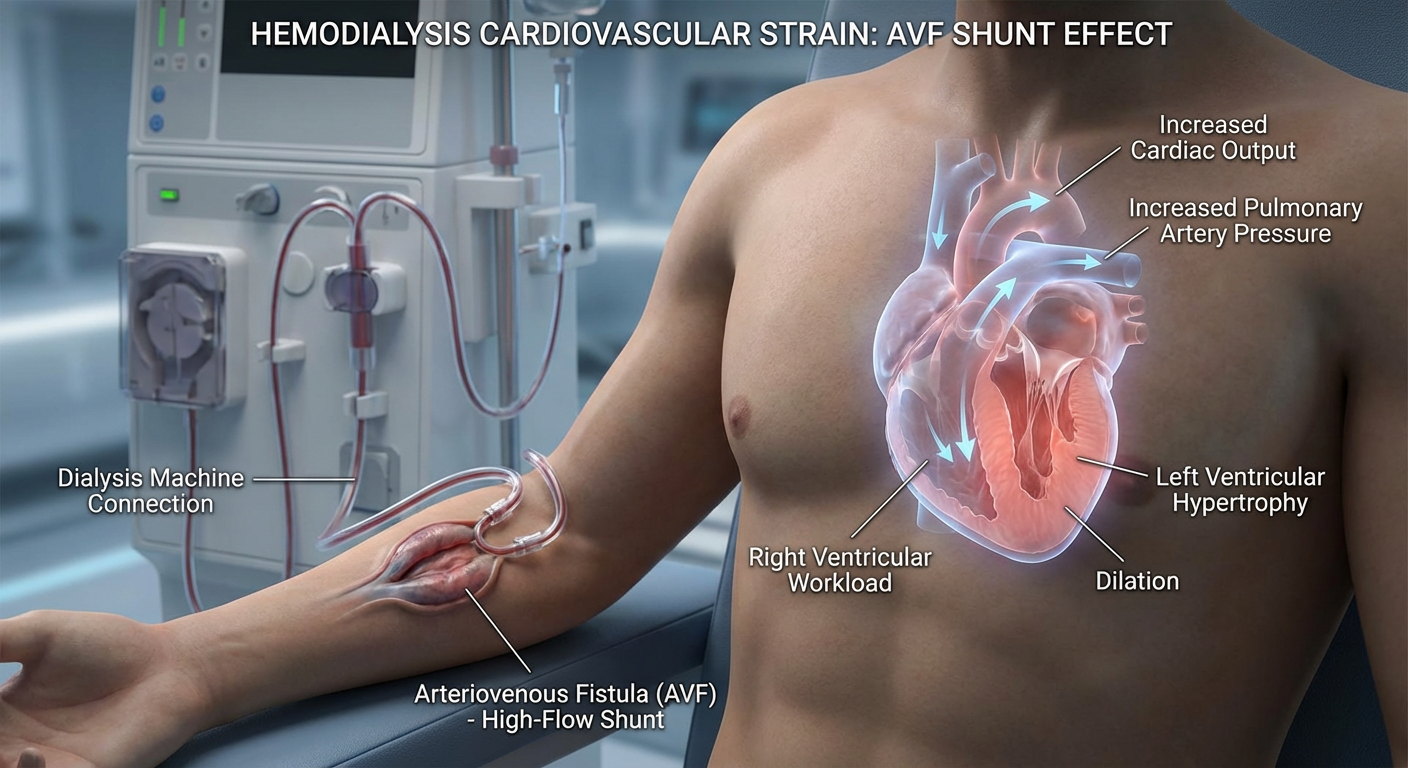
The creation of an arteriovenous fistula (AVF) or arteriovenous graft (AVG) for vascular access, while crucial for efficient HD, introduces a chronic hemodynamic burden that significantly affects cardiac function 6 7 .
1.1.2.1 Acute Hemodynamic Perturbations
An AVF establishes a low-resistance circuit, effectively bypassing the high-resistance arteriolar beds 7 .
1.1.2.2 Chronic Cardiac Adaptations
Over time, these persistent hemodynamic shifts induce significant cardiac adaptations. Studies reveal that AV access-driven cardiac remodeling is evident in patients with high fistula flow-to-cardiac output ratios (Qa/CO) and low cardiac output ejection fractions (COef) 6 8 .
1.2 Ultrafiltration Rate and Microcirculatory Compromise
The ultrafiltration rate (UFR) during HD is a critical determinant of microcirculatory alterations 9 10 .
1.3 Critical Role of Hemodynamic Monitoring in Mitigating HD-Induced Stress
Given the multifactorial cardiovascular stressors inherent to HD, comprehensive hemodynamic monitoring is indispensable for guiding therapy and preventing adverse events. Hemodynamic monitoring is a core component of critical care, essential for managing conditions ranging from AKI requiring dialysis to patients with sepsis or acute congestive heart failure 11 12 .
1.3.1 Invasive Hemodynamic Monitoring Modalities
For critically ill patients, invasive hemodynamic monitoring provides real-time, precise data. This includes arterial and central venous lines 13 14 8 15 16 17 .
1.3.2 Non-Invasive Hemodynamic Monitoring Advancements
The development of non-invasive technologies aims to reduce risks associated with invasive monitoring while still providing valuable hemodynamic insights. Standard non-invasive monitoring includes blood pressure, heart rate, and peripheral oxygen saturation via pulse oximetry 9 . Specialized non-invasive methods include:
1.3.2.1 Electrical Impedance Tomography (EIT)
EIT enables non-invasive, real-time monitoring of the hemodynamic state in conscious, spontaneously breathing patients 2 7 .
1.3.2.2 Continuous Blood Pressure Monitoring
Devices like Finapres NOVA and Finometer Pro utilize finger cuff technology for continuous, beat-to-beat systolic and diastolic blood pressure waveforms 25 26 . These systems provide dynamic insights into blood pressure regulation without arterial cannulation.
1.3.2.3 Wearable Biosensing Devices
Emerging wearable technologies offer continuous hemodynamic monitoring, particularly in the context of AVF. These devices can capture photoplethysmography (PPG) signals over an AVF or homogenously perfused tissue sites to detect changes in photon absorption and reflectance 27 28 .
1.3.2.4 Oxygen Signature Phase Shift (OSPS) Detection
A sophisticated method involves measuring oxygen saturation phase shift (OSPS) or transcutaneous travel time by comparing oxygen saturation in extracorporeal blood with blood within the patient's body 10 . This process is critical for preemptive intervention during HD sessions.
1.4 Access-Related Complications and Systemic Impact
Beyond the direct hemodynamic effects of AV access, the chosen modality for vascular access can introduce further cardiovascular stressors and complications.
1.4.1 Central Venous Catheter Morbidity
While AVFs offer superior hemodynamics and lower infection risk compared to CVCs 8 15 29 30 .
1.4.2 Anticoagulation-Associated Bleeding Risks
Anticoagulation is often necessary during HD to prevent clotting within the extracorporeal circuit. However, this carries a risk of bleeding, particularly at sites of vascular access or invasive monitoring. Reports document minor anticoagulation-related bleeding at cut-down sites for hemodialysis catheters and invasive hemodynamic monitoring catheters, such as pulmonary artery and arterial catheters 17 18 19 . Such complications add to the overall burden and risk profile for HD patients.
2. Systemic Inflammatory Response in Conventional Dialysis
The physiological challenge of chronic inflammation and its associated pathologies in end-stage kidney disease (ESKD) patients undergoing conventional dialysis remains a significant concern, necessitating continuous advancements in therapeutic strategies . The interaction of a patient's biological systems with extracorporeal circuits inherent to conventional kidney replacement therapy (KRT) modalities presents a complex immunological landscape.
2.1 Etiology of Inflammation in Extracorporeal Circuits
The fundamental cause of systemic inflammatory responses in conventional dialysis often stems from the interaction between the patient's blood and the non-native materials within the extracorporeal circuit.
2.1.1 Biocompatibility Challenges with Synthetic Materials
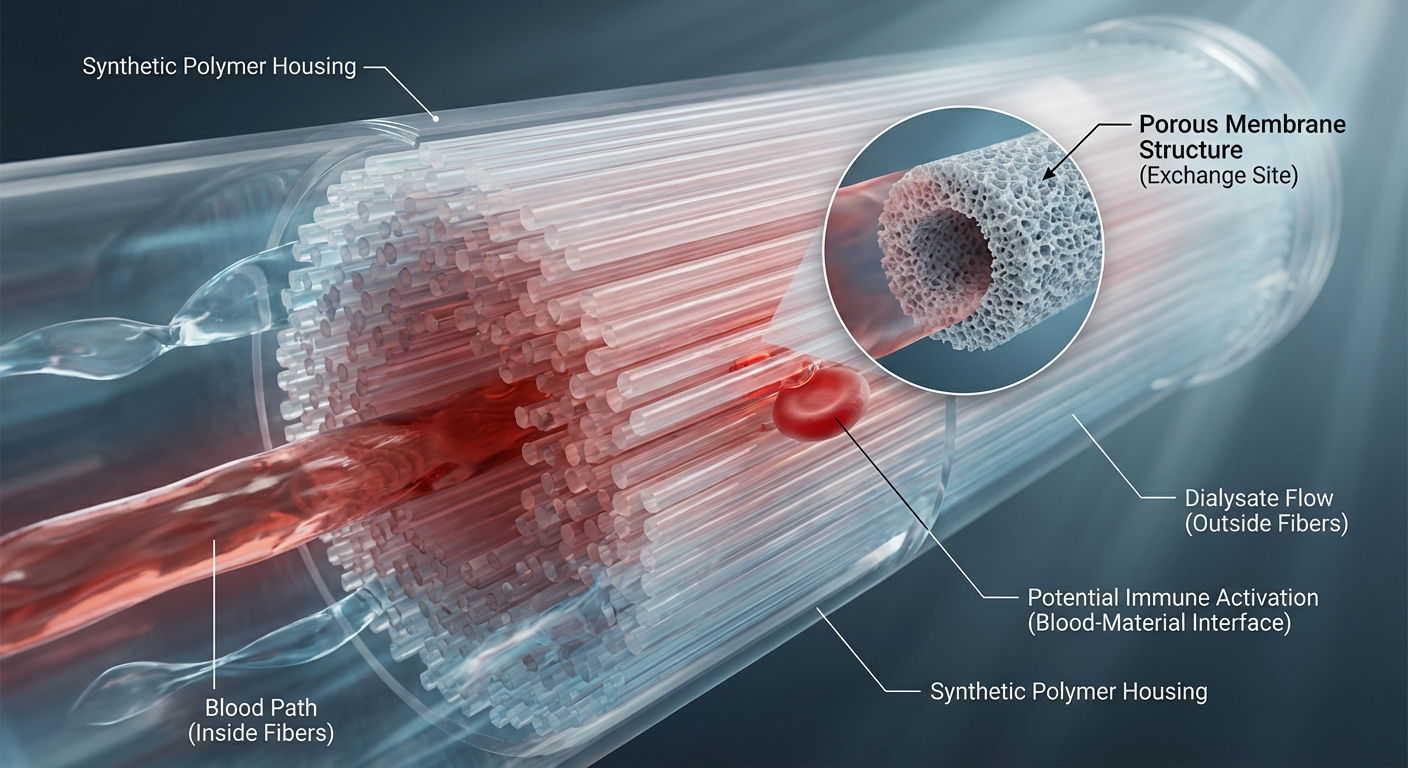
Conventional dialysis relies heavily on synthetic polymer materials in its circuits and membranes 31. These materials, while engineered for mechanical stability and filtration efficacy, can inadvertently act as triggers for immune activation. The contact of blood components with these synthetic surfaces initiates a cascade that culminates in an immune response, frequently manifesting as chronic inflammation 31. The hollow fiber technology, which forms the basis of many dialyzers and was developed for kidney dialysis 32, inherently involves vast surface areas of these synthetic membranes. The recognition of such foreign surfaces by the body's immune system underscores the crucial need for materials that exhibit enhanced biocompatibility 33, 34. Furthermore, individual patient chemistry dictates that a material deemed safe for one might still induce an allergic reaction or inflammation in another, highlighting the nuanced nature of biocompatibility 35.
2.1.2 Immune Response to Extracorporeal Contact
The interaction between blood and the synthetic components of the dialysis circuit can provoke an immunological reaction 36, 37. This process involves the activation of immune system cells upon exposure to the foreign surfaces, leading to the release and synthesis of pro-inflammatory mediators. This systemic dissemination of inflammatory signals contributes to the chronic inflammatory state observed in dialysis patients 38.
2.2 Clinical Manifestations and Therapeutic Modalities
Understanding the inflammatory cascade in dialysis allows for the investigation of methods to mitigate its impact, including the modulation of pro-inflammatory markers and the use of alternative KRT modalities.
2.2.1 Pro-inflammatory Marker Modulation
The persistent presence of pro-inflammatory markers is a hallmark of chronic inflammation in ESKD. Research is actively exploring compounds that can reduce these markers. For instance, cationic polymers like polyethylenimines have demonstrated the ability to reduce pro-inflammatory markers in cellular models, suggesting a potential avenue for novel anti-inflammatory therapeutic compounds with distinct mechanisms of action or biophysical properties 38. This targeted reduction of inflammatory mediators represents a direct approach to addressing the systemic inflammatory burden.
2.2.2 Efficacy of Convective Therapies on Clinical Outcomes
Intermittent convective therapies, including hemofiltration (HF) and hemodiafiltration (HDF), are often hypothesized to offer improved inflammation modulation compared to conventional hemodialysis (HD) due to enhanced clearance profiles for middle molecules 39. However, a systematic review and meta-analysis comparing intermittent HF and HDF to conventional HD in acute kidney injury (AKI) patients revealed no significant effect on critical clinical outcomes. Specifically, these convective therapies did not demonstrate an improvement in in-hospital mortality (relative risk, 1.23; 95% confidence interval (CI), 0.76-1.99), renal recovery at 30 days (RR, 0.98; 95% CI, 0.82-1.16), time-to-renal recovery (mean difference, 0.77; 95% CI, -6.56 to 8.10), or the number of dialysis sessions until renal recovery (MD, -1.34; 95% CI, -3.39 to 0.72) 39. This finding, while not negating the role of inflammation in patient morbidity, suggests that any inflammation modulation achieved by these specific intermittent convective therapies did not translate into statistically significant benefits for these acute endpoints in the studied population 39.
2.3 Advanced Material Science and Biocompatibility
The pursuit of enhanced biocompatibility is central to mitigating dialysis-induced inflammation. This involves developing new materials and systems that minimize immune recognition and activation.
2.3.1 Natural and Biomimetic Materials
A critical strategy to overcome the inflammatory potential of synthetic polymers is the adoption of natural materials 31. Biological macromolecules, such as collagen derived from marine sources, are highly promising in this regard 31. These materials are designed to be metabolically compatible across different phylogenetic groups due to high homology in structure 31. Their use in scaffold formation, for example, has shown promise in minimizing immunological reactions both in vitro and in vivo 31. The field is also exploring nanostructured materials, specifically bio-mimetic and bio-compatible variants, for their potential application in medicine 33.
2.3.2 Novel Anti-Inflammatory Compounds and Platforms
Beyond material changes, the development of targeted anti-inflammatory agents is crucial. Cationic polymers, as previously mentioned, offer a potential path for direct reduction of pro-inflammatory markers 38. Furthermore, a novel biomolecular anticoagulant platform has been developed with applications in kidney dialysis, specifically engineered to avoid immunological reactions that can occur with conventional anticoagulants or during the dialysis process 37. This platform operates via extracellular communication, with its components being tiny, harmless, inactive, and easily excreted renally, thereby circumventing immune activation 37.
2.3.3 Future Directions: Biohybrid Systems
The future of dialysis may involve biohybrid systems that incorporate living biological components to enhance biocompatibility and physiological function. Examples include the use of porcine hepatocytes within hollow fiber bioreactors, a technology originally developed for kidney dialysis 32. While currently used outside the patient's circulation to avoid direct immunological reactions, advances in genetically altered hepatocytes could minimize immune responses if integrated further 32. The broader concept of biohybrid microbots, although still nascent, highlights the long-term goal of medical devices that can operate within the body without instigating immune responses or other adverse effects 36.
3. Pathophysiology of Hemodynamic Instability During Dialysis
3.1 Introduction to Intradialytic Hemodynamic Instability
Hemodynamic instability, predominantly manifesting as intradialytic hypotension (IDH), represents a pervasive and multifactorial complication during kidney dialysis, significantly contributing to patient morbidity and mortality 40 41 42 43 44 .
3.1.1 Clinical Significance and Manifestations
Intradialytic hemodynamic instability can lead to a cascade of adverse events, from acute organ hypoperfusion to long-term cardiovascular damage. The need for real-time monitoring to detect and alert clinicians to impending instability is underscored by its association with increased morbidity 45 46 42 47 .
3.2 Primary Hemodynamic Derangements
The core mechanisms driving hemodynamic instability during dialysis are largely centered on acute intravascular volume changes and their systemic consequences.
3.2.1 Intravascular Volume Depletion and Plasma Refilling Kinetics
Rapid fluid removal during ultrafiltration (UF) is a primary driver of IDH. When the rate of fluid removal from the intravascular compartment exceeds the rate of plasma refilling from the interstitial space, effective circulating blood volume decreases, leading to a fall in cardiac preload and, consequently, blood pressure 41 . This mismatch between UF rate and plasma refilling is a critical determinant of hemodynamic stability.
3.2.2 Osmotic Imbalances and Fluid Redistribution
3.2.2.1 Role of Plasma Osmolality and Thirst Mechanisms
Conventional hemodialysis protocols often lead to a rapid decline in plasma osmolality. This osmotic shift drives fluid movement from the intravascular space into the interstitial compartment, exacerbating intravascular volume depletion and further contributing to IDH 41 .
3.3 Dialysis-Related Factors Modulating Hemodynamics
The operational parameters of the dialysis prescription itself significantly influence hemodynamic stability. Modifying dialysate composition and ultrafiltration profiles can directly impact patient outcomes.
3.3.1 Dialysate Temperature and Inflammatory Response
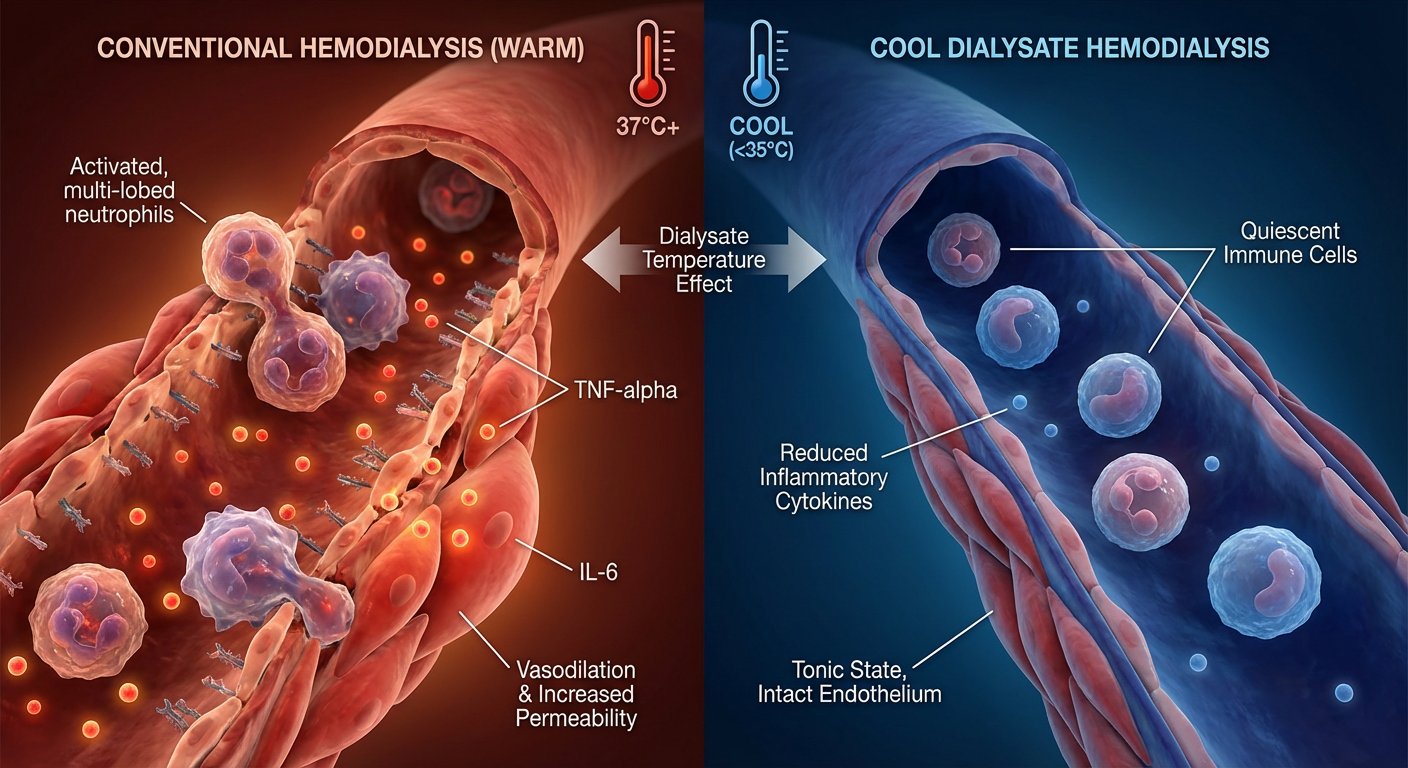
Conventional hemodialysis is associated with a degree of biocompatibility stress, leading to chronic microinflammation. Hypothermic conditions, achieved through cool dialysate hemodialysis, have been shown to directly suppress the activation of neutrophils and monocytes 40 . The precise mechanisms involve reduced release of inflammatory mediators and preservation of endothelial function, which collectively contribute to better vasomotor control and stability.
3.3.2 Sodium and Ultrafiltration Profiling Strategies
Optimized profiling of dialysate sodium and ultrafiltration rates offers a mechanistic explanation for improved hemodynamic stability. Initiating dialysis with a higher sodium concentration, followed by a linear reduction (e.g., 150→138 mmol/L), effectively mitigates the rapid decline in plasma osmolality typically seen during conventional treatments 41 . These synergistic approaches prevent excessive intravascular volume depletion and maintain osmotic equilibrium, thereby stabilizing blood pressure.
3.4 Patient-Specific Vulnerabilities and Comorbidities
Patient factors significantly modulate the susceptibility to hemodynamic instability. Individuals with pre-existing cardiovascular comorbidities are particularly vulnerable 43 45 48 .
3.5 Advanced Monitoring and Mitigation of Instability
3.5.1 Real-Time Hemodynamic Monitoring
The integration of advanced hemodynamic monitoring systems is increasingly vital for the proactive identification and management of instability. Such systems provide continuous, real-time data on parameters like blood pressure and heart rate, enabling clinicians to intervene promptly 45 42 46 43 .
3.5.2 Hemodynamically Stable Extracorporeal Therapies
Beyond conventional dialysis, novel extracorporeal therapies are being developed with inherent hemodynamic stability. For instance, adsorptive toxin removal devices, when integrated into extracorporeal circuits for plasma adsorption/perfusion (PAP) mode, have demonstrated safety and good tolerance without detrimental hemodynamic effects 49 50 . This indicates that advanced purification techniques can be implemented while maintaining or even enhancing systemic circulatory stability.
4. Mechanisms of Catheter-Induced Erythrocyte Damage
4.1 Introduction: Iatrogenic Hemolysis in Dialysis Modalities
The indispensable role of central venous catheters in modern renal replacement therapy is accompanied by an inherent, yet often underappreciated, risk of iatrogenic erythrocyte damage. Hemolysis, the premature destruction of red blood cells, can arise from complex interactions between circulating blood components and the artificial surfaces and hydrodynamic forces within extracorporeal circuits. Understanding the precise mechanisms of catheter-induced erythrocyte compromise is paramount for mitigating adverse outcomes and informing future device design. This section delineates the principal biophysical and immunological pathways through which dialysis catheters contribute to erythrocyte destruction.
4.2 Biophysical Stressors: The Role of Shear Forces
4.2.1 Hydrodynamic Shear Stress in Extracorporeal Circuits
Erythrocytes circulating within extracorporeal circuits are continuously exposed to dynamic mechanical forces, with hydrodynamic shear stress representing a primary determinant of mechanical fragility and subsequent lysis. The concept of shear stress influencing cellular integrity is well-documented, even in contexts tangential to direct catheter dynamics. For instance, in hepatic tissue engineering, monolayer cell cultures, when subjected to perfusion, inherently expose cells to shear stress 51 .
Extrapolating this principle to dialysis catheters, the complex internal geometries, including abrupt changes in lumen diameter, sharp angulations, and potential surface irregularities, generate regions of elevated shear rates. As erythrocytes traverse these high-shear zones, they undergo significant deformation. While mild shear stress may induce reversible viscoelastic deformation, supra-physiological shear rates, particularly when coupled with prolonged exposure, can compromise the erythrocyte membrane's structural integrity. This leads to the formation of nanoscale pores, irreversible spectrin-actin cytoskeleton damage, and ultimately, fragmentation or complete osmotic lysis. The precise threshold for erythrocyte lysis is influenced by factors such as the magnitude and duration of shear exposure, erythrocyte age, and intrinsic membrane properties. Within the context of dialysis, the continuous passage of blood through these high-stress areas over several hours contributes to a cumulative mechanical burden on the erythrocyte population.
4.3 Immunological Pathways: Complement Activation and Erythrocyte Lysis
4.3.1 Surface-Induced Complement Cascade Initiation
Beyond direct mechanical trauma, the interaction of blood with the foreign surfaces of dialysis catheters can instigate immunological responses, most notably the activation of the complement cascade, which directly contributes to erythrocyte lysis. The complement system, a pivotal component of innate immunity, can be activated through multiple pathways (classical, lectin, alternative), all converging on the generation of C3 convertases and subsequent downstream effector mechanisms.
The artificial surfaces characteristic of dialysis catheters are potent initiators of the complement system. The adsorption of plasma proteins onto the catheter material acts as a substrate, triggering the sequential activation of complement components. This cascade leads to the deposition of activated complement proteins, such as C3b and iC3b, onto the surface of passing erythrocytes. Ultimately, this can culminate in the formation of the terminal membrane attack complex (MAC, C5b-9), which inserts into the erythrocyte lipid bilayer, creating transmembrane pores. These pores disrupt the osmotic balance of the cell, leading to an influx of water and subsequent osmotic lysis.
4.3.1.1 Paroxysmal Nocturnal Hemoglobinuria as a Mechanistic Analog
The clinical entity of Paroxysmal Nocturnal Hemoglobinuria (PNH) provides a compelling mechanistic analog for understanding complement-mediated erythrocyte lysis. In PNH, a somatic mutation in the PIG-A gene results in a deficiency of glycosylphosphatidylinositol (GPI)-anchored proteins, specifically CD55 (decay-accelerating factor) and CD59 (membrane inhibitor of reactive lysis), on the erythrocyte surface. The absence of these crucial complement regulatory proteins renders PNH erythrocytes hypersensitive to complement attack, leading to uncontrolled complement activity and severe intravascular hemolysis 52 53 .
While catheter-induced complement activation does not mimic the intrinsic erythrocyte defect seen in PNH, the downstream consequence of dysregulated complement activation resulting in intravascular hemolysis is mechanistically similar 52 53 . The foreign surface of a dialysis catheter effectively creates a localized environment where complement activation can proceed unchecked, mimicking, in effect, the systemic complement dysregulation seen in PNH, albeit with a different initiating trigger. This highlights that regardless of the initial cause, excessive complement activity poses a significant threat to erythrocyte integrity within the extracorporeal circuit.
4.4 Systemic Sequelae of Catheter-Mediated Hemolysis
The ramifications of catheter-induced erythrocyte damage extend far beyond a mere reduction in hemoglobin levels. Intravascular hemolysis releases cell-free hemoglobin, which, upon depletion of haptoglobin, circulates freely. Free hemoglobin is a potent scavenger of nitric oxide (NO), contributing to endothelial dysfunction, vasoconstriction, and oxidative stress, thereby increasing the risk of cardiovascular events. Furthermore, the PNH paradigm illustrates that uncontrolled complement activity, which directly causes intravascular hemolysis, is also associated with systemic complications, notably through its propensity to induce platelet activation 52 53 . This suggests that catheter-induced hemolysis may not only exacerbate the anemia inherent to end-stage kidney disease but also contribute to a procoagulant state and systemic inflammatory responses. Consequently, a detailed understanding of these pathogenic mechanisms and concerted efforts towards catheter and circuit redesign are imperative to mitigate these systemic harms and improve the long-term clinical outcomes for patients undergoing chronic dialysis.
5. Fluid and Electrolyte Imbalance in Traditional Dialysis
5.1 Introduction: The Multifaceted Challenge of Homeostasis in ESRD
Patients undergoing traditional dialysis for end-stage renal disease (ESRD) face a myriad of challenges in maintaining fluid and electrolyte homeostasis. The inherent non-physiological nature of intermittent extracorporeal solute and fluid removal often leads to acute and chronic fluctuations in electrolyte concentrations, acid-base status, and intravascular volume. Beyond the direct effects of dialysate composition and ultrafiltration, systemic complications often contribute significantly to these imbalances, exacerbating patient morbidity and mortality. An understanding of diverse systemic harms, even those originating from distinct disease pathologies, can illuminate mechanisms relevant to the dialysis context.
5.2 Systemic Perturbations and Their Impact on Fluid and Electrolyte Homeostasis
The intricate interplay between systemic inflammation, vascular integrity, and cellular function profoundly influences fluid and electrolyte dynamics. While traditional dialysis focuses on solute clearance and fluid removal, the systemic sequelae of chronic kidney disease and the dialysis procedure itself can trigger or perpetuate processes that destabilize internal milieu.
5.2.1 Paroxysmal Nocturnal Hemoglobinuria (PNH) as a Model of Systemic Harm
Paroxysmal Nocturnal Hemoglobinuria (PNH) serves as a potent paradigm for understanding how uncontrolled systemic activity can precipitate widespread complications, directly impacting components that regulate fluid and electrolyte balance 52 53 .
5.2.1.1 Pathophysiology of PNH and Complement Dysregulation
PNH is fundamentally characterized by uncontrolled complement activity 52 53 . This dysregulation is typically due to somatic mutations in the PIGA gene in hematopoietic stem cells, leading to a deficiency of glycosylphosphatidylinositol (GPI)-anchored proteins, notably CD55 and CD59, on the surface of affected blood cells. CD55 (Decay-Accelerating Factor) inhibits C3 convertase, and CD59 (Membrane Attack Complex Inhibitory Protein) inhibits the formation of the terminal complement complex (MAC) by blocking C9 polymerization. The absence of these regulatory proteins renders affected cells, particularly erythrocytes, exquisitely sensitive to complement-mediated destruction. The systemic consequences arising from this uncontrolled complement activity are substantial 52 53 .
5.2.1.2 Intravascular Hemolysis and Platelet Activation in PNH
A principal systemic complication of PNH, stemming directly from uncontrolled complement activity, is intravascular hemolysis 52 53 . This contributes to a pro-thrombotic state, increasing the risk of thrombotic events that can further impair systemic organ function and complicate overall patient management, including fluid balance control.
5.2.2 Extrapolation to Dialysis-Associated Systemic Challenges
The mechanisms observed in PNH—intravascular hemolysis, complement activation, and platelet activation—are not exclusive to this rare disorder. They represent fundamental physiological pathways that can be perturbed in various clinical settings, including traditional dialysis. Extrapolating these insights to the dialysis population highlights critical areas where systemic harm can contribute to fluid and electrolyte imbalances.
5.2.2.1 Hemolysis and Electrolyte Derangements in Dialysis
Intravascular hemolysis, regardless of its etiology, directly impacts electrolyte balance. As described in the context of PNH 52 53the lysis of red blood cells releases significant quantities of intracellular potassium and phosphate. In the traditional dialysis setting, hemolysis can occur due to multiple factors: * Mechanical Stress: Shearing forces within the extracorporeal circuit, kinked blood lines, improperly functioning blood pumps, or stenotic access can mechanically damage RBCs. * Osmotic Stress: Errors in dialysate preparation leading to hypo-osmolar dialysate can induce osmotic lysis of RBCs. * Thermal Damage: Overheated dialysate can cause thermal injury and hemolysis. * Chemical Exposure: Contamination of dialysate with chloramines or other oxidizing agents.
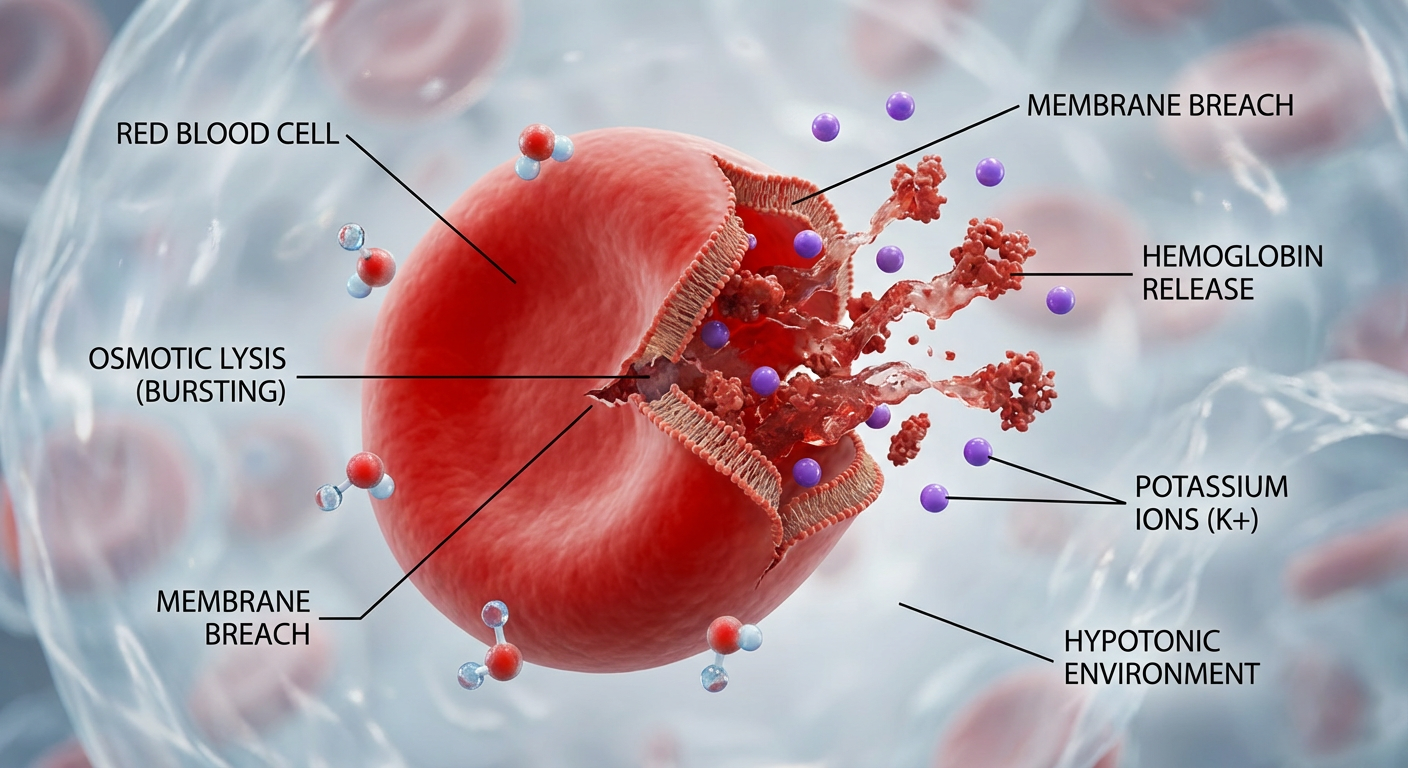
The release of intracellular potassium can lead to life-threatening hyperkalemia, particularly problematic in anuric ESRD patients who lack renal excretory capacity. Similarly, the efflux of inorganic phosphate can exacerbate hyperphosphatemia, a chronic issue in ESRD with significant cardiovascular and bone mineral disease implications. Hemolysis also contributes to anemia and the release of cell-free hemoglobin, which can scavenge nitric oxide, promoting vasoconstriction and exacerbating cardiovascular instability.
5.2.2.2 Complement Activation and Inflammatory Fluid Shifts
Traditional dialysis, particularly with bioincompatible membranes (e.g., unmodified cellulose membranes), can initiate a robust inflammatory response, including complement activation. This systemic activation of complement, while not as persistently dysregulated as in PNH 52 53as seen in PNH, underscores the importance of minimizing iatrogenic complement activation in dialysis.
5.2.2.3 Platelet Activation and Its Indirect Effects on Fluid Management
The extracorporeal circuit itself, with its non-endothelialized surfaces and shear stresses, represents a pro-thrombotic stimulus, leading to platelet activation. As demonstrated in PNH where uncontrolled complement activity leads to platelet activation 52 53similar mechanisms, or independent ones, contribute to the hypercoagulable state in dialysis patients. Platelet activation can lead to clot formation within the dialyzer or blood lines, reducing the effective surface area for solute and fluid exchange and potentially leading to circuit failure. This not only compromises adequate solute clearance but can necessitate increased anticoagulation, which carries its own risks, or lead to blood loss and the need for fluid replacement (e.g., saline flushes, transfusions), further complicating fluid balance.
5.3 Implications for Advanced Dialysis Redesign
The profound systemic impacts observed in conditions like PNH, characterized by complement-driven intravascular hemolysis and platelet activation 52 53underscore the need for advanced dialysis systems that minimize similar iatrogenic harms. A paradigm shift in kidney dialysis necessitates process and equipment redesign that prioritizes biocompatibility, reduces mechanical trauma to blood components, and mitigates systemic inflammatory and pro-thrombotic responses. By understanding and addressing these fundamental systemic interactions, future dialysis modalities can aim to eliminate such harms, thereby improving fluid and electrolyte homeostasis and ultimately reducing cardiovascular morbidity and mortality in ESRD patients.
6. Integrated Blood Volume Homeostasis Control Systems
The meticulous regulation of circulating blood volume is a cornerstone of cardiovascular stability and optimal organ perfusion. In the context of end-stage renal disease (ESRD), particularly for patients undergoing hemodialysis, this homeostatic balance is profoundly challenged, leading to significant morbidity and mortality, prominently exemplified by intradialytic hypotension (IDH) 54 55 . The paradigm shift in dialysis necessitates a granular understanding of these intricate control systems and their perturbations.
6.1 Hemodialysis-Induced Hemodynamic Instability and Volume Dynamics
Hemodialysis, while life-sustaining, inherently imposes a progressive decline in circulating blood volume due to the ultrafiltration (UF) process 55 56 .
6.1.1 Pathophysiological Determinants of Intradialytic Hypotension (IDH)
IDH is a multifactorial syndrome, reflecting a systemic failure to compensate for rapid volume shifts. Key contributing factors elucidated include:
6.1.1.1 Excessive Ultrafiltration Rate
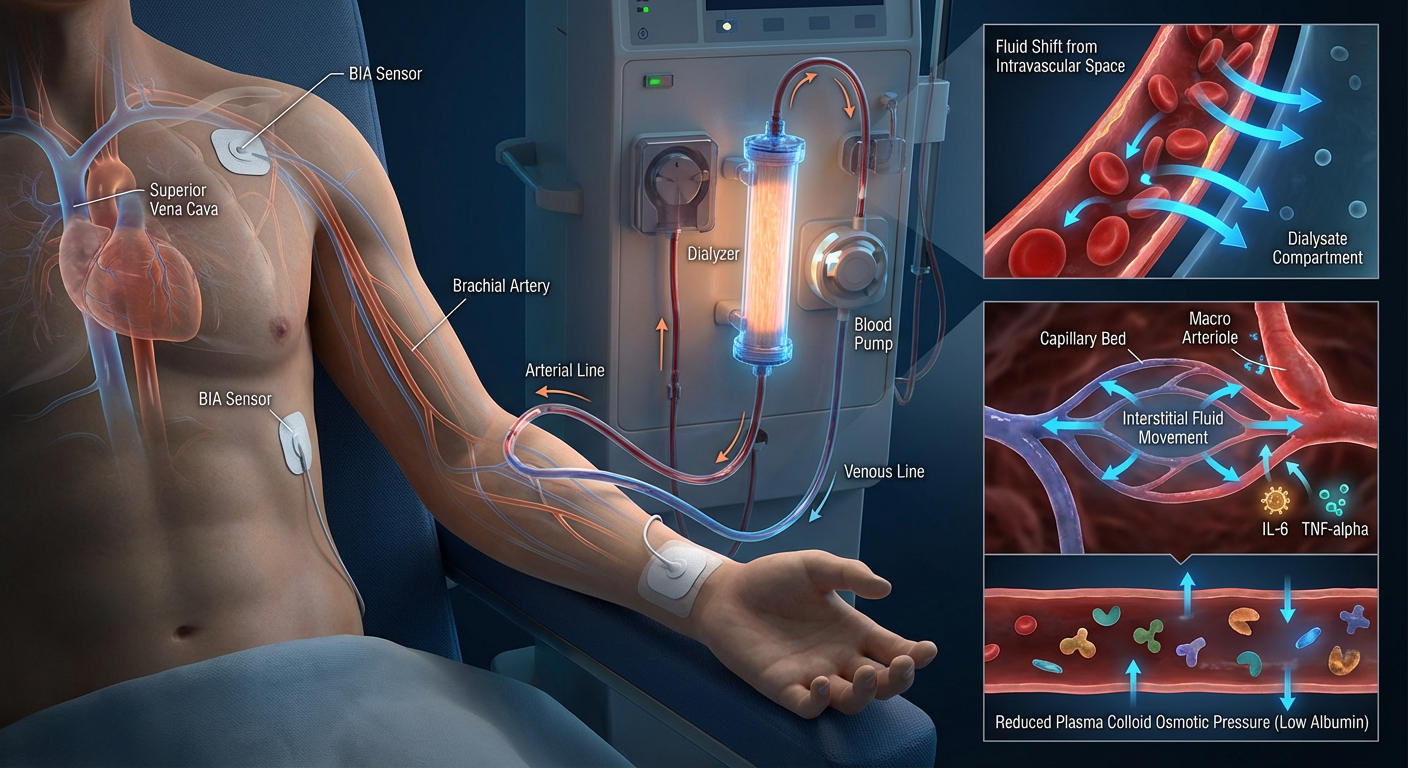
A primary driver of IDH is an ultrafiltration rate exceeding the plasma refill rate, particularly when surpassing 10 mL/min 54 .
6.1.1.2 Reduced Plasma Colloid Osmotic Pressure
Low plasma albumin levels, frequently observed in malnourished or inflamed ESRD patients, significantly diminish plasma colloid osmotic pressure 51d. This reduction impedes the movement of interstitial fluid back into the intravascular compartment, thereby lowering effective circulating blood volume and exacerbating the susceptibility to hypotension during fluid removal. Concomitantly, decreased plasma colloid osmotic pressure can aggravate tissue edema, further compromising systemic vascular stability 54 .
6.1.1.3 Systemic Inflammation and Vasodilatory Responses
The chronic inflammatory state prevalent in ESRD patients contributes to IDH through the release of pro-inflammatory cytokines such as interleukin-6 (IL-6) and tumor necrosis factor-alpha (TNF-α) 54 . This blunted vasoconstrictor response synergizes with intravascular volume depletion to promote hypotensive episodes.
6.1.1.4 Vascular Access and Other Factors
Long-term catheter use for vascular access has also been identified as an independent risk factor for IDH 54 . While the precise mechanistic link is complex, it may involve increased risk of infection, inflammation, or direct impact on vascular integrity and reactivity.
6.2 Advanced Monitoring and Integrated Control Strategies
Current and emerging technologies aim to mitigate the risks associated with fluid volume management by providing more precise, dynamic assessment and control.
6.2.1 Functional Hemodynamic Monitoring
The integration of functional hemodynamic monitoring is crucial for optimizing fluid status and ensuring cardiovascular stability, not only in AKI 56 57 44 .
6.2.2 Bioelectrical Impedance Analysis (BIA)
Bioelectrical impedance analysis (BIA) represents a non-invasive technique for dynamic assessment of volume status 54 .
6.2.3 Advanced Dialysis Equipment and Control Loops
Modern dialysis apparatus already incorporates closed-loop control systems for parameters such as dialysate temperature, as demonstrated by the use of temperature sensors for precise control and disinfection 58 . Extrapolating this principle, the development of integrated sensors for real-time blood volume monitoring within the extracorporeal circuit, coupled with predictive algorithms, could enable adaptive ultrafiltration and dialysate composition adjustments. This would allow for a more nuanced and physiologically driven fluid removal process, potentially minimizing hemodynamic perturbations.
6.2.4 Future Directions: Multi-Omics Integration
The future of blood volume homeostasis control in dialysis is likely to involve the integration of genomic and metabolomic indicators with dynamic hemodynamic monitoring 54 .
6.3 Contextualizing Regional Perfusion Control
While the focus on systemic blood volume is paramount, the concept of localized perfusion control highlights the complexity of fluid dynamics within specific vascular beds. For instance, in double balloon-occluded arterial infusion (D-BOAI) chemotherapy for bladder cancer, monitoring vesical perfusion volume and internal iliac artery pressure (IIABP) is critical 59 .
7. Precision Blood Temperature Matching Technologies
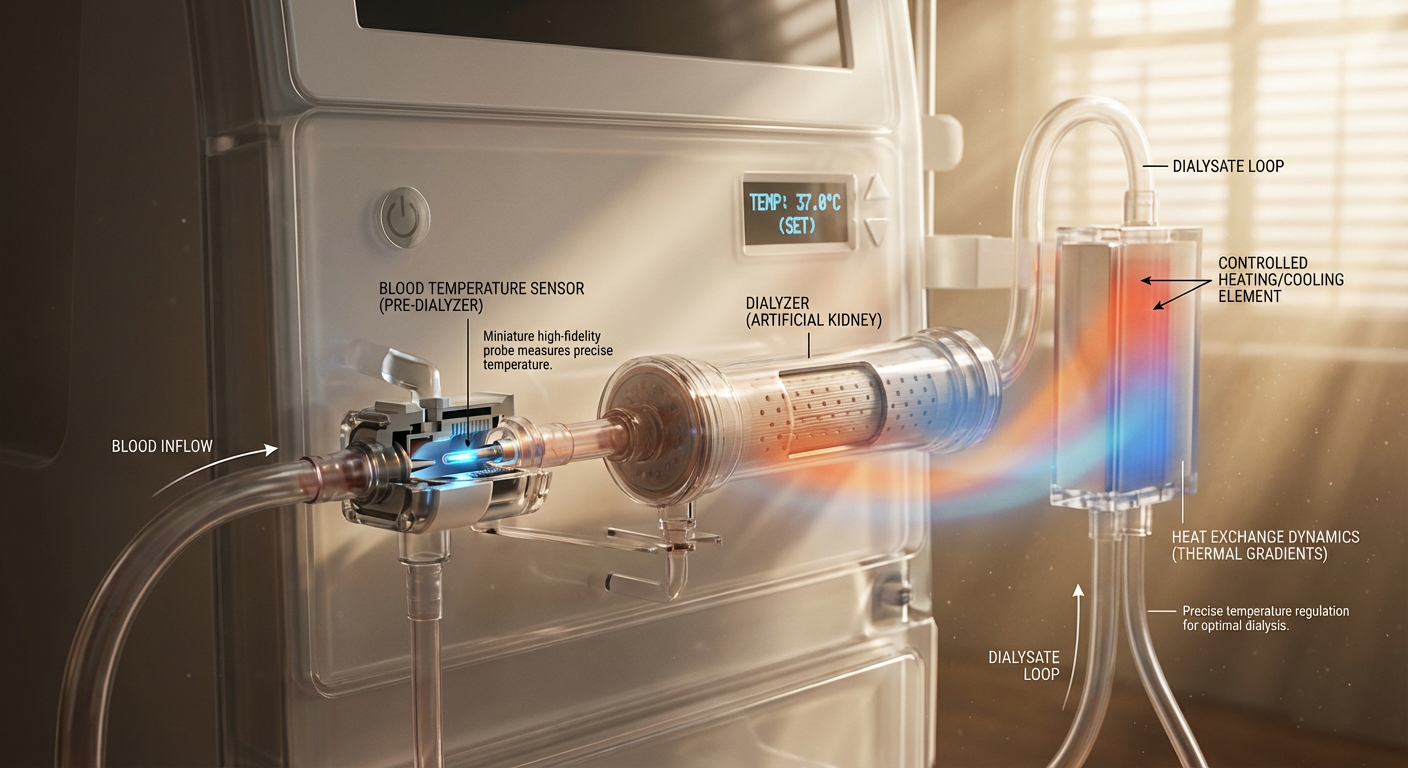
The maintenance of optimal thermal homeostasis during extracorporeal blood purification therapies, particularly hemodialysis, represents a critical yet often underappreciated determinant of intradialytic hemodynamic stability and long-term cardiovascular outcomes. Historically, dialysis machines operated with open-loop systems where parameters such as dialysate temperature were manually set at the session's onset, only adjusted in response to overt patient complications 60 61 62 63 .
7.1 Physiological Imperatives of Thermal Balance in Dialysis
During hemodialysis, the extracorporeal circuit acts as a heat exchanger, influencing the patient's core body temperature. A rise in core temperature during a dialysis session can induce an undesired hemodynamic response, characterized by vasodilation, tachycardia, and a fall in ejection fraction 64 65 .
7.1.1 Intradialytic Thermal Homeostasis and Hemodynamic Stability
Adjusting the dialysate thermal balance is recognized as a simple yet effective strategy to improve hemodynamic tolerance with minimal risk of patient discomfort 64 .
7.2 Evolution of Temperature Control and Monitoring in Dialysis
The evolution from rudimentary temperature control to precision matching involves several technological advancements, from dedicated sensors to integrated biofeedback systems.
7.2.1 Early Mechanisms of Dialysate Temperature Control
Historically, dialysate temperature control focused on ensuring the solution was at an appropriate temperature for disinfection or to achieve specific concentrations, such as sodium bicarbonate 58 66 . While these systems maintained a baseline temperature, they lacked the real-time responsiveness required for precision thermal balance.
7.2.2 The Rise of Blood Temperature Monitoring and Closed-Loop Systems
The integration of a temperature sensor for closed-loop control of dialysate temperature, actuated by a controller and heater, marks a significant step forward 58 66 64 . Such systems typically involve: * Continuous Measurement: A specific sensor continuously monitors a biological variable, in this case, blood temperature 60 . * Evaluation by an Expert System: A controller or "expert system" processes this data 60 . * Actuators: Means (e.g., heaters/coolers for dialysate) directly or indirectly influence the variable's behavior 60 .
7.2.2.1 Integrated Biofeedback Systems
The future of precision temperature matching lies in the integration of blood temperature monitoring within a broader closed-loop biofeedback system 61 62 63 .
7.2.3 Non-Invasive Hemodynamic Monitoring for Enhanced Precision
While direct blood temperature monitoring within the circuit is crucial, complementing this with advanced non-invasive hemodynamic monitoring offers a holistic view of the patient's cardiovascular response to thermal shifts. Monitoring devices and equipment, including temperature monitoring devices and hemodynamic monitoring devices, are part of a growing market of patient monitoring solutions 67 68 69 70 .
Companies like Baxter International Inc., through acquisitions such as Cheetah Medical, are focusing on non-invasive hemodynamic monitoring technologies that provide dynamic measurements of fluid responsiveness 71 72 73 74 75 76 .
Such integrated monitoring allows for the detection of early physiological responses to thermal changes, enabling proactive adjustments within the closed-loop system, thereby minimizing the risk of adverse events like significant blood pressure drops or tachycardia.
(Extracorporeal Circuit)" participant BloodTempSensor as "Blood Temperature Sensor" participant ControllerUnit as "Closed-Loop Controller Unit" participant DialysateHeaterCooler as "Dialysate Heater/Cooler" participant DialysateFlowPath as "Dialysate Flow Path" participant PatientBloodReturn as "Patient Blood Return
(Extracorporeal Circuit)" PatientBloodInlet->>BloodTempSensor: "Continuously measures blood temperature" BloodTempSensor->>ControllerUnit: "Transmits real-time blood temperature data" ControllerUnit->>ControllerUnit: "Compares blood temperature to target (iso/hypothermic) and algorithms" ControllerUnit->>DialysateHeaterCooler: "Sends command to adjust dialysate temperature" DialysateHeaterCooler->>DialysateFlowPath: "Modifies dialysate temperature" DialysateFlowPath-->>PatientBloodReturn: "Heat exchange with patient's blood in dialyzer" PatientBloodReturn->>PatientBloodInlet: "Impacts subsequent blood temperature readings"
7.3 Implications for Cardiovascular and Systemic Harm Reduction
The adoption of precision blood temperature matching technologies holds profound implications for mitigating the cardiovascular and systemic harm associated with conventional hemodialysis. By preventing intradialytic core temperature rises, these systems can:
- Improve Hemodynamic Stability: Reduced vasodilation and sympathetic overactivity contribute to fewer hypotensive episodes, preserving cardiac function and reducing myocardial strain 64 .
- Reduce Cardiovascular Morbidity: Chronic exposure to intradialytic thermal stress and associated hemodynamic instability is a key driver of cardiovascular complications in ESRD patients. Precision thermal control can potentially lower the incidence of cardiac events 64 .
- Enhance Patient Comfort and Quality of Life: Preventing uncomfortable thermal fluctuations and reducing symptoms associated with IDH can significantly improve the patient experience during and after dialysis 64 .
- Facilitate Future Innovations: These advanced monitoring and control systems align with emerging technologies like wearable artificial kidneys, which aim for continuous dialysis with improved cardiovascular stability 77 78 .
The ability to integrate blood temperature monitoring with other biofeedback loops—such as blood volume monitoring and sodium profiling—within a single, intelligent, closed-loop system represents the vanguard of dialysis treatment 61 62 63 . This holistic approach moves beyond merely treating kidney failure to actively safeguarding overall patient health, thereby transforming hemodialysis from a supportive treatment into a truly protective therapy.
8. Advanced Vascular Access Design for Reduced Shear Stress
8.1 The Imperative of Hemodynamic Optimization in Vascular Access for Hemodialysis
The efficacy and longevity of vascular access (VA) are foundational to successful hemodialysis, yet current methodologies are frequently complicated by issues stemming from suboptimal blood flow dynamics. The physiological environment within and around vascular access sites, whether arteriovenous fistulae (AVF), grafts (AVG), or central venous catheters, is exquisitely sensitive to hemodynamic forces. Among these, wall shear stress (WSS) is a critical biomechanical determinant influencing endothelial health, intimal hyperplasia, thrombogenesis, and subsequent access failure, such as fistula embolization 79 . A paradigm shift towards advanced VA design necessitates a granular understanding and meticulous control of these local hemodynamic parameters to mitigate systemic and cardiovascular harm inherent in conventional approaches.
8.2 Hemodynamic Monitoring: The Diagnostic Foundation for Shear-Optimized Design
Precise, continuous hemodynamic monitoring is paramount to characterize the intricate pressure and flow dynamics within the vasculature, providing the data necessary to inform and validate advanced VA designs. This non-invasive approach, increasingly utilized in critical care and chronic disease management, offers real-time insights into cardiovascular function and localized blood flow characteristics relevant to dialysis patients 80 79 .
8.2.1 Advanced Non-Invasive Hemodynamic Assessment
Modern hemodynamic monitoring extends beyond basic vital signs, employing sophisticated algorithms to process pulsatile signals related to pressure and flow 74 80 81 82 . This allows for early detection of deviations that could predispose to VA complications.
8.2.2 Clinical Relevance in Dialysis and Critical Care
The integration of advanced hemodynamic monitoring is recommended in various clinical guidelines for optimizing fluid balance and preventing acute kidney injury (AKI) in critically ill patients, including those with hepatorenal syndrome and post-cardiac surgery 83 84 48 85 86 87, can inform not only systemic management but also the localized conditions within the VA.
8.3 Precision Design for Catheter-Based Vascular Access: Mitigating Shear
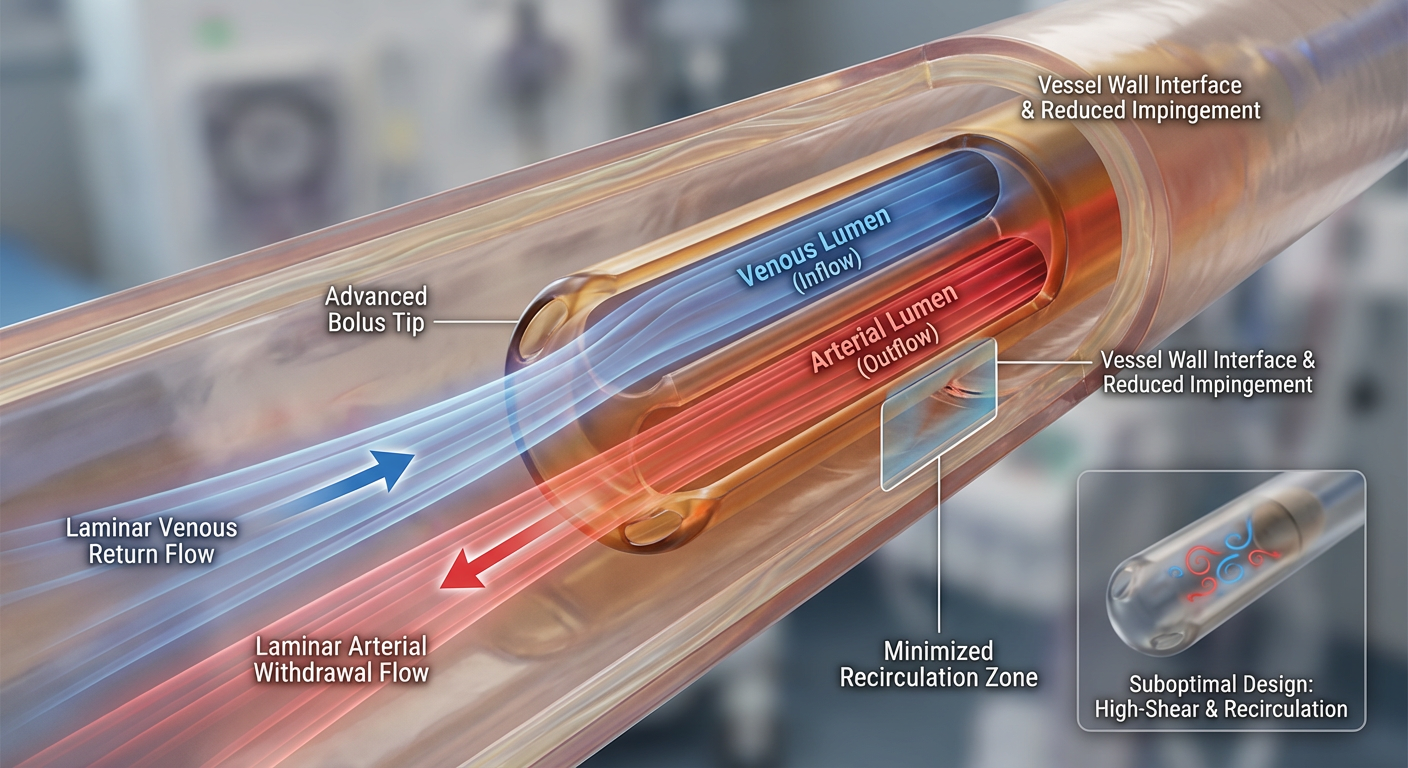
Dual-lumen catheters, commonly employed in hemodialysis, simultaneously accommodate opposing blood flow, with one lumen for arterial outflow and the other for venous return 92 . The geometric configuration of the catheter tip, particularly its "bolus tip design," is critical in dictating the localized flow patterns and, consequently, the shear stress exerted on the vessel wall.
8.3.1 Bolus Tip Design and Flow Dynamics
Traditional catheter designs can induce regions of high shear stress, flow separation, and recirculation, which are thrombogenic and pro-inflammatory. An advanced bolus tip design, informed by detailed hemodynamic flow analysis (pressure and flow waveforms in the frequency domain) 74, can be engineered to optimize flow streamlining, minimize turbulent eddies, and reduce localized WSS maxima. This involves meticulous shaping of the distal ends, internal lumen geometry, and exit/entry port configurations. The objective is to achieve a smoother, more laminar transition of blood into and out of the catheter, thereby preserving endothelial integrity and reducing the risk of thrombosis and intimal hyperplasia.
8.4 Shear Stress Considerations in Arteriovenous Fistulae and Grafts
While catheters present acute shear challenges, AVFs and AVGs face chronic, progressive issues stemming from the interface between native vessels, surgical anastomoses, and graft materials.
8.4.1 Hemodynamic Influence on AVF Patency
The patency of AVFs is directly influenced by the local hemodynamic environment. For instance, processes like fistula embolization highlight the fragility of these vascular constructs under adverse flow conditions 79 . This underscores the need to design AVFs and AVGs with optimal anastomotic angles and luminal diameters that promote stable, physiological flow patterns, thereby minimizing regions prone to high or oscillatory shear stress.
8.4.2 Material and Geometric Innovations in Vascular Grafts
Vascular graft devices, used for access creation, are available in various types (e.g., endovascular, access grafts) and materials (synthetic such as PTFE, polyester, polyurethane; or biological) 93 . The selection of material and the geometric design of these grafts directly impact flow characteristics and the distribution of WSS. Future designs will increasingly incorporate biomimetic surface modifications and flow-adaptive geometries to reduce surface thrombogenicity and promote favorable shear stress profiles, thus extending graft patency.
8.5 Integrated Hemodynamic Monitoring for Continuous Vascular Access Management and Design Iteration
The integration of continuous, non-invasive hemodynamic monitoring into the clinical workflow creates a powerful feedback loop for both managing existing vascular access and iteratively refining future designs. This approach moves beyond reactive intervention to proactive, data-driven optimization.
This continuous feedback mechanism, powered by companies specializing in advanced patient monitoring 93 94 95, ensures that vascular access design evolves from empirical practices to a highly data-informed, mechanistic approach. By leveraging detailed hemodynamic data, engineers and clinicians can collaborate to develop vascular access solutions that are not only effective in blood purification but also fundamentally designed to minimize adverse shear stress, thereby enhancing patient safety and reducing long-term cardiovascular harm.
9. Closed-Loop Biofeedback for Hemodynamic Regulation
9.1 Introduction to Closed-Loop Biofeedback in Hemodynamic Management
The optimization of hemodynamic stability represents a cornerstone of critical care, anesthesia, and increasingly, specialized nephrological interventions such as dialysis. Traditional hemodynamic management often relies on intermittent measurements and manual adjustments, which are inherently subjective, prone to delay, and may lack the precision required for tight physiological control 96 97 98 .
9.2 Core Components and Operational Mechanism
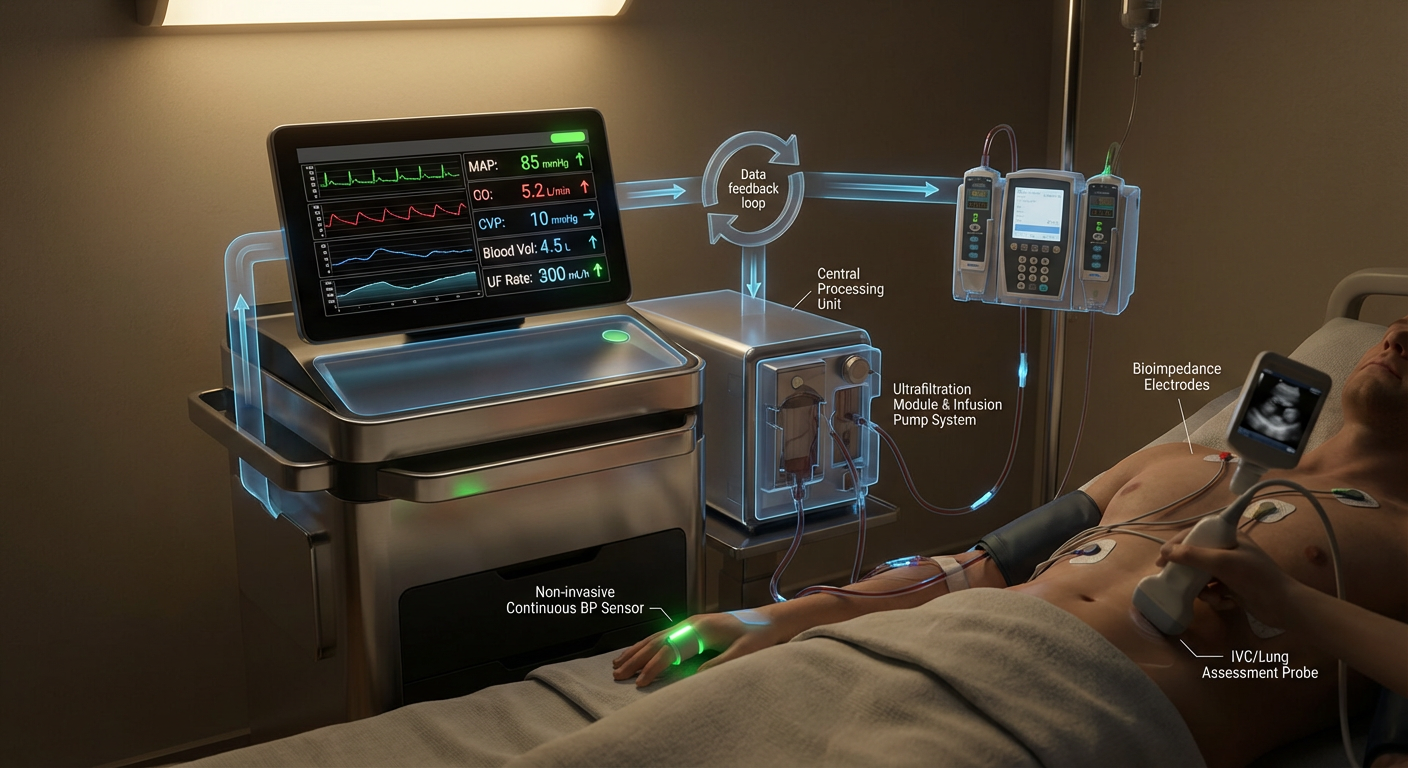
A closed-loop hemodynamic regulation system fundamentally consists of three integrated components: sensing (monitoring), data processing (control algorithm), and actuation (therapy delivery) 98 99 .
9.2.1 Advanced Hemodynamic Monitoring and Sensing
The foundation of any effective closed-loop system is the accurate, continuous, and often non-invasive monitoring of multiple hemodynamic parameters 98 100 101 102 .
9.2.1.1 Key Monitored Parameters and Technologies
- Arterial Pressure: Continuous, non-invasive arterial pressure assessment is crucial, with technologies like finger volume clamp and surface sensors providing real-time data 103 104 105 106 .
- Cardiac Output (CO) and Stroke Volume (SV): Non-invasive cardiac output and thoracic fluid content (TFC) can be assessed using bioreactance 107 108 109 110 111 .
- Fluid Status Indicators: Bioimpedance provides a non-invasive evaluation of fluid status 96 112 113 .
- Other Physiological Markers: Heart rate variability from electrocardiography can predict hypotension 103 114 99 .
- Multi-parameter Integration: Combining multiple information sources, such as pulse transit time, finger volume clamp, and surface sensors, further improves hemodynamic monitoring 103 115 116 .
9.2.1.2 Limitations of Traditional Monitoring
Intermittent blood pressure measurements with long intervals are problematic for real-time hemodynamic monitoring, especially in conditions requiring dynamic adjustments 96 107 .
9.2.2 Data Processing and Control Algorithms
Once sensed, physiological data is fed into a control system, which uses sophisticated algorithms—including established rule sets, intelligent algorithms, and machine learning—to process information and make therapeutic decisions 98 .
9.2.2.1 Artificial Intelligence and Machine Learning
- Predictive Models: Machine learning (ML) and cloud computing infrastructure have enabled the development of near-real-time prediction models to provide timely warnings and prevent events like intradialytic hypotension (IDH) 96 103 .
- Digital Twins (DT): Pediatric Digital Twins, for instance, utilize ML-based systems that outperform traditional early warning scores by capturing subtle physiological patterns preceding decompensation 117 .
- Automated Control: AI-driven analytics enable personalized treatment adjustments 118 119 120 .
9.2.2.2 Rule-Based Systems and Adaptive Control
Some closed-loop systems use predefined rule sets or Bayesian-based algorithms to validate and adjust therapies 121 122 123 124 .
9.2.3 Actuation and Therapy Delivery
The final stage of the closed-loop system involves automated delivery or titration of interventions, such as fluids or drugs, in response to the processed data 98 .
9.2.3.1 Fluid Administration
Computer-assisted fluid management systems (CAFMs) provide automated tools for precise fluid therapy, continuously adjusted to meet set goals 97 110 .
9.2.3.2 Vasopressor Infusion
Closed-loop vasopressor (CLV) controllers have been developed to correct hypotension more efficiently 106 125 126 .
9.2.3.3 Device Optimization
For cardiac assist devices, control systems integrate signals like position, motion, and acceleration to monitor heart movement, identify dysfunction, and optimize pump settings through backward supervision (closed-loop feedback control) 127 .
The operational flow of such a system can be visualized:
(Algorithms, AI)" participant A as "Actuators/Therapy Delivery" participant P as "Patient Physiology" P->>S: "Physiological Data (e.g., MAP, CO, Fluid Status)" S->>D: "Transmit Raw Data (Real-time)" D->>D: "Analyze Data, Compare to Target, Identify Deviations" D->>D: "Determine Optimal Therapeutic Adjustment" D->>A: "Send Control Signal (e.g., Infusion Rate, Fluid Bolus)" A->>P: "Deliver Therapy (e.g., Vasopressor, Fluid, Device Adjustment)" P->>S: "Physiological Response (New State)" Note right of P: "Continuous Feedback Loop"
9.2.4 System Integration and Infrastructure
A comprehensive hemodynamic management system receives data from various medical devices and physiological sensors, filtering and processing it to determine hemodynamic parameters 128 129 98 .
9.3 Advanced Applications and Clinical Impact
Closed-loop biofeedback systems are revolutionizing hemodynamic management across various clinical settings by enabling unprecedented precision and responsiveness.
9.3.1 Precision Fluid Management
Goal-directed fluid therapy (GDFT) based on continuous hemodynamic monitoring has shown benefits in high-risk surgery 100 110 102 122 .
9.3.2 Automated Vasopressor Titration
Automated closed-loop vasopressor systems, such as those controlling norepinephrine infusion, have demonstrated efficacy in maintaining target MAP and reducing the incidence and duration of hypotension 106 125 126 105 104 .
9.3.3 Integrated Cardiac Support and Optimization
Closed-loop control systems for cardiac assist devices provide continuous hemodynamic monitoring and feedback to optimize device operation and patient treatment for heart failure 127 99 .
9.3.4 Early Detection and Predictive Capabilities
The ability of these systems to integrate multi-parameter data and apply predictive algorithms allows for early detection of hemodynamic instability and the prediction of adverse events 103 96 124 130 .
9.3.5 Relevance to Dialysis and Nephrology
While the broader application of closed-loop systems in hemodynamic management is widespread, its implications for nephrology, particularly in kidney dialysis, are profound. Intradialytic hypotension (IDH) and fluid overload remain significant challenges in hemodialysis, contributing to systemic and cardiovascular harm 96 . * Ultrafiltration Control: Closed-loop ultrafiltration feedback control is explicitly recognized as a critical area for improvement, moving beyond subjective and insufficient methods of fluid assessment 96 . * IDH Prevention: Near-real-time prediction models, often utilizing machine learning, can provide timely warnings and measurements to prevent IDH 96 . The ability of closed-loop systems to precisely manage fluid and blood pressure (as seen with vasopressor titration) directly addresses the multifactorial causes of IDH. * Cardiovascular Protection: By maintaining tight hemodynamic control, preventing fluid fluctuations, and optimizing cardiac function, these systems can mitigate the cardiovascular strain associated with dialysis, thereby reducing long-term morbidity and mortality in this vulnerable patient population.
9.4 Future Perspectives and Challenges
The field of closed-loop biofeedback for hemodynamic regulation is rapidly advancing, driven by technological innovations in monitoring, artificial intelligence, and precision medicine 131 .
9.4.1 Evolution of Non-Invasive Technologies
The development of non-invasive, continuous hemodynamic monitoring devices is key to expanding the applicability of closed-loop systems beyond critical care to wider clinical settings 102 100 116 132 103 133 .
9.4.2 Personalized Medicine and AI Integration
Next-generation closed-loop systems will increasingly integrate machine learning to create personalized, goal-directed fluid management strategies tailored to individual patient needs and their unique physiological "tipping points" 131 99 118 135 .
9.4.3 Expanding Clinical Applicability
While initially focused on critical care and perioperative settings, the maturation of these technologies will broaden their routine clinical use 103 115 and potentially transforming outpatient care for chronic conditions where hemodynamic stability is crucial.
9.4.4 Remaining Challenges
Despite significant advancements, challenges persist. These include ensuring the robustness and reliability of complex AI algorithms, mitigating the risk of system malfunctions or errors 126 113 . However, the potential for eliminating systemic and cardiovascular harm through advanced, closed-loop hemodynamic regulation represents a transformative frontier in medical care.
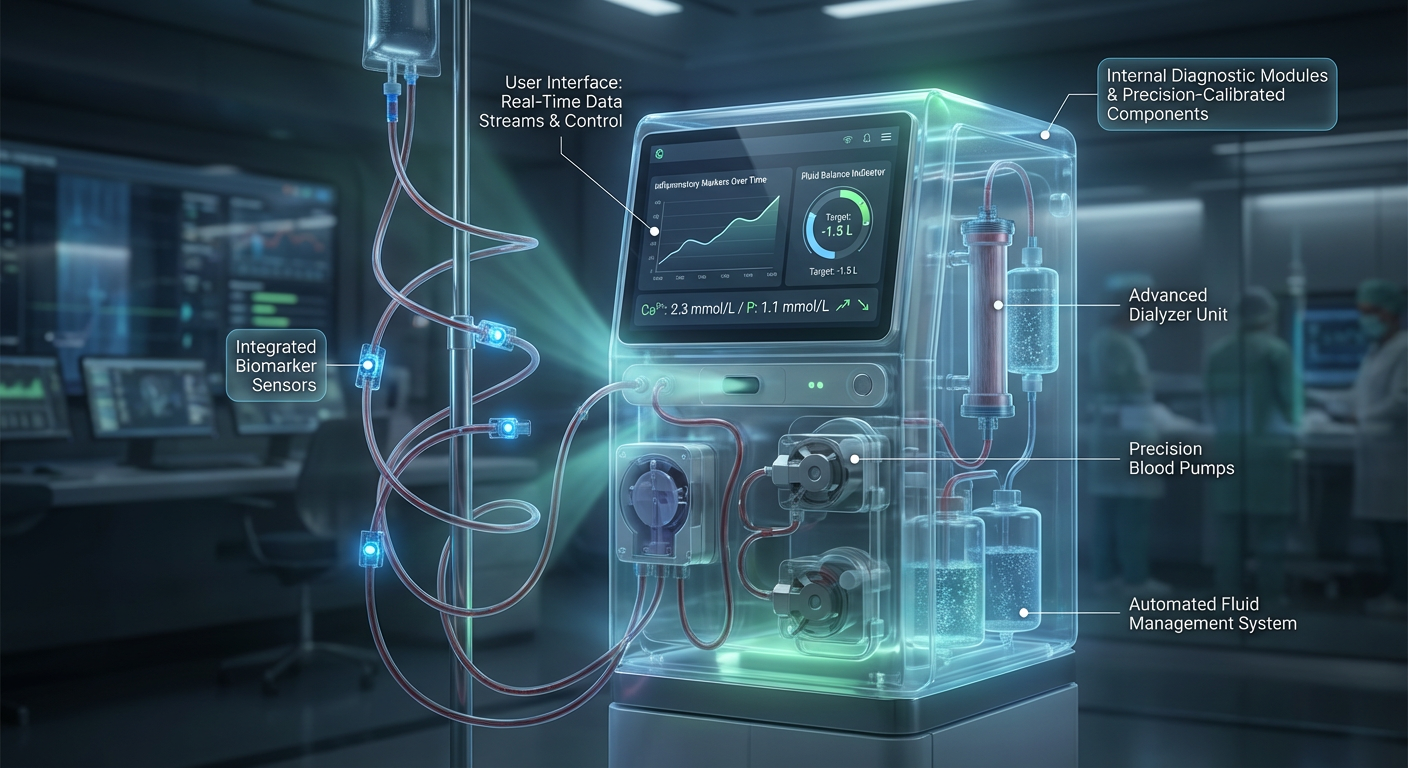
10. Real-time Multi-Biomarker Analysis Integration
The evolution of hemodialysis from a life-sustaining therapy to a system engineered for proactive harm mitigation critically hinges on the integration of real-time multi-biomarker analysis. This paradigm shift addresses the inherent systemic and cardiovascular vulnerabilities associated with conventional dialysis, particularly in susceptible populations such as elderly patients with chronic kidney disease (CKD) 136 . The objective extends beyond solute clearance to encompass the dynamic modulation of pathophysiological processes that contribute to adverse long-term outcomes.
10.1 Mechanistic Underpinnings of Real-time Biochemical Surveillance
Advanced hemodialysis systems are now designed to incorporate continuous, in-line biochemical monitoring, moving beyond intermittent laboratory assessments 136 . This continuous data stream provides granular insights into a patient's dynamic physiological state, enabling immediate therapeutic adjustments.
10.1.1 Key Biomarker Domains and Their Significance
The scope of real-time monitoring in next-generation dialysis systems is multifaceted, targeting several critical physiological domains:
10.1.1.1 Inflammatory Biomarkers
Chronic inflammation is a pervasive complication in CKD patients, contributing significantly to cardiovascular morbidity and mortality. Real-time analysis of inflammatory biomarkers allows for the immediate detection of acute inflammatory shifts or persistent pro-inflammatory states. This enables the automated dialysis system to potentially adjust membrane biocompatibility, dialysate composition, or even filtration modalities to attenuate the inflammatory cascade 136 .
10.1.1.2 Renal Function Parameters
While dialysis inherently replaces renal excretory function, real-time monitoring of surrogate renal function parameters, such as urea kinetic modeling indicators or residual renal function markers, can inform the efficiency of the ongoing dialysis session and guide personalized treatment duration or intensity. The integration facilitates the assessment of parameters contributing to "renal analytics" 136 .
10.1.1.3 Calcium-Phosphorus Homeostasis
Disruptions in calcium-phosphorus metabolism are hallmarks of CKD-mineral and bone disorder (CKD-MBD), leading to vascular calcification and increased cardiovascular risk. Continuous monitoring of calcium and phosphorus levels, along with parathyroid hormone (PTH) surrogates, allows for immediate adjustment of dialysate calcium concentration or phosphate binder administration algorithms, thereby maintaining metabolic equilibrium 136 .
10.1.1.4 Real-time Metabolic Tracking
Beyond specific electrolytes, advanced systems perform comprehensive "real-time metabolic tracking" 136 .
10.1.1.5 Hemodynamic Monitoring (Integrated Context)
While primary focus is on biochemical markers within the dialysis circuit, the broader concept of real-time multi-biomarker analysis can encompass physiological monitoring. In critical care or complex surgical settings, mini-invasive hemodynamic monitoring, including parameters like cardiac preload or heart rate, is routinely employed to optimize cardiac compensation and mitigate risks like peripheral vasodilation or autonomic mismatch 137 .
10.2 Technological Integration and Data-Driven Precision Care
The actualization of real-time multi-biomarker analysis is facilitated by sophisticated technological integration within the dialysis ecosystem.
10.2.1 Automated Systems and Precision Calibration
At the core are "fully automated dialysis machines" capable of executing intricate treatment protocols 136 . The precision calibration ensures the accuracy and reliability of the data captured and the subsequent adjustments made.
10.2.2 AI-Augmented Analytics and "Smart Dialysis Ecosystems"
The massive influx of real-time biomarker data necessitates advanced computational capabilities. This is where Artificial Intelligence (AI) plays a pivotal role, leading to the emergence of "Smart Dialysis Ecosystems" 138 . This AI-driven insight generation enables:
- Trend Spotting: Proactive identification of deviations from individualized baselines or therapeutic targets 138 .
- Refinement of Treatment Plans: Automated adjustment of dialysis parameters (e.g., ultrafiltration rate, dialysate composition, duration) in real-time to optimize clinical outcomes and mitigate intradialytic complications 138 .
- Personalized Care: Tailoring services to meet each patient's unique and dynamically changing needs, moving towards "next-generation precision care" 138 .
The integration of AI transforms raw biomarker data into actionable clinical intelligence, moving towards an "AI-augmented artificial kidney" paradigm 138 .
10.3 Clinical Impact and Future Trajectories
The overarching goal of integrating real-time multi-biomarker analysis is to enhance clinical outcomes and mitigate the systemic complications associated with CKD and its treatment 136 . By continuously monitoring and responding to subtle physiological shifts, these advanced systems aim to:
- Modulate inflammatory pathways more effectively, potentially reducing chronic inflammation-related cardiovascular risk 136 .
- Maintain a more stable metabolic equilibrium, preventing the acute shifts in calcium-phosphorus homeostasis and acid-base balance that contribute to patient morbidity 136 .
- Reduce the incidence of intradialytic adverse events, improving patient safety and comfort.
- Pave the way for truly personalized medicine in nephrology, where each patient's dialysis prescription is dynamically optimized based on their real-time physiological responses 138 .
This sophisticated integration of sensing, automation, and artificial intelligence represents a foundational shift, not merely in equipment design, but in the entire philosophy of kidney care, promising smart, scalable, and sustainable systems for the future 138 .
11. Autologous Blood Reservoir Priming and Volume Management: Minimizing Systemic Perturbations in Advanced Extracorporeal Therapy
The profound physiological stress imposed by conventional extracorporeal renal replacement therapies (ECRRTs) on critically ill patients, particularly those with pre-existing hemodynamic instability, necessitates a paradigm shift in circuit priming and volume management. The overarching goal is to eliminate systemic and cardiovascular harm by meticulous process and equipment redesign, focusing on preserving patient homeostasis throughout the therapeutic intervention. This chapter delves into the technical intricacies and mechanistic advantages of advanced strategies, notably autologous blood reservoir priming, integrated within sophisticated plasma detoxification and volume control systems.
11.1 Hemodynamic Vulnerability and the Imperative for Optimized Priming
11.1.1 Challenges of Conventional Extracorporeal Circuit Priming
Traditional ECRRT circuits often require priming with significant volumes of non-autologous fluids (e.g., saline, albumin solutions). This exogenous fluid load can trigger a cascade of adverse hemodynamic and biochemical consequences, especially in patients already at risk of hypotension. The introduction of non-physiologic solutions can lead to fluid shifts, dilutional coagulopathy, and electrolyte fluxes, all of which contribute to or exacerbate hemodynamic compromise 139 . The challenge lies in mitigating these initial insults while ensuring efficient solute clearance.
11.1.2 Autologous Blood Reservoir Priming: A Strategic Intervention
Autologous blood reservoir priming represents a sophisticated intervention designed to circumvent the detrimental effects of non-autologous priming solutions. This strategy involves utilizing the patient's own blood, rather than synthetic fluids, to prepare the extracorporeal circuit for operation. The fundamental mechanism involves drawing a precise volume of blood from the patient into a dedicated reservoir within the circuit, which then serves to fill the system volume before the full treatment flow is initiated.
The physiological rationale underpinning this approach is multi-faceted: * Preservation of Plasma Oncotic Pressure: By minimizing the dilution of plasma proteins, autologous priming helps maintain intravascular oncotic pressure, thereby reducing fluid shifts into the interstitial space and supporting circulatory volume stability. * Reduced Dilutional Coagulopathy: Eliminating or substantially reducing exogenous fluid exposure mitigates the dilution of endogenous clotting factors and platelets, which is crucial for preventing acquired coagulopathy, a frequent and serious complication in critically ill patients undergoing ECTR. * Prevention of Electrolyte Derangements: The use of patient-specific blood as the priming fluid inherently maintains physiological electrolyte concentrations within the circuit, preventing the acute electrolyte fluxes and potential imbalances (e.g., hypokalemia, hypocalcemia, hypomagnesemia) often associated with the introduction of non-physiologic solutions 139 .
The implementation of autologous blood reservoir priming is a critical parameter in optimizing ECTR parameters to reduce the risk of hemodynamic compromise 139 .
11.2 Integrated Plasma Detoxification and Precision Volume Control
11.2.1 The Plasma Detoxification and Volume Control System
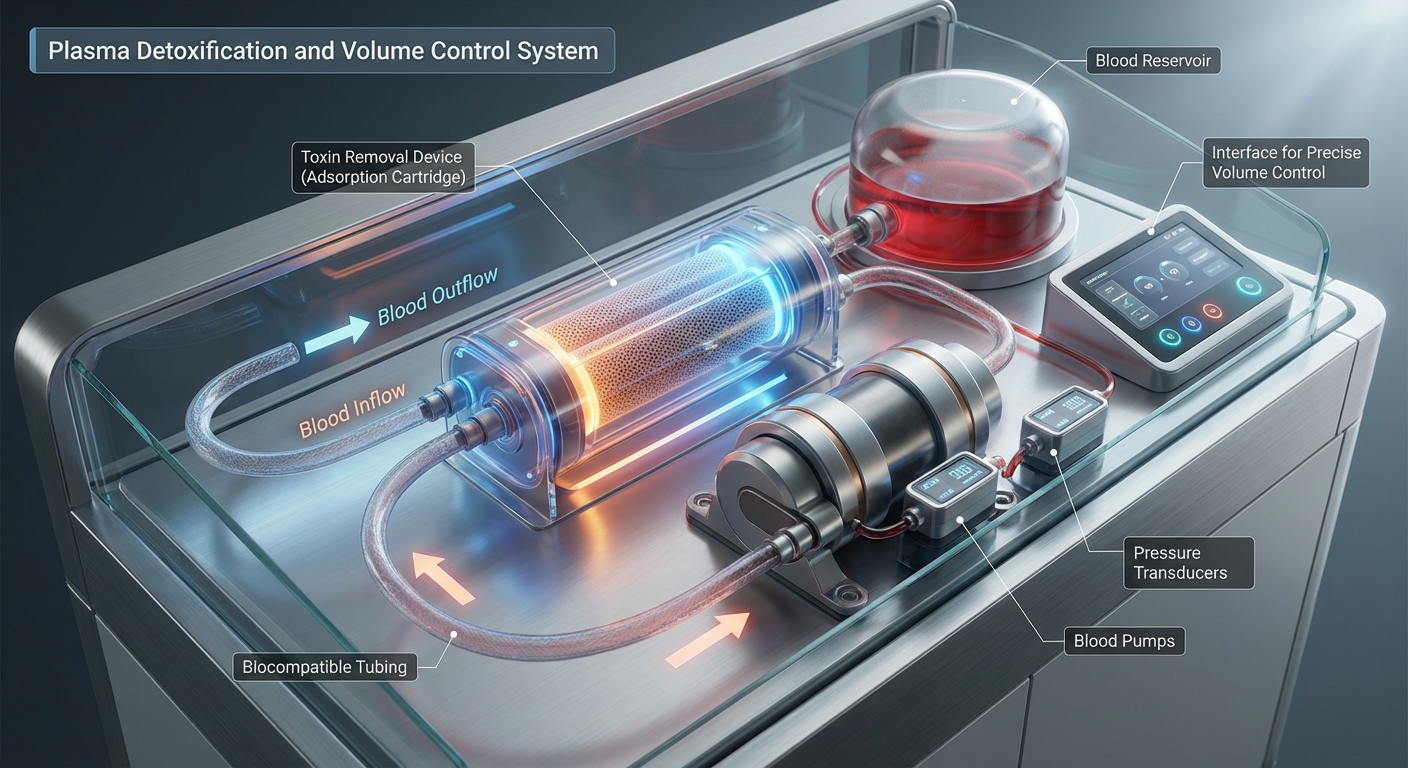
Advanced extracorporeal platforms, such as the "plasma detoxification and volume control system," embody a holistic approach to ECRRT, combining effective toxin removal with precise fluid management 140 141 142 143 139 .
11.2.2 Mechanistic Advantages in Systemic Homeostasis
Observations from a canine model evaluating this specific "toxin removal device" within an extracorporeal circuit provide critical insights into its systemic biocompatibility:
- Absence of Adsorption Column-Related Electrolyte Abnormalities: A significant finding was the complete absence of electrolyte abnormalities directly attributable to the adsorption column component of the system 140 141 142 143 . This indicates a highly selective adsorption matrix or a sophisticated control mechanism that prevents non-specific binding or undesired depletion of essential electrolytes, thereby maintaining physiological ionic balance. This is a substantial improvement over older adsorption technologies that could lead to unpredictable electrolyte shifts.
- Preservation of Clotting Factors: Furthermore, the canine model demonstrated no evidence of consumption of clotting factors over a 4-hour treatment period 140 141 142 143 . This suggests a highly biocompatible circuit material and surface design, minimal shear stress on blood components, and potentially optimized flow dynamics that collectively prevent excessive activation or removal of coagulation proteins. Preserving endogenous clotting factor levels is paramount for mitigating bleeding risks inherent to ECTR.
11.2.3 Minimizing Net Ultrafiltration and Hemodynamic Risk
Beyond priming, precise volume control facilitated by these advanced systems is critical for patient stability. The strategy of minimizing net ultrafiltration is a cornerstone of managing hemodynamically compromised patients undergoing ECTR 139 . The ability to finely tune ultrafiltration rates prevents rapid intravascular volume depletion, thereby reducing sympathetic activation and preserving cardiovascular stability.
11.3 Persistent Challenges: Anticoagulation and Hemodynamic Monitoring
11.3.1 Anticoagulation-Associated Bleeding
Despite significant advancements in circuit biocompatibility and design, anticoagulation remains an indispensable component of extracorporeal therapies to prevent circuit clotting. The canine model evaluating the "plasma detoxification and volume control system" noted "minor anticoagulation-related bleeding" at the cut-down sites for the hemodialysis catheter, as well as for invasive hemodynamic monitoring catheters (pulmonary artery catheter and arterial catheter) 140 141 142 143 . This observation underscores that while the internal circuit may be highly biocompatible and preserve clotting factors, the systemic effects of anticoagulation, particularly at invasive access sites, remain a persistent clinical challenge. Future directions must continue to explore novel regional anticoagulation strategies or ultra-biocompatible surfaces that can further reduce systemic anticoagulant requirements.
11.3.2 Role of Invasive Hemodynamic Monitoring
The use of invasive hemodynamic monitoring, including pulmonary artery catheters and arterial catheters, in the canine study 140 141 142 143 144 139 .
11.4 Operationalizing Priming and Volume Control for Enhanced Patient Outcomes
11.4.1 Optimization Parameters for Extracorporeal Treatment
Beyond the critical aspects of priming and volume management, the overall efficacy and safety of ECTR are influenced by a comprehensive set of operational parameters. To enhance clearance and simultaneously reduce the risk of hemodynamic compromise, ECTR parameters should be meticulously optimized. This includes employing higher blood and effluent flows and utilizing filters/dialyzers with larger surface areas to maximize solute removal kinetics 139 .
11.4.2 Temporal Dynamics in ECTR
The 4-hour treatment duration in the canine model, both prior to and following the conclusion of treatment, provided a robust framework for assessing the sustained effects of the "toxin removal device" and its integrated volume control 140 141 142 143 . This temporal observation is crucial as it allows for the evaluation of both acute physiological responses to circuit initiation and the longer-term stability and biocompatibility of the system. The demonstration of sustained efficacy without adverse systemic effects over this period supports the clinical feasibility and safety profile of such advanced systems for prolonged therapeutic applications.
12. Saline-Free Dialysis Protocols and Their Implementation
The paradigm shift in kidney dialysis towards eliminating systemic and cardiovascular harm necessitates a critical re-evaluation of established practices, particularly concerning anticoagulation and fluid management strategies. Traditional hemodialysis often involves systemic heparinization to prevent extracorporeal circuit clotting and may utilize saline boluses to manage intradialytic hypotension (IDH). However, these interventions carry inherent risks, including increased bleeding tendency and volume overload, contributing to cardiovascular strain. Saline-free dialysis protocols, by minimizing or eliminating these systemic burdens, represent a sophisticated approach to enhance patient safety and outcomes, particularly in vulnerable populations.
12.1 The Imperative for Saline-Free Dialysis: Mitigating Systemic and Cardiovascular Harm
The primary objective of moving towards saline-free dialysis protocols is to reduce the multifactorial harms associated with conventional approaches. Systemic anticoagulation, predominantly with unfractionated heparin, although effective in maintaining circuit patency, inherently elevates bleeding risk. This risk is particularly pronounced in critically ill patients, those with acute liver failure (ALF) or acute-on-chronic liver failure (ACLF) where coagulopathy is common, or those with other pre-existing bleeding diatheses 145 146 147 . The ultimate goal is to optimize patient safety by minimizing these iatrogenic complications.
12.1.1 Challenges with Conventional Anticoagulation
Conventional hemodialysis typically employs heparinization to prevent coagulation within the extracorporeal circuit. While broadly effective, this practice is not without drawbacks. A significant concern is the 8% incidence of extracorporeal circuit clotting, even in methods designed to be heparin-free, indicating that thrombus formation remains a persistent challenge regardless of the specific anticoagulant strategy 148 145 146 . This complex coagulopathy underscores the need for alternative anticoagulation strategies that do not exacerbate bleeding tendencies while still ensuring circuit patency.
12.2 Advanced Saline-Free Anticoagulation Modalities
The development of saline-free dialysis protocols hinges upon effective alternative anticoagulation strategies that obviate the need for systemic heparin or minimize cumulative fluid load. These advanced modalities aim to prevent thrombus formation within the extracorporeal circuit while mitigating systemic risks.
12.2.1 Regional Citrate Anticoagulation
Regional citrate anticoagulation (RCA) represents a cornerstone of heparin-free and saline-sparing dialysis. In RCA, citrate is infused pre-dialyzer, chelating ionized calcium and thereby interrupting the coagulation cascade specifically within the extracorporeal circuit. The citrate-calcium complex is then removed through the dialyzer, and systemic calcium is replenished post-dialyzer. A study comparing citrate-based heparin-free dialysis with a saline group using a heparinized, saline-rinsed polyamide dialyzer demonstrated that 92% of patients tolerated the citrate procedure well 148 . The efficacy of RCA in localized anticoagulation without systemic effects makes it a preferred option for patients with high bleeding risk.
12.2.2 Heparin-Coated Membranes and Direct Thrombin Inhibitors
Beyond citrate, other advanced techniques are explored to achieve saline-free and heparin-sparing dialysis. These include the use of modified dialyzer membranes and alternative pharmaceutical agents.
12.2.2.1 Heparin-Coated Dialyzers
Heparin-coated dialysis membranes, such as those used in the Evodial system, offer a potential solution for heparin-free dialysis by providing localized anticoagulant activity directly at the membrane surface. The HepZero study, a prospective, multicenter, international, open, randomized controlled clinical trial, is designed to compare heparin-free dialysis utilizing heparin-coated membranes against standard care 148 . This approach aims to reduce the need for systemic heparin administration while maintaining circuit patency, thereby minimizing systemic bleeding risks.
12.2.2.2 Low-Dose Argatroban
For patients with an extremely high risk of bleeding, direct thrombin inhibitors such as argatroban offer another viable alternative. A pilot, monocentric, randomized controlled trial by Yixiong et al. compared low-dose argatroban with heparin-free saline flushes in 80 hemodialysis sessions involving 52 patients at high bleeding risk 148 . Argatroban directly inhibits thrombin, thereby preventing fibrin formation and platelet activation, making it effective even in patients with heparin-induced thrombocytopenia. Its use requires careful monitoring due to its potent anticoagulant effect.
12.2.3 Considerations for Heparin-Free Saline Flushes
While saline flushes are often employed in heparin-free protocols to maintain circuit patency, their role in a truly "saline-free" paradigm is diminished. The pilot study mentioned above utilized heparin-free saline flushes as a comparative arm 148 . However, the reliance on saline for frequent flushing contributes to the overall fluid and sodium load, which the saline-free philosophy seeks to mitigate. Therefore, in advanced saline-free protocols, alternative methods like frequent blood return or optimized flow dynamics must be considered to reduce the need for saline.
12.3 Hemodynamic Monitoring: A Cornerstone of Saline-Free Dialysis
The successful implementation of saline-free dialysis protocols, especially those that limit fluid administration, critically relies on robust and continuous hemodynamic monitoring. The absence of readily available saline boluses to counteract intradialytic hypotension (IDH) necessitates a proactive and predictive approach to hemodynamic stability.
12.3.1 Pathophysiology of Intradialytic Hypotension (IDH) and Monitoring Requirements
IDH is a complex interaction between ultrafiltration rate (UFR), cardiac output (CO), vascular resistance, and the ability of the extravascular space to refill the intravascular compartment 147 148 149 .
12.3.2 Advanced Hemodynamic Monitoring Technologies
To effectively manage hemodynamics in saline-free dialysis, advanced monitoring technologies are indispensable. These technologies provide real-time, granular data that allow for early detection of instability and informed intervention.
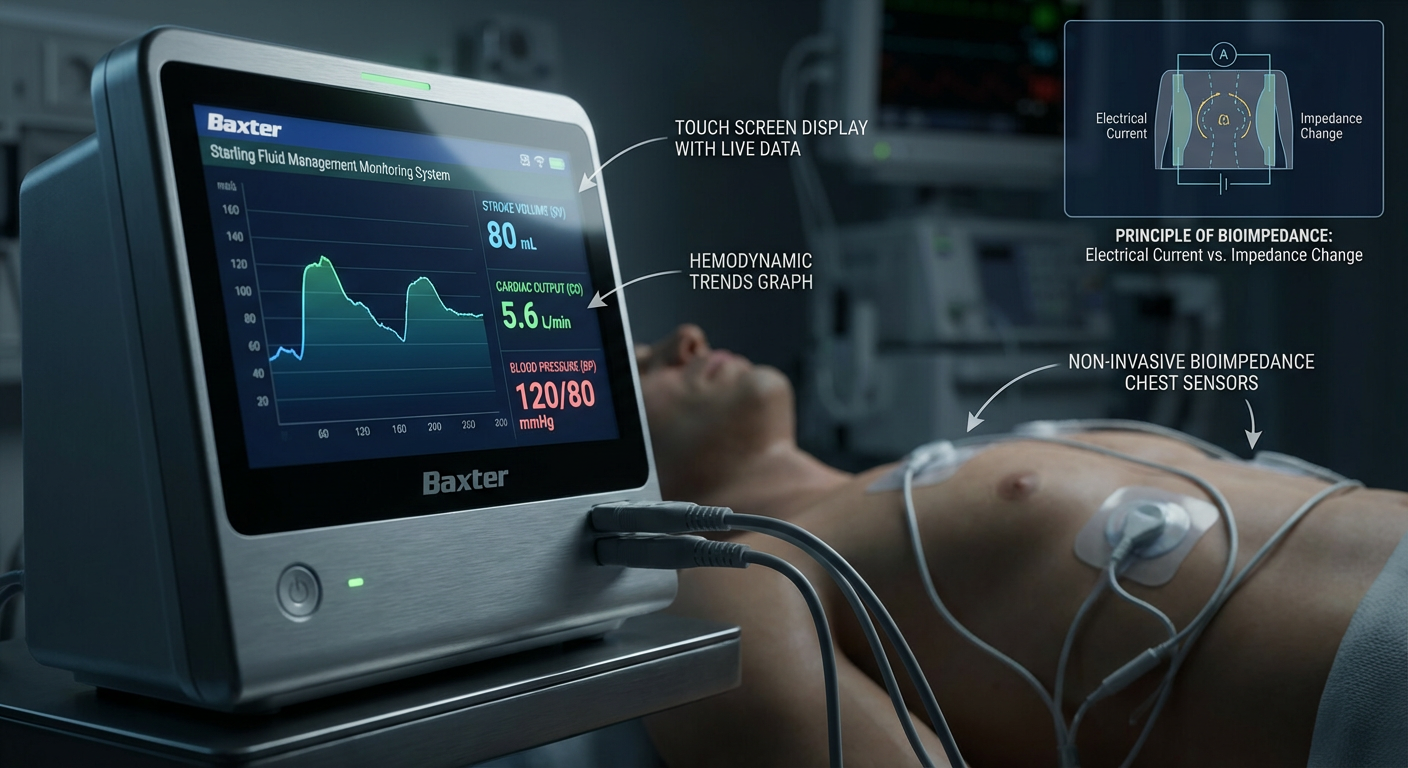
Baxter International Inc. has made significant strides in this area, acquiring Cheetah Medical, a leading provider of non-invasive hemodynamic monitoring technologies 150 151 152 153 145 146 .
12.4 Protocol Implementation and Patient Safety
Implementing saline-free dialysis protocols requires a structured approach that prioritizes patient safety through meticulous risk assessment, protocol personalization, and technological integration.
12.4.1 Risk Assessment and Personalization
Prior to initiating saline-free dialysis, a comprehensive assessment of the patient's bleeding risk, thrombotic risk, and hemodynamic stability is paramount. This includes evaluating comorbidities such as cardiac disease, diabetes mellitus, and age, which are non-modifiable risk factors for IDH 147 145 146 and must be carefully controlled to prevent hemodynamic destabilization in the absence of prophylactic saline.
12.4.2 Integration with Remote Patient Management
The broader "paradigm shift" in kidney care emphasizes patient-centered innovation and home-based therapies. Remote patient management platforms, such as Baxter's Sharesource, play a crucial role in enhancing the safety and effectiveness of dialysis, particularly as protocols become more complex. Data indicates that Sharesource, when used with automated peritoneal dialysis (APD) cyclers, can improve clinical effectiveness by extending time on therapy by 3.4 months 152 150 . While these data pertain to PD, the principles of remote monitoring and proactive intervention are directly transferable to managing patients on saline-free hemodialysis protocols, allowing for continuous oversight and early intervention for potential complications, even outside the conventional clinical setting.
12.5 Future Directions and the Broader Paradigm Shift
The evolution towards saline-free dialysis protocols aligns with a larger movement in renal care focused on improving outcomes, lowering healthcare costs, and enhancing the quality of life for patients with chronic kidney disease (CKD) 151 145 146 . The integration of artificial intelligence and machine learning into hemodynamic monitoring and remote patient management systems holds the promise of predictive analytics, allowing for even more proactive and individualized patient care in the context of saline-free dialysis.
13. Dynamic Dialysate Composition and Sodium Flux Optimization
13.1 Introduction to Dialysate Dynamics and Physiological Imperatives
The escalating global prevalence of end-stage renal disease (ESRD) necessitates continuous advancements in extracorporeal blood purification therapies. While dialysis remains a life-saving intervention, conventional approaches are frequently associated with significant systemic and cardiovascular harms, reflecting an incomplete replacement of native kidney function and often leading to suboptimal patient outcomes and diminished quality of life 154 . A paradigm shift is imperative, moving beyond static, generalized treatment protocols towards highly individualized, dynamic systems that proactively mitigate these adverse effects. Central to this evolution is the precise, real-time control of dialysate composition and the intricate management of sodium flux, which directly influences intradialytic hemodynamic stability and long-term cardiovascular health. This chapter delves into the technical intricacies and mechanistic principles underlying advanced dialysate design and sodium flux optimization, emphasizing a data-driven, adaptive approach to hemodialysis.
13.2 Real-time Analytes and Kinetic Monitoring for Adaptive Dialysate Design
The efficacy and safety of hemodialysis are profoundly influenced by the ability to dynamically adapt the dialysate composition based on the patient's individual physiological state and real-time clearance kinetics. This necessitates sophisticated monitoring systems capable of identifying and quantifying critical analytes within the extracorporeal circuit.
13.2.1 Identification of Key Analytes and Spectral Signatures
Advanced systems for monitoring patient health during dialysis can identify a comprehensive panel of analytes, including urea, urea-based compounds, urea nitrogen-based compounds, sodium bicarbonate, glucose, fatty acids, triglycerides, and carbohydrates 155 . This allows for precise, non-invasive quantification within the dynamic environment of dialysis.
13.2.2 Temporal Analysis and Dynamic Adjustments
Beyond static concentration measurements, the true power of advanced monitoring lies in assessing analyte clearance kinetics based on their changes over time, both individually and in relation to one another 155 . This continuous, comparative analysis forms the basis for closed-loop feedback mechanisms that can profoundly modify subsequent dialysis treatments.
13.2.3 Adaptive Dialysis Prescription Modifications
The kinetic data derived from real-time analyte monitoring enables intelligent adjustment of key dialysis parameters. These modifications can include increasing or decreasing the overall dialysis treatment time, modulating the rate of blood flow through the dialyzer, and adjusting the frequency of dialysis treatments 155 . Such adaptive strategies move beyond fixed prescriptions, allowing for a truly personalized therapy that responds to the patient's evolving physiological needs.
13.3 Sodium Flux Regulation and Intradialytic Volume Management
Sodium is the primary determinant of extracellular fluid volume, and its precise control during hemodialysis is paramount for maintaining hemodynamic stability and preventing intradialytic morbidities. Advanced systems leverage biofeedback mechanisms to optimize sodium flux and ultrafiltration (UF) rates.
13.3.1 Biofeedback Systems for Hemodynamic Stability
Next-generation dialysis machines incorporate sophisticated biofeedback systems that continuously monitor and respond to key biological parameters. These parameters include dialysate temperature, dialysate conductivity, relative blood volume reduction, and systemic blood pressure 63 .
13.3.2 Ultrafiltration Rate and Dialysate Conductivity Modulation
The core of sodium flux optimization through biofeedback involves the dynamic modulation of both the ultrafiltration rate and/or dialysate conductivity 63 156 .
13.3.3 Interplay of Factors Affecting Refill Kinetics
While ECW size is a material contributor to RBV dynamics, it is essential to acknowledge that other factors can independently modify refill kinetics and RBV levels, potentially confounding or attenuating the observed associations 156 . A comprehensive understanding and integrated monitoring of these variables are essential for achieving truly personalized fluid management.
13.4 Precise Dialysate Temperature Control and Its Hemodynamic Implications
Dialysate temperature, often an overlooked parameter, profoundly impacts patient comfort, sodium bicarbonate concentration, and cardiovascular stability during hemodialysis.
13.4.1 Closed-Loop Temperature Regulation
Modern dialysis equipment incorporates sophisticated temperature sensors that enable closed-loop control of dialysate temperature 66 .
13.4.2 Impact on Sodium Bicarbonate Concentration
A key mechanistic link exists between dialysate temperature control and sodium bicarbonate concentration. Temperature directly influences the solubility and dissociation of bicarbonate in the dialysate, thereby affecting its buffering capacity and ultimately the patient's acid-base balance 66 . Precise temperature regulation is thus integral to maintaining optimal bicarbonate delivery and preventing metabolic complications.
13.4.3 Standardized and Individualized Temperature Prescriptions
While some clinical studies may standardize dialysate temperature (e.g., 36.5 °C for all patients) for research consistency 157 63 .
13.5 Advanced Dialysate Purification and Sustainable Systems
The generation and disposal of vast volumes of dialysate present significant logistical, economic, and environmental challenges. Innovations in dialysate purification and recycling are crucial for achieving sustainable hemodialysis.
13.5.1 Recirculating Dialysate (REDY) Systems
Recirculating Dialysate (REDY) systems represent a significant advancement towards sustainability and portability. In these systems, spent dialysate is not discarded but rather routed through an activated carbon sorbent cartridge 158 . This closed-loop approach drastically reduces the fresh dialysate volume required and minimizes waste.
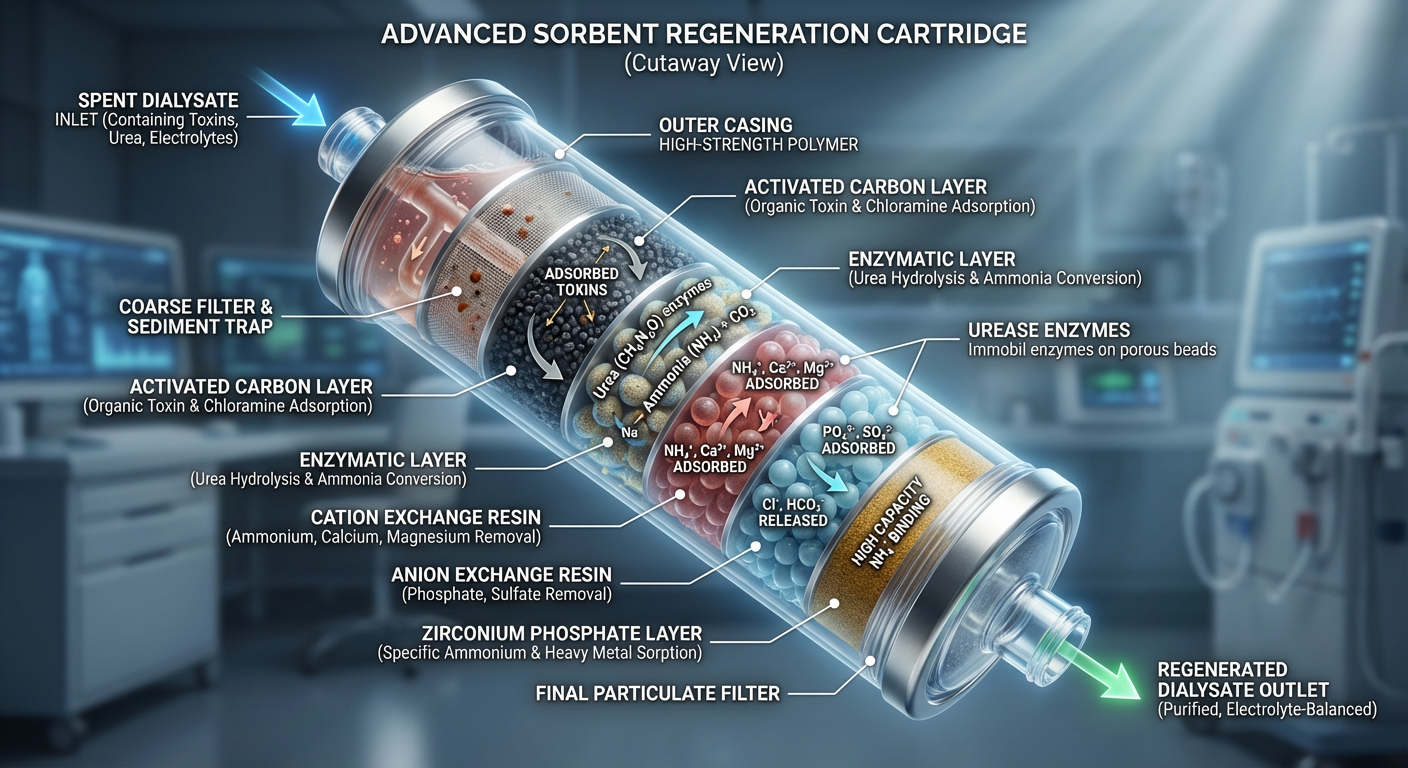
13.5.2 Carbon Material Enhancement for Optimized Regeneration
The efficacy of sorbent-based dialysate regeneration hinges on the functional properties of the activated carbon materials. Advanced oxidation processes, such as UV/H2O2, can be employed to precisely regulate both the functional group composition and pore structure of these carbon materials 158 .
13.5.3 Closed-Loop Water Management
The adoption of sustainable closed-loop strategies for dialysate management is strongly advocated 159 154 .
13.6 Integrated Hemodynamic Monitoring for Enhanced Safety
Comprehensive hemodynamic monitoring is integral to ensuring patient safety and optimizing cardiovascular outcomes during dynamic dialysis. This extends beyond simple blood pressure measurements to encompass continuous, functional assessments within the circulatory system.
13.6.1 Functional Hemodynamic Monitoring
Advanced systems for hemodynamic monitoring are designed to provide continuous, real-time data on pressure and blood flow within the circulatory system 144 82 . Such monitoring is crucial for detecting subtle changes that might precede overt hemodynamic instability.
13.6.2 Clinical Application in AKI and Dialysis
In contexts such as acute kidney injury (AKI) and chronic dialysis, functional hemodynamic monitoring is a cornerstone for optimizing fluid status and overall hemodynamics 160 . The integration of such monitoring with dynamic dialysate adjustments creates a powerful protective mechanism against intradialytic complications.
13.6.3 Anticoagulation Management and Electrolyte Stability
Maintaining electrolyte balance and managing anticoagulation are critical safety components within any extracorporeal circuit. While adverse events are rare, careful consideration must be given to potential anticoagulant-related bleeding, such as observed at catheter insertion sites in some canine models 19 17 18 142 154 . Dynamic dialysate composition must account for these variables to prevent systemic electrolyte imbalances.
13.7 Future Directions: Personalized and Predictive Dialysis
The convergence of real-time analyte kinetics, dynamic sodium flux management, precise temperature control, and integrated hemodynamic monitoring establishes a robust foundation for the future of hemodialysis.
13.7.1 Integration of Multi-parametric Data
The next frontier involves the seamless integration and interpretation of these disparate data streams. By combining continuous monitoring of analytes (urea, glucose, electrolytes), blood volume shifts, precise dialysate temperature, and comprehensive hemodynamic metrics, a holistic, real-time patient physiological profile can be constructed. This multi-parametric dataset provides an unprecedented level of granularity into the patient's response to dialysis.
13.7.2 Predictive Modeling for Cardiovascular Stability
Leveraging artificial intelligence and machine learning algorithms, these integrated data streams can be utilized to develop sophisticated predictive models. These models aim to forecast potential cardiovascular instabilities or intradialytic hypotensive events before their clinical manifestation. By identifying early indicators of physiological distress, the system can proactively trigger precise, automated adjustments to dialysate composition, ultrafiltration rates, and other treatment parameters, thereby preventing adverse events rather than merely reacting to them.
13.7.3 Towards Truly Individualized Dialysis
This advanced integration and predictive capability signify a profound paradigm shift from generic, "one-size-fits-all" prescriptions to truly individualized, adaptive dialysis therapies. The goal is to optimize every aspect of the treatment for each patient at each moment, minimizing systemic harm, enhancing cardiovascular stability, and ultimately improving long-term patient outcomes and quality of life. This dynamic, closed-loop approach represents the pinnacle of precision medicine in nephrology.
14. High-Efficiency Membrane Technology for Rapid Solute Clearance
14.1 Introduction: The Imperative for Enhanced Solute Clearance
The evolution of hemodialysis from rudimentary procedures to sophisticated extracorporeal therapies has been fundamentally driven by advancements in membrane technology. While conventional low-flux dialysis effectively removes small molecular weight solutes via diffusion, its capacity for clearing larger, often protein-bound, and middle molecular weight uremic toxins is inherently limited. This chapter delves into the intricate engineering and physiological implications of high-efficiency membrane technology, which represents a paradigm shift towards more comprehensive solute clearance, ultimately mitigating the systemic and cardiovascular morbidities endemic to end-stage renal disease (ESRD). The objective is to elucidate the mechanisms by which these advanced membranes facilitate rapid and broad-spectrum solute removal, thereby addressing unmet clinical needs and paving the way for personalized dialysis regimens.
14.2 Fundamental Principles of High-Efficiency Membrane Function
14.2.1 Membrane Composition and Architecture
High-efficiency dialyzer membranes are meticulously engineered synthetic polymers, predominantly characterized by their high hydraulic permeability and enhanced solute transport characteristics compared to their low-flux predecessors. Common membrane materials include polyethersulfone (PES), polysulfone (PS), cellulose triacetate (CTA), polyacrylonitrile (PAN), and polymethylmethacrylate (PMMA). The choice of polymer dictates fundamental properties such as mechanical strength, chemical stability, and intrinsic hydrophilicity/hydrophobicity.
A critical design feature for high-efficiency membranes is their asymmetric structure. This architecture typically comprises a dense, thin inner separation layer responsible for selective solute filtration and a more porous, thicker outer support layer that provides mechanical stability without impeding trans-membrane flow. This layered morphology results in a gradient of pore sizes, with the smallest pores located on the blood-contacting surface, progressively increasing in diameter towards the dialysate side. This pore size distribution is finely tuned to optimize the sieving coefficient for targeted molecules while minimizing the loss of essential plasma proteins, notably albumin.
Surface modifications are also pivotal in enhancing membrane performance and biocompatibility. To mitigate protein adsorption and subsequent membrane fouling or thrombogenicity, hydrophilic coatings are often applied to the otherwise hydrophobic polymer backbones. These modifications contribute to an anti-thrombogenic surface, reducing the need for systemic anticoagulation and improving the overall safety profile of the dialysis procedure. The luminal diameter of the hollow fibers and the total membrane surface area are also critical parameters, directly influencing the effective clearance rates of various solutes.
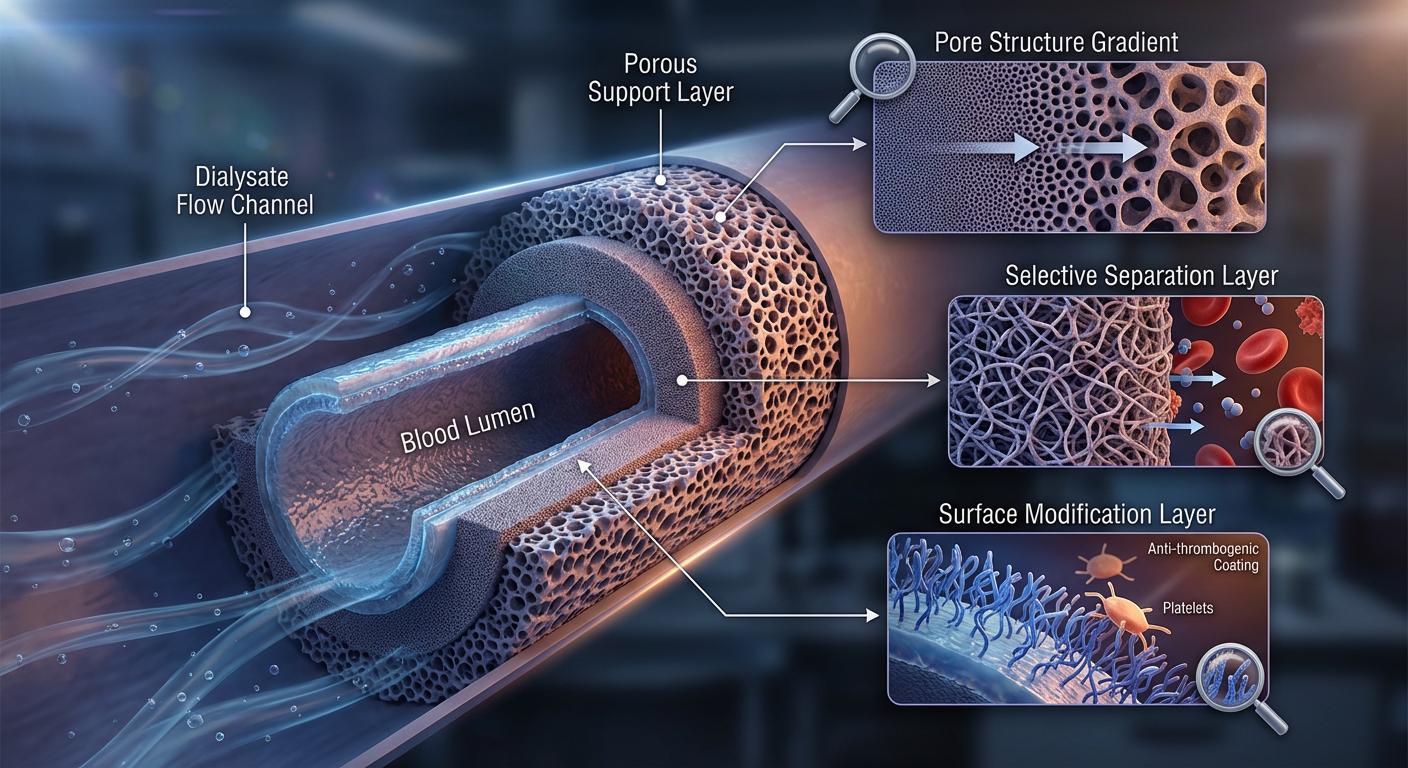
14.2.2 Mechanistic Transport: Diffusion, Convection, and Adsorption
Solute clearance across high-efficiency membranes is governed by a combination of diffusive, convective, and adsorptive transport mechanisms.
14.2.2.1 Diffusive Transport
Diffusive transport predominates for small molecular weight solutes (<500 Da), such as urea (MW ~60 Da) and creatinine (MW ~113 Da). This process relies on a concentration gradient across the semi-permeable membrane, where solutes move from the blood compartment (higher concentration) to the dialysate compartment (lower concentration) along their electrochemical potential gradient. High-efficiency membranes enhance diffusive clearance by optimizing the membrane surface area, reducing membrane thickness, and improving the intrinsic permeability of the material.
14.2.2.2 Convective Transport
Convective transport, also known as solvent drag or ultrafiltration, becomes increasingly significant for the removal of middle molecules (e.g., β2-microglobulin, MW ~11,800 Da; phosphate) and larger protein-bound toxins (PBTs). This mechanism is driven by a transmembrane pressure gradient, which forces plasma water, along with dissolved solutes, across the membrane from the blood to the dialysate compartment. High-flux membranes are characterized by a high ultrafiltration coefficient (Kuf), indicating their high permeability to water. The efficiency of convective removal for a specific solute is quantified by its sieving coefficient, which is the ratio of the solute concentration in the ultrafiltrate to its concentration in the plasma water. High-flux membranes are designed to have high sieving coefficients for middle molecules while maintaining low coefficients for essential macromolecules like albumin.
14.2.2.3 Adsorptive Transport
In addition to diffusion and convection, some high-efficiency membranes exhibit adsorptive properties. Certain hydrophobic or charged solutes, including specific protein-bound toxins, can directly bind to the membrane material, particularly to the hydrophobic segments of polysulfone or polyethersulfone. While adsorption contributes to initial clearance, its capacity is finite and can lead to saturation over time, necessitating careful consideration in long-term therapy. The balance between these three mechanisms, precisely tuned by membrane design, is crucial for comprehensive and effective uremic toxin removal.
14.3 Characterization of High-Efficiency and High-Flux Membranes
14.3.1 Defining High-Flux Capabilities
High-flux membranes are defined primarily by their ultrafiltration coefficient (Kuf), typically exceeding 20 mL/h/mmHg, in contrast to low-flux membranes with Kuf values less than 10 mL/h/mmHg. This high hydraulic permeability enables the efficient generation of substantial ultrafiltrate volumes, which is a prerequisite for effective convective clearance.
The performance differential between low-flux and high-flux dialyzers is stark. High-flux membranes demonstrate significantly elevated clearance rates for small solutes like urea (e.g., 200-250 mL/min at blood flow of 300-400 mL/min) and creatinine, comparable to or exceeding those of low-flux membranes, but crucially, they also achieve substantial removal of larger middle molecules. For instance, high-flux membranes can achieve β2-microglobulin clearances ranging from 40 to 80 mL/min, whereas low-flux membranes offer negligible β2-microglobulin removal. This enhanced middle molecule removal is a cornerstone of the clinical advantages conferred by high-efficiency dialysis.
14.3.2 Enhanced Removal of Uremic Toxins
The expanded pore size and high Kuf of high-flux membranes allow for the effective clearance of a broader spectrum of uremic toxins.
14.3.2.1 Middle Molecules
Key middle molecules, such as β2-microglobulin, are implicated in dialysis-related amyloidosis and inflammatory processes. High-efficiency membranes, particularly when integrated into hemodiafiltration (HDF) modalities, achieve superior β2-microglobulin clearance compared to conventional hemodialysis, with reported clearances of β2-microglobulin significantly higher than low-flux dialyzers. Similarly, enhanced removal of phosphate, a critical uremic toxin contributing to cardiovascular disease and bone disorders, is observed with high-efficiency membranes, especially in HDF, where convective transport contributes significantly to phosphate mass removal beyond diffusive flux.
14.3.2.2 Protein-Bound Toxins (PBTs)
PBTs, such as indoxyl sulfate and p-cresol sulfate, are challenging to remove via conventional dialysis due to their strong binding to albumin. While their large molecular weight and protein binding limit direct convective or diffusive removal through standard pores, some advanced high-flux membranes, through their larger effective pore sizes, surface characteristics (e.g., adsorption), and particularly in the context of high ultrafiltration volumes characteristic of HDF, can facilitate a modest but clinically significant reduction in PBTs by altering the equilibrium between bound and unbound fractions or through direct adsorption.
14.4 Integration into Advanced Dialysis Modalities
14.4.1 Online Hemodiafiltration (OL-HDF) and Membrane Synergies
The full potential of high-efficiency membranes is realized when integrated into advanced modalities such as Online Hemodiafiltration (OL-HDF). OL-HDF leverages the high hydraulic permeability of these membranes to achieve substantial convective volumes, typically exceeding 20 L per session, by continuously infusing large quantities of sterile, ultrapure replacement fluid directly into the patient's blood circuit. This "on-line" generation of replacement fluid from dialysate eliminates the need for pre-packaged solutions, making high-volume HDF economically and logistically feasible.
In OL-HDF, the membrane acts as a dual-action filter, simultaneously facilitating diffusive clearance of small solutes and robust convective removal of middle and larger molecules. The high ultrafiltration rates, precisely managed by automated fluid management systems and feedback control, ensure that net fluid removal matches the prescribed target while maximizing convective clearance efficiency.
The placement of replacement fluid can occur either pre-dialyzer (pre-dilution HDF) or post-dialyzer (post-dilution HDF). * Pre-dilution HDF involves adding replacement fluid to the blood entering the dialyzer, diluting the blood and potentially reducing protein concentration, which may lower initial diffusive gradients but enhances convective potential by increasing the total plasma flow across the membrane. * Post-dilution HDF adds replacement fluid to the blood after it exits the dialyzer, maximizing the concentration gradient for diffusive removal within the dialyzer, but potentially increasing hemoconcentration and fouling within the dialyzer itself.
The synergy between high-flux membranes and the OL-HDF process demonstrably improves the clearance of β2-microglobulin and other middle molecules, often surpassing the clearance achieved by high-flux hemodialysis alone. This enhanced clearance is directly associated with improved clinical outcomes, including reduced cardiovascular morbidity and mortality.
14.5 Clinical Impact and Patient Outcomes
14.5.1 Reduction in Systemic Inflammatory Markers and Oxidative Stress
The comprehensive removal of a broader spectrum of uremic toxins, including middle molecules and specific protein-bound compounds, directly contributes to a reduction in the chronic inflammatory state and oxidative stress prevalent in ESRD patients. Uremic toxins act as pro-inflammatory mediators, and their efficient clearance by high-efficiency membranes in modalities like OL-HDF attenuates the systemic inflammatory response. This reduction in inflammation and oxidative stress is critical, as these factors are major contributors to cardiovascular disease, a leading cause of mortality in dialysis patients. By mitigating these adverse physiological conditions, high-efficiency membrane technology fosters improved patient outcomes and contributes to longer, healthier lives for individuals with ESRD. The ability to achieve rapid solute clearance also enables shorter treatment times without compromising efficacy, enhancing patient quality of life.
14.5.2 Addressing Challenges: Albumin Loss and Biocompatibility
While high-flux membranes offer substantial advantages, managing potential albumin loss remains a critical consideration. The larger pore sizes necessary for middle molecule clearance inherently carry a risk of increased albumin (MW ~66 kDa) leakage. Although a small amount of albumin loss (typically <5g per session) is generally considered acceptable and not clinically significant, excessive loss can lead to hypoalbuminemia, a marker of poor prognosis. Membrane manufacturers continually refine pore size distribution, aiming for a "highly permeable but albumin-retentive" membrane design, balancing optimal toxin removal with minimal essential protein loss. Some advanced membranes achieve this by creating a highly selective rejection layer that discriminates effectively between middle molecules and albumin.
Furthermore, membrane biocompatibility is paramount. The interaction between blood components and the membrane surface can trigger undesirable reactions, such as complement activation, leukocyte adhesion, and coagulation pathway initiation. Advanced high-efficiency membranes are designed with improved biocompatibility, often through hydrophilic surface modifications, which minimize protein adsorption and reduce the activation of inflammatory and thrombotic cascades. This enhancement contributes to the safety and tolerability of long-term dialysis therapy.
14.6 Future Directions and Emerging Technologies
The trajectory of high-efficiency membrane technology continues towards ever-increasing selectivity and biocompatibility. Research is focused on developing membranes with even finer control over molecular weight cutoffs, allowing for tailored removal of specific uremic toxins while virtually eliminating albumin loss. Innovations in biomimetic membranes, incorporating biologically active components, or advanced surface chemistries designed to resist fouling and enhance biocompatibility are also areas of active exploration. These future advancements promise to further refine the paradigm shift initiated by current high-efficiency membranes, moving towards even more precise, personalized, and patient-centric renal replacement therapies.
15. Advanced Anticoagulation Strategies for Minimizing Systemic Effects
Effective anticoagulation is a cornerstone of extracorporeal blood purification therapies, including kidney dialysis, to prevent clotting within the circuit. Traditionally, established protocols such as systemic heparin and regional citrate are routinely employed in clinical hemodialysis 161 162 163 . However, the paradigm shift towards minimizing systemic and cardiovascular harm necessitates an evolution in these strategies, moving beyond conventional approaches to integrate advanced technologies and precise monitoring.
15.1 Limitations of Conventional Anticoagulation and the Need for Advanced Approaches
While systemic heparin and regional citrate are standard, each carries inherent systemic risks. Systemic heparin can lead to an increased risk of bleeding, especially in critically ill patients or those undergoing surgery, potentially necessitating careful management of low antithrombin levels with antithrombin concentrate 164 .
15.2 Regional Citrate Anticoagulation: A Mechanism for Localized Hemostasis Control
Regional citrate anticoagulation operates on the principle of localized calcium chelation, preventing thrombus formation within the extracorporeal circuit without causing systemic anticoagulation. This mechanism involves the infusion of citrate into the afferent limb of the circuit, which binds to ionized calcium, a critical cofactor in the coagulation cascade.
(post-dialyzer/systemic)" Ca->>Liver: "Citrate-Ca complex metabolized by liver" Liver->>Ca: "Restores systemic Ca2+ balance"
The effectiveness of regional citrate hinges on precise dosing, continuous monitoring of ionized calcium levels both within the circuit and systemically, and judicious calcium replacement 5. This intricate balance ensures circuit longevity while largely obviating the systemic bleeding complications associated with heparin.
15.3 Integration of Advanced Devices for Enhanced Safety
The evolving landscape of extracorporeal therapies incorporates novel devices designed to mitigate harm and improve outcomes, which in turn influences anticoagulation strategies.
15.3.1 Adsorptive Toxin Removal Devices
Advanced adsorptive toxin removal devices, such as the HLM-100 adsorbent column, can be integrated into extracorporeal circuits for plasma detoxification and volume control. Clinical evaluations in canine models have demonstrated that the inclusion of such devices with continuous renal replacement therapy (CRRT) systems (e.g., Diapact™) was safe and well-tolerated. Specifically, these studies showed no detrimental hemodynamic effects, hemolysis, thrombocytopenia, leucopenia, or nonspecific loss of fibrinogen or albumin 165 166 . This demonstrates that such advanced filtration and adsorption systems can be safely integrated into dialysis circuits without increasing the systemic anticoagulation burden or inducing factor consumption.
15.3.2 Selective Cytopheresis Inhibitory Devices (SCID)
Selective Cytopheresis Inhibitory Devices (SCID) represent another frontier in extracorporeal therapy, particularly in managing inflammatory conditions. A SCID can be incorporated into various extracorporeal circuits, including cardiopulmonary bypass (CPB) systems, to treat or prevent inflammatory responses secondary to surgeries 163 . This integration within the extracorporeal circuit highlights the modularity of advanced dialysis systems, allowing for multi-modal therapy.
15.4 Role of Biocompatible Materials in Reducing Thrombogenicity
The materials used in extracorporeal circuits play a significant role in reducing device-related thrombogenicity, thereby potentially lowering the requirement for high-dose anticoagulation. Catheters and stents can be enhanced by incorporating hollow fiber bundles made from biocompatible materials such as polyamide (nylon), polysulfone, polyether sulfone, polyvinylidene fluoride (PVDF), and cellulose di- and tri-acetate 167 168 169 . These material choices minimize blood-material interactions that trigger the coagulation cascade, thus decreasing the intrinsic thrombotic risk of the circuit itself.
15.5 Precision Hemodynamic Monitoring for Safety and Optimization
Advanced hemodynamic monitoring is indispensable for optimizing anticoagulation strategies and ensuring patient safety during kidney dialysis, especially in critically ill populations 170 171 172 173 174 175 .
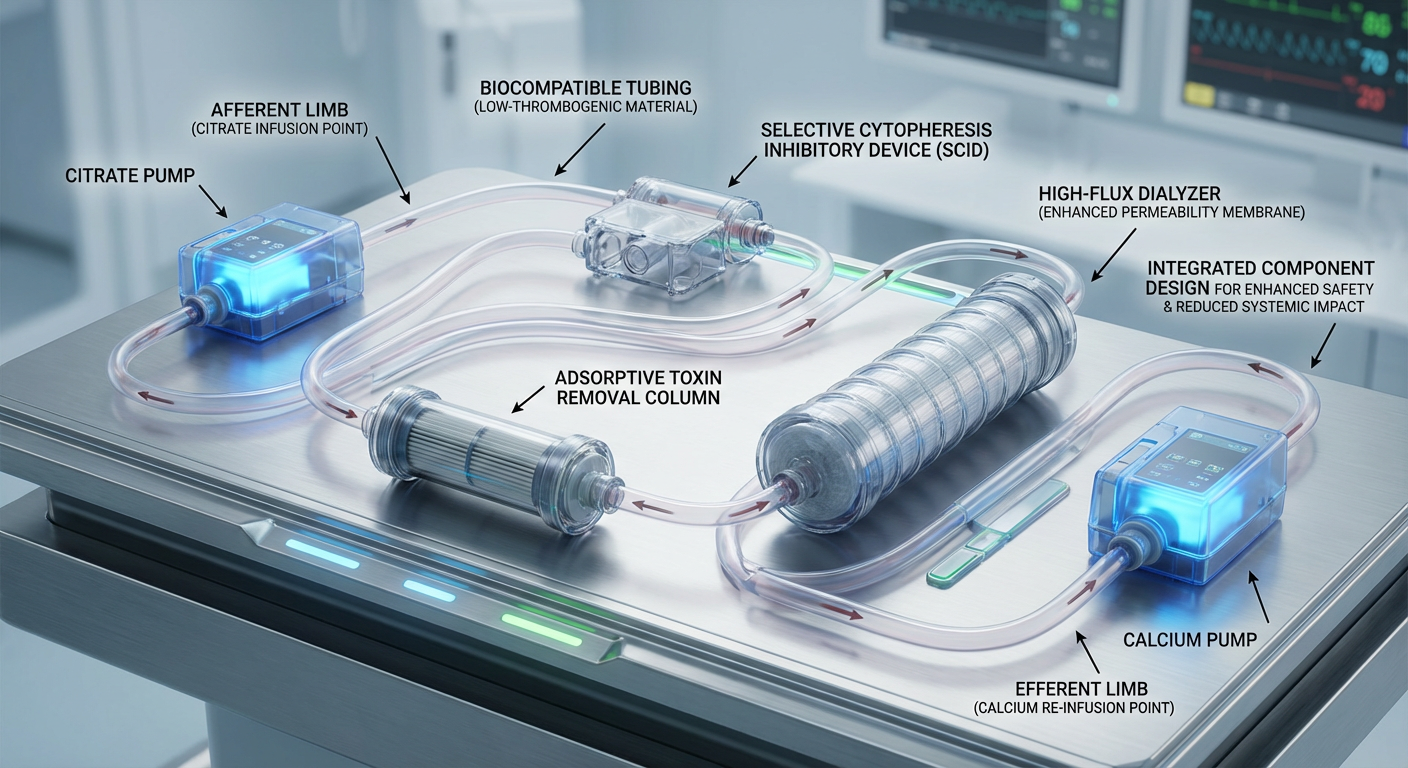
16. Intelligent Catheter Materials and Geometry for Hemolysis Prevention
Hemolysis, the rupture of red blood cells (RBCs) with subsequent release of intracellular hemoglobin, represents a critical and deleterious complication in extracorporeal blood circuits, particularly within kidney dialysis. Beyond the direct loss of oxygen-carrying capacity, intravascular hemolysis leads to systemic complications such as smooth muscle contraction due to free hemoglobin, chronic anemia, and an elevated risk of severe thromboembolism 52 53 . Understanding and mitigating the mechanical forces, thermal stresses, and surface interactions responsible for RBC destruction is paramount for advancing dialysis technology. This chapter will delve into the mechanisms of hemolysis and explore the cutting-edge material science and geometric design principles aimed at preventing this adverse event in dialysis catheters.
16.1 Mechanistic Underpinnings of Hemolysis in Extracorporeal Circuits
Hemolysis within hemodialysis systems primarily arises from mechanical stress, thermal fluctuations, and unsuitable surface interactions encountered by red blood cells as they navigate the extracorporeal circuit. The intricate interplay between the geometry and cell membrane of RBCs, coupled with their inherent mechanical properties and deformation characteristics, dictates their susceptibility to rupture 183 .
16.1.1 Mechanical Stress and Shear-Induced Hemolysis
Red blood cells are highly deformable, a property critical for their passage through microcapillaries. However, excessive mechanical shear stress, particularly within narrow lumens, at sharp bends, or across abrupt changes in flow velocity, can overwhelm their membrane integrity. Hemolysis characterization reveals that such stresses are prevalent in components like needles, grafts, and the broader hemodialysis process 183 184 . This principle underscores the importance of smooth, laminar flow and minimizing regions of high shear in catheter design.
16.1.2 Thermal Stress and Hemolysis
Temperature control is another critical factor in preventing hemolysis. Uncontrolled heating or cooling of blood can induce thermal stress on RBC membranes. Dialysis apparatuses often incorporate heat exchange mechanisms and temperature sensors to precisely regulate dialysate solution temperature 185 .
16.2 Advanced Biocompatible Materials for Catheter Surfaces
The interaction between blood components and the catheter surface is a primary determinant of hemolysis and thrombogenesis. Intelligent material selection and surface modification are crucial for creating a hemocompatible interface.
16.2.1 Core Biocompatible Materials
Catheters and other medical devices that contact blood must be constructed from biocompatible materials. Traditionally, suitable metallic or plastic materials, such as stainless steel, have been used, provided they possess the requisite strength and biocompatibility for intended use within the vascular system 186 . However, "biocompatible" extends beyond mere inertness; it implies active moderation of biological responses.
16.2.2 Biomolecular Anticoagulant Platforms
A significant advancement lies in the development of biomolecular anticoagulant platforms that can be integrated into medical devices. These platforms are designed to prevent coagulation without eliciting immunological reactions, a crucial factor for long-term patient safety 187 188 . This sophistication, remarkably, is coupled with relative ease of production.
16.2.3 Surface Coatings and Functionalization
Beyond intrinsic material properties, surface coatings can impart specific functionalities. While chitosan lactate particles are noted for non-compression hemostasis 189 190 184 illustrates how engineered biocompatible environments can protect biological components, a principle that can be extrapolated to protecting RBCs.
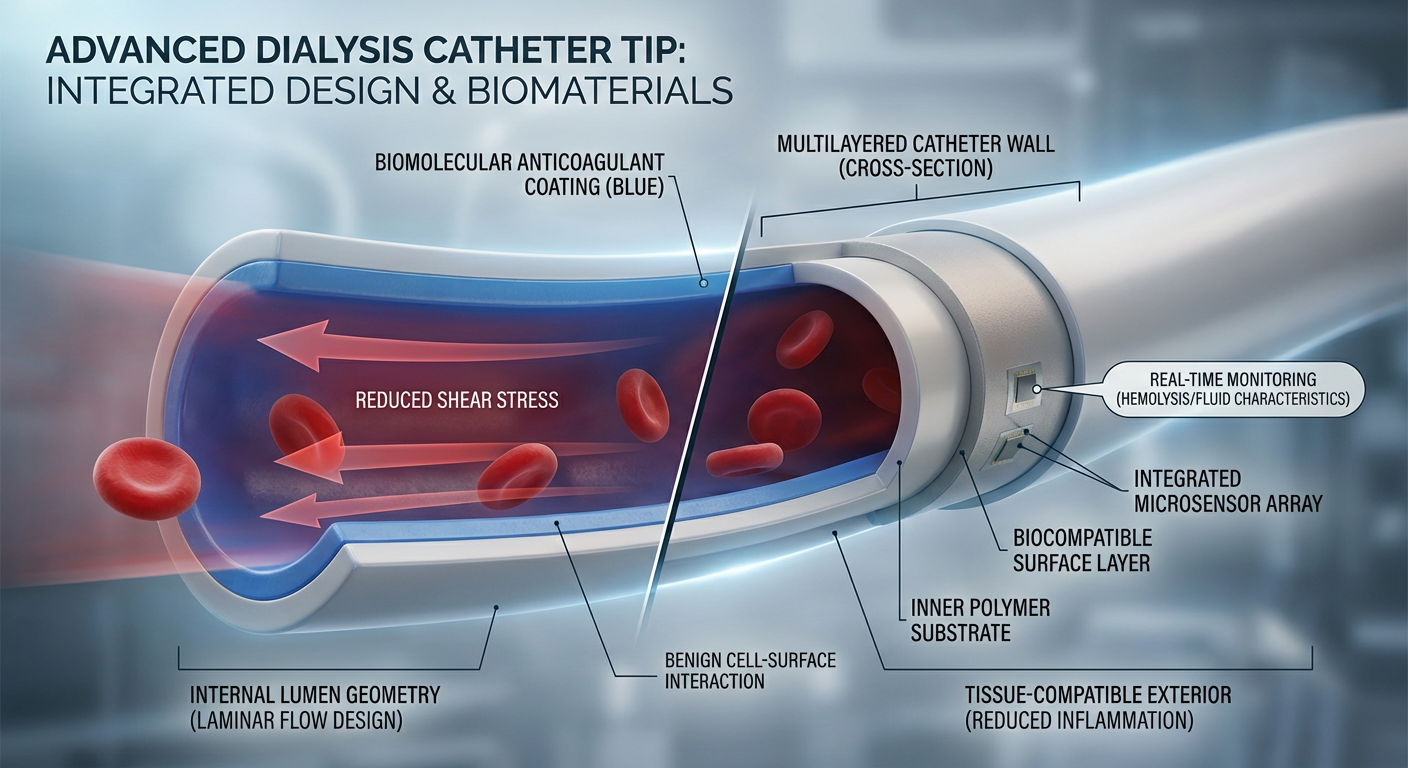
16.3 Optimized Catheter Geometry for Hemodynamic Preservation
The physical design of the catheter, from its macroscopic shape to its microscopic surface topography, fundamentally influences blood flow dynamics and, consequently, the risk of hemolysis.
16.3.1 Minimizing Shear Stress Through Lumen Design
Hemolysis is a direct consequence of mechanical forces. Therefore, catheter geometries that promote smooth, laminar blood flow and minimize turbulent eddies, recirculation zones, and abrupt changes in flow velocity are crucial. This involves optimizing: * Entrance and Exit Angles: Smooth transitions at the catheter's entry and exit points prevent high-velocity jets or sudden decelerations that can damage RBCs. * Internal Lumen Smoothness: Catheter surfaces should be ultra-smooth at the micro-scale to reduce friction and potential sites for mechanical deformation of RBCs. * Radius of Curvature: Bends in catheters, particularly sharp ones, induce secondary flows and regions of high shear. Optimizing the radius of curvature minimizes these detrimental effects.
The fundamental principle observed in hollow fiber technology—protecting cells from shear stress—is highly relevant to catheter geometry 184 . Extending this to the entire catheter design, including internal lumens, bifurcations, and connections, is paramount.
16.3.2 Macro- and Micro-Geometry Considerations
While specific geometric details for hemolysis prevention in catheters are not extensively detailed in the provided data, analogous principles from other fields offer insight. For instance, research into biohybrid microbots emphasizes the need to understand body fluid flows and viscous/fibrous microenvironments to navigate and control these devices 36 187 188highlights the engineering freedom available to optimize geometry for hemocompatibility.
16.4 Integrated Sensing and Real-time Monitoring
The integration of advanced sensor technology directly into catheters offers a paradigm shift in preventing hemolysis by enabling real-time monitoring and adaptive control.
16.4.1 Continuous Biomarker Monitoring
New sensor technologies allow for super-sensitive, live monitoring of human biomolecules 191 . While focused on dialysate composition, the underlying technology for direct in-line sensing is transferable to monitoring blood integrity.
16.4.2 Feedback Control for Hemolysis Prevention
The presence of sensors capable of detecting parameters like temperature (as discussed in 16.1.2) or even direct markers of hemolysis (e.g., free hemoglobin levels, though not explicitly detailed as catheter-integrated) enables sophisticated feedback control systems. If a sensor detects an unfavorable condition or an early sign of hemolysis, the system could automatically adjust flow rates, pressure, or temperature to mitigate the risk, akin to how dialysate temperature is controlled to prevent hemolysis 185 . Such intelligent systems can make dialysis safer by proactively preventing RBC damage.
16.5 Future Trajectories in Intelligent Catheter Design
The convergence of advanced materials, optimized geometries, and integrated sensing points towards a future where dialysis catheters are not merely conduits but intelligent systems actively safeguarding blood integrity. The development of biomolecular anticoagulant platforms with "kill switch" mechanisms, which are easy to produce despite their sophistication 187 188 . The overarching goal is to eliminate systemic and cardiovascular harm by making extracorporeal circuits—starting with the catheter—biologically intelligent and mechanically benign.
17. Arterial-Arterial Blood Flow Management in Single-Needle Dialysis
17.1 Introduction to Single-Needle Dialysis Modalities and Hemodynamic Considerations
Single-needle dialysis, a method employing a single vascular access point for both arterial blood withdrawal and venous blood return, represents a significant approach in renal replacement therapy, particularly when conventional dual-needle cannulation is challenging or contraindicated 192 .
17.2 Physiological Imperatives for Optimized Blood Flow in Extracorporeal Circuits
The fundamental principle governing the efficacy of hemodialysis is the rate of blood flow through the dialyzer; generally, higher blood flow translates directly to enhanced dialysis efficiency and superior solute clearance 193 . This high flow, however, demands a robust cardiovascular response and sophisticated management to prevent complications.
17.3 Vascular Access Modalities and Their Influence on Arterial Blood Flow Potential
The type of vascular access profoundly dictates the achievable blood flow rates and, consequently, the efficiency of single-needle dialysis.
17.3.1 Arteriovenous Fistulae and Grafts
Arteriovenous fistulae (AVF) and arteriovenous grafts (AVG) are generally preferred due to their capacity to support high blood flows and lower complication rates compared to central venous catheters 193 192 .
17.3.2 Central Venous Catheters
In contrast, central venous catheters, often necessitated in acute settings or for patients without mature AVF/AVG, generally do not support the same high blood flow rates as fistulae or grafts 193 194 195 .
17.4 Hemodynamic Monitoring: A Cornerstone of Safe Blood Flow Management
Given the cardiovascular stress induced by rapid fluid shifts and high extracorporeal blood flows during dialysis, meticulous hemodynamic monitoring is indispensable 196 . This is particularly crucial in single-needle modalities where efficient blood processing must be balanced against the patient's physiological tolerance.
17.4.1 Objectives of Hemodynamic Monitoring
Hemodynamic monitoring systems are designed to scrutinize a patient's blood flow dynamics, including blood oxygen content, arterial pressure, cardiac output, and overall fluid status 197 198 199 196 175 .
17.4.2 Monitoring Modalities
Both invasive and non-invasive methods contribute to comprehensive hemodynamic assessment. Invasive techniques, such as arterial catheters and pulmonary artery catheters, provide precise, continuous data but carry risks of infection and bleeding 73 200 196 193 201 72 .
17.4.2.1 Proactive Fluid and Blood Pressure Management
Optimizing fluid status is paramount, as both excessive and insufficient fluid administration can increase morbidity and length of hospital stay 196 197 198 .
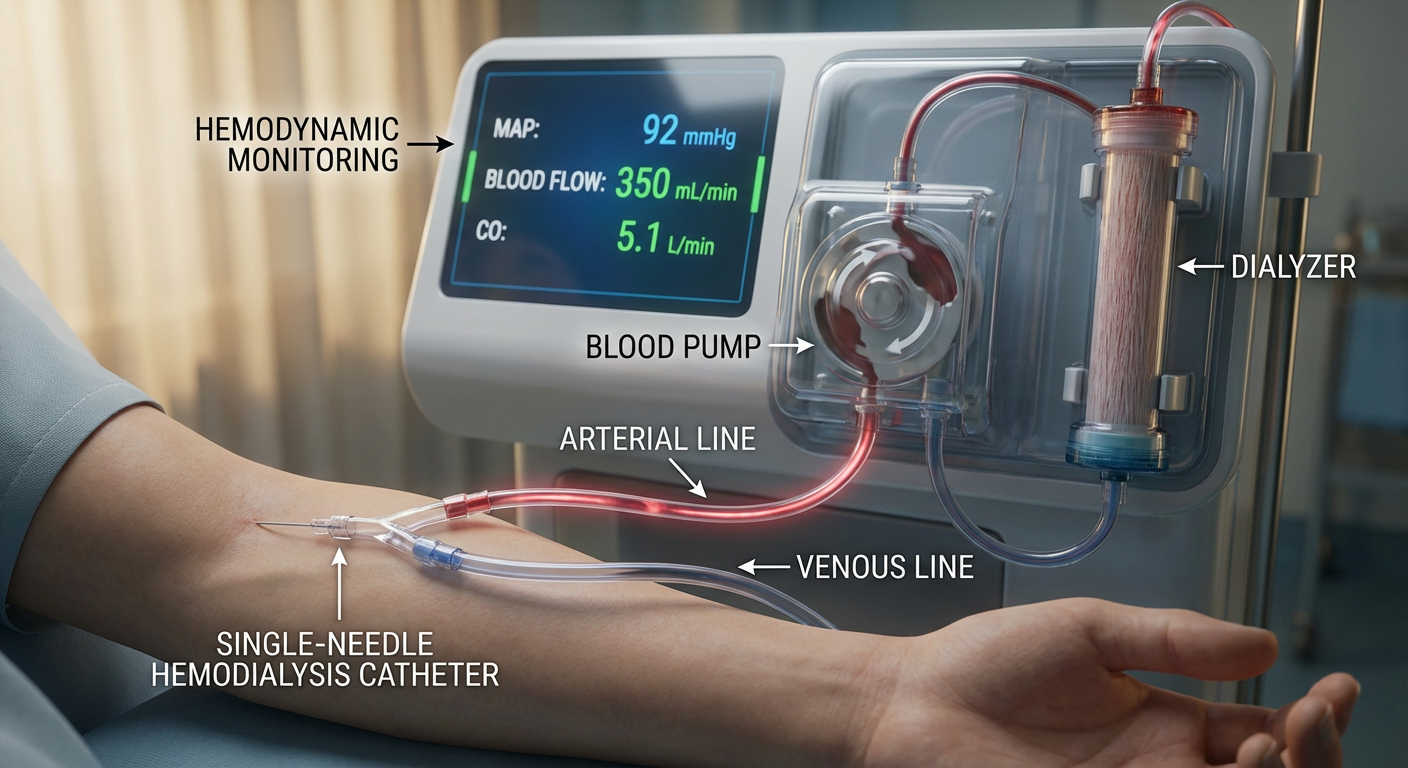
17.5 Ancillary Modalities in Blood Flow Management and Circuit Patency
Effective blood flow management extends beyond mere pump speed and patient hemodynamics, encompassing the intricate interplay of dialysate parameters and anticoagulation strategies.
17.5.1 Dialysate Flow and Composition
For stable outpatient prescriptions, the dialysate flow rate is typically set at 1.5 times the blood flow rate 193 . Careful selection of dialysate concentrate and flow is integral to optimizing clearance while maintaining patient electrolyte balance.
17.5.2 Dialysate Temperature Regulation
The standard dialysate temperature is 37°C 193 .
17.5.3 Anticoagulation for Circuit Patency
Maintaining the patency of the extracorporeal circuit is critical for sustained blood flow and efficient dialysis. Unfractionated heparin is commonly used as an anticoagulant during dialysis, infused via a side branch in the arterial portion of the circuit, entering the blood flowing towards the dialyzer 193 . Effective anticoagulation ensures uninterrupted blood flow, preventing premature termination of treatment and preserving the integrity of the blood components.
17.6 Technological Innovations and Process Redesign for Enhanced Single-Needle Modalities
The evolution of dialysis technology and procedural redesign is continually seeking to improve the safety and efficacy of single-needle dialysis. Innovations like the Ellipsys vascular access system, which offers a "single needle-stick" approach, exemplify this shift by providing a less invasive, patient-friendly, and highly functional access solution with reduced recovery time 192 49 200 . These integrated systems signify a broader paradigm shift towards minimizing systemic harm through sophisticated process and equipment redesign, optimizing not only blood flow management but also the entire extracorporeal treatment landscape.
18. Miniaturized Sensor Integration for In-Line Diagnostics
18.1 Evolution and Imperatives for Advanced In-Line Monitoring in Dialysis
The landscape of patient monitoring has undergone a profound evolution, transitioning from reliance on invasive procedures to sophisticated, device-based diagnostic platforms capable of long-term ambulatory surveillance 202 203 .
In the context of renal replacement therapy, particularly hemodialysis, the demand for precise, real-time, and continuous physiological and process parameter monitoring is paramount. There remains a pronounced unmet need for inexpensive, reliable, non-invasive methods for chronic fluid status monitoring and accurate, real-time cardiac output measurements, circumventing the limitations of earlier techniques like impedance cardiography which faced accuracy concerns 203 204 . The integration of miniaturized in-line sensors directly into the dialysis circuit offers a transformative approach, moving beyond intermittent, manual assessments to continuous, automated diagnostics that can preempt complications and optimize therapeutic delivery.
18.2 Key Sensor Modalities for Dialysis Process and Patient State Optimization
18.2.1 Real-Time Dialysate and Blood Temperature Management
Precision temperature control within the extracorporeal circuit is fundamental to patient safety and treatment efficacy in hemodialysis. A temperature sensor plays a critical role in closed-loop control systems, regulating dialysate temperature via a heater 205 . This control is not merely for patient comfort but serves several crucial functions: * Disinfection Efficacy: Ensuring the dialysate reaches the correct temperature for effective disinfection 205 . * Bicarbonate Concentration: Influencing or determining the sodium bicarbonate concentration, a vital component of the dialysate buffer system 205 . * Patient Hemodynamics: Maintaining the dialysate at an appropriate, often individualized, temperature is crucial to prevent adverse events 205 . Variability in dialysate temperature has been implicated in patient outcomes, with studies exploring the relationship between hypotension and cerebral ischemia during hemodialysis, and systematic reviews investigating the effects of lowering dialysate temperature in chronic hemodialysis patients.
Modern temperature monitoring devices encompass a variety of product types, including contact and non-contact sensors, with outputs ranging from digital to analog, and connectivity options including wired and wireless 206 . Integrating such specialized temperature sensors directly into the dialysate flow loop provides immediate feedback for dynamic adjustment, preventing thermal stress to blood components and optimizing the physical-chemical properties of the dialysate.
18.2.2 In-Line Fluid Status and Hemodynamic Monitoring
The accurate assessment of a patient's fluid status and cardiovascular function during dialysis is paramount to mitigating intradialytic hypotension, a common and potentially severe complication. While implantable bioimpedance sensors integrated into biventricular pacemakers exist for monitoring thoracic fluid content in heart failure patients, they are often expensive and limited in application 203 .
Bioreactance technology, which offers enhanced accuracy and lower cost compared to impedance cardiography, presents a promising avenue for non-invasive, continuous cardiac output and fluid status monitoring 203 . Adapting such principles for in-line application within the dialysis circuit could provide real-time indicators of fluid shifts and cardiovascular stability.
The broader category of hemodynamic monitoring systems, which measure a patient's cardiovascular function, is expanding significantly, with a projected CAGR of 6.5% 207 208 . Integrating these miniaturized systems directly into the extracorporeal blood path, or utilizing advanced non-invasive techniques proximal to the patient, offers unprecedented opportunities for closed-loop fluid management and adaptive dialysis prescriptions. This aligns with the growth of remote patient monitoring (RPM) devices, which facilitate the real-time transmission of patient data to healthcare experts, improving timely intervention and outpatient care.

18.3 Integration Pathways and Closed-Loop Control Mechanisms
The true power of miniaturized sensor integration lies in its capacity to enable sophisticated closed-loop control systems. As detailed in the context of dialysate temperature control, an in-line temperature sensor feeds real-time data to a control unit, which then actuates a heater to maintain the optimal temperature 205 . This fundamental concept can be extended to other critical parameters.
(e.g., Temperature, Conductivity, Blood Flow)" participant DCU as "Dialysis Machine Control Unit" participant A as "Actuator
(e.g., Heater, Pump, Ultrafiltration Controller)" S->>DCU: "Real-time Parameter Data
(e.g., Dialysate Temp = X°C)" DCU->>DCU: "Compare to Defined Setpoint/Algorithm" alt "Parameter Deviation Detected" DCU->>A: "Transmit Adjustment Command" A-->>DCU: "Confirmation/Status Update" Note right of A: "System Parameter Modulated" else "Parameter Within Range" DCU->>DCU: "Maintain Current Settings" end S->>DCU: "Continuous Feedback Loop for Optimization"
This continuous feedback loop allows for dynamic, micro-adjustments that maintain physiological and process stability, a significant advancement over systems reliant on periodic, manual intervention. The integration of multi-parameter sensing capabilities—encompassing temperature, conductivity, pH, blood flow, and potentially more advanced markers of fluid status or blood composition—within a single, miniaturized module positioned directly in the flow path is a crucial development. Such systems not only optimize the efficiency of the dialysis process but also provide early warning signs of patient instability or machine malfunction, facilitating proactive clinical responses. The ongoing miniaturization trend promises further enhancements in device capabilities and wider applicability, especially in shifting monitoring from inpatient to ambulatory and home-care settings 202 204 .
19. Process Automation and AI for Personalized Dialysis Protocols
The evolution of kidney dialysis, historically reliant on standardized protocols, is undergoing a profound paradigm shift driven by advanced process automation and artificial intelligence (AI). This transformation aims to transcend generic treatment regimens, moving towards highly individualized therapies that dynamically adapt to real-time physiological data, thereby mitigating systemic and cardiovascular complications intrinsic to conventional hemodialysis. The integration of AI, sophisticated sensing technologies, and closed-loop control systems promises a future of precision nephrology, fundamentally redefining patient care and outcomes.
19.1 AI-Driven Personalized Dialysis Prescriptions and Fluid Management
Central to the advancement of personalized dialysis is the application of AI in refining treatment prescriptions, particularly concerning fluid management. Interdialytic weight gain (IDWG) remains a significant challenge in hemodialysis, contributing to cardiovascular instability and other adverse events 209 . AI-driven predictive analytics integrate multi-modal data streams to address this.
19.1.1 Predictive Analytics for Volume Status Optimization
AI leverages data from wearable bioimpedance sensors and historical dialysis treatment parameters to anticipate fluid overload states with increased precision 209 .
19.1.2 Hemodynamic Monitoring and Hypotension Prediction
Beyond fluid balance, AI significantly impacts hemodynamic stability during dialysis. Advanced hemodynamic monitoring systems, such as those developed by Cheetah Medical and Edwards Lifesciences, provide real-time data on heart function and fluid status 72 210 . These systems, particularly the Acumen Hypotension Prediction Index software, utilize AI algorithms to alert clinicians in advance of a patient developing dangerously low blood pressure 210 . This predictive capacity is critical, as intradialytic hypotension is a common and detrimental complication that often leads to organ ischemia and increased morbidity. The integration of AI allows for adaptive interventions, such as modifications to ultrafiltration rate, dialysate sodium, or even the administration of vasopressors, preventing hemodynamic collapse.
19.2 Automated Closed-Loop Control Systems in Dialysis Equipment
Process automation within dialysis machinery is transitioning from pre-programmed fixed settings to adaptive, closed-loop control systems, augmented by AI. This represents a critical shift towards autonomous, responsive treatment delivery.
19.2.1 Real-time Parameter Adjustment and Mechanistic Control
Modern dialysis systems incorporate sophisticated mechanisms for closed-loop control of vital operational parameters. For instance, temperature sensors are integral to maintaining precise dialysate temperature, actuated by controllers and heaters 205 .
19.2.1.1 AI Enhancement of Closed-Loop Systems
AI profoundly enhances these inherent closed-loop systems by improving pattern recognition and filtering environmental or physiological noise from sensor data 211 . This means that a dialysis machine, guided by AI, can autonomously modulate ultrafiltration rates, dialysate composition (e.g., sodium, bicarbonate), and flow rates, continuously optimizing treatment delivery to the individual's needs rather than relying on static, pre-set values.
(Integrated Sensors)" participant AIProcessor as "Edge AI Processor" participant Clinician as "Clinician Interface/Monitoring" participant Actuators as "Dialysis Machine Actuators" Sensors->>AIProcessor: Transmit Real-time Physiological Data (e.g., bioimpedance, HR, BP) DialysisMachine->>AIProcessor: Transmit Real-time Dialysis Data (e.g., UF rate, conductivity, pressure) AIProcessor->>AIProcessor: Process and Integrate Data AIProcessor->>AIProcessor: Run Predictive Analytics (e.g., Fluid Overload Risk, Hypotension Prediction) AIProcessor->>AIProcessor: Generate Personalized Prescription Adjustments AIProcessor->>Actuators: Send Control Commands (e.g., Adjust UF rate, Dialysate Composition, Flow) Actuators->>DialysisMachine: Execute Parameter Changes AIProcessor->>Clinician: Display Real-time Status & Proposed/Executed Adjustments Clinician->>AIProcessor: Override/Confirm (Optional) Note over Clinician,Actuators: Continuous Feedback Loop
19.3 Advanced Sensing and Monitoring for Granular Data Acquisition
The foundation for intelligent automation and personalized care lies in the pervasive deployment of advanced sensing and monitoring technologies that capture a granular, continuous stream of patient physiological data.
19.3.1 Wearable, Implantable, and Flexible Monitoring Devices
The shift towards personalized medicine necessitates continuous, non-invasive or minimally invasive monitoring. Wearable bioimpedance sensors are critical for predicting fluid overload 209 82 . This capability ensures that comprehensive physiological data, including cardiac function and fluid status, can be collected continuously, even outside the clinical setting.
19.3.2 Comprehensive Patient Monitoring Ecosystem
The broader patient monitoring device market supports this data-rich environment, encompassing a wide array of sensors: * Vital Parameter Monitoring: Cardiac, respiratory, temperature, and multiparameter devices provide foundational physiological insights 212 213 214 215 179 . * Specialized Monitoring: Beyond basic vitals, devices for fetal and neonatal monitoring, weight monitoring, and neuro-monitoring contribute to a holistic patient profile 212 213 . * Remote Patient Monitoring (RPM): The capability to monitor patients remotely allows for continuous data collection and early intervention, extending the personalized care paradigm beyond the confines of the dialysis unit 212 213 .
19.3.3 Emerging Microrobot Technologies
Looking ahead, AI-driven microrobots represent a frontier in personalized diagnostics and therapy. These microscopic agents can perform single-cell analyses, measure localized chemical concentrations, and monitor biochemical pathways in situ 211 . While not yet directly implemented in dialysis, their capability to provide highly granular, localized biological data has significant implications for future personalized medicine, offering unprecedented insight into cellular and biochemical responses to dialysis treatment.
19.4 Prognostic AI for Early Intervention and Disease Management
Beyond immediate treatment adjustments, AI plays a pivotal role in early risk stratification and the long-term management of kidney disease, potentially preventing or delaying the need for dialysis itself.
19.4.1 KidneyIntelX: An AI-Driven Prognostic Tool
KidneyIntelX technology exemplifies AI's power in providing early, actionable prognoses for chronic kidney disease (CKD) progression 216 217 .
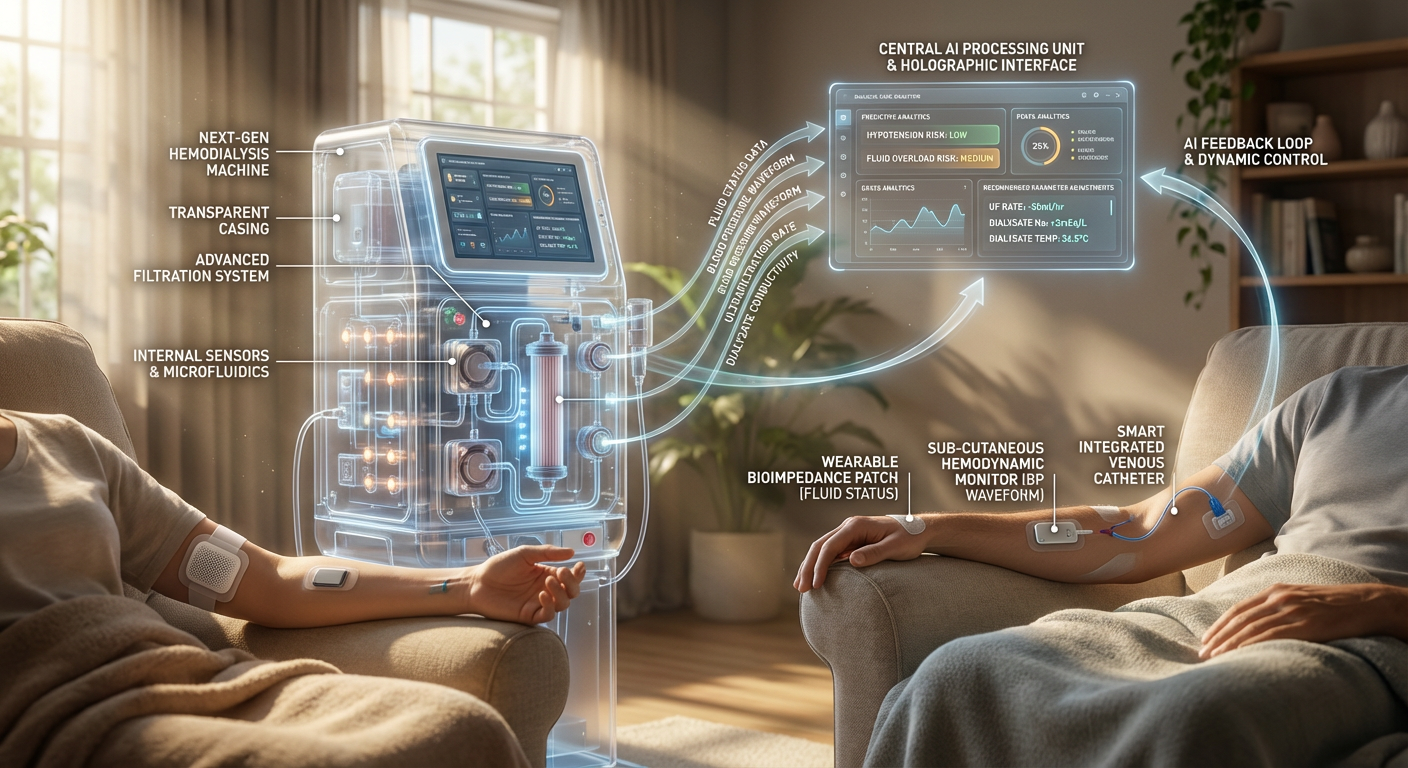
19.5 The Integrated AI-Automation Ecosystem for Adaptive Dialysis
The confluence of AI-driven predictive analytics, advanced sensing, and automated closed-loop control systems forms a powerful, integrated ecosystem for adaptive dialysis. This ecosystem moves beyond the limitations of manual adjustments and static protocols, establishing a dynamically responsive treatment modality.
This integrated system operates as a continuous feedback loop: 1. Data Acquisition: Comprehensive physiological data from wearable, implantable, and machine-integrated sensors (bioimpedance, hemodynamic, vital parameters) is continuously streamed 209 82 . 2. AI-Driven Analysis and Prediction: AI algorithms process this massive dataset, identify subtle patterns, filter noise, and generate predictive insights into patient-specific risks (e.g., fluid overload, hypotension, IDWG) 209 211 210 . 3. Personalized Prescription and Adjustment: Based on AI's predictions, individualized treatment parameters (e.g., ultrafiltration volume and rate, dialysate composition, treatment duration) are refined in real-time 209 . 4. Automated Control: The AI system directly interfaces with the dialysis machine's actuators, implementing closed-loop adjustments to dialysate temperature, flow rates, and ultrafiltration profiles 205 211 . 5. Clinician Oversight and Intervention: While highly automated, the system provides clinicians with transparent data, predictions, and proposed/executed changes, allowing for override or confirmation, ensuring human oversight remains integral.
This symbiotic relationship between human expertise and advanced technology heralds a new era for kidney dialysis, where precision, adaptability, and proactive intervention minimize harm and maximize the well-being of patients on long-term renal replacement therapy.
20. Enhanced Uremic Toxin Removal Mechanisms and Kinetics
The landscape of renal replacement therapy is evolving, driven by the persistent challenge of comprehensively clearing the diverse array of uremic toxins that contribute to systemic and cardiovascular morbidities in patients with end-stage renal disease (ESRD). While conventional hemodialysis (HD) effectively removes small, water-soluble solutes, significant limitations remain for larger and protein-bound molecules, necessitating the exploration of advanced mechanisms and kinetic considerations 218 219 .
20.1 Current Limitations in Uremic Toxin Clearance
Despite decades of advancements, conventional hemodialysis (HD) and even modern hemodiafiltration (HDF) struggle with the complete spectrum of uremic solutes. This incomplete removal contributes to chronic inflammation, cardiovascular dysfunction, and other uremic sequelae.
20.1.1 Inadequate Removal of Protein-Bound Uremic Toxins (PBUTs)
Protein-bound uremic toxins (PBUTs) represent a significant class of solutes poorly cleared by standard hemodialysis modalities 218 .
20.1.2 Heterogeneity of Uremic Solute Kinetics and Challenges in Dialysate Regeneration
The kinetic efficiency of urea removal, which is generally high in conventional single-pass hemodialysis, does not serve as an accurate surrogate for the clearance efficiency of the entire spectrum of uremic solutes 219 220 .
20.2 Advanced Strategies for Enhanced Toxin Removal
To overcome the limitations of conventional therapies, several advanced mechanisms and strategic augmentations are being developed and investigated.
20.2.1 Hemodiafiltration (HDF) and Augmented Hemodialysis
Hemodiafiltration (HDF) offers improved removal of middle molecules compared to conventional HD, primarily through convective transport 218 220 . This augmentation typically involves higher convective volumes, specialized membrane designs, or a combination of diffusive and adsorptive elements.
20.2.2 Membrane Adsorption
Membrane adsorption represents a direct approach to remove solutes that are poorly cleared by diffusion or convection, particularly PBUTs and certain middle molecules 218 219 .
20.2.3 Binding Competition for Protein-Bound Uremic Toxins (PBUTs)
A particularly innovative strategy involves binding competition, where a 'displacer' molecule is infused pre-dialyzer 218 .
20.3 Kinetic Modeling and Regenerative Systems
Understanding and predicting the kinetics of uremic toxin removal is paramount for optimizing existing therapies and developing next-generation systems.
20.3.1 Mathematical Models for Predictive Kinetics
Precise mathematical modeling is essential for comparing and optimizing different toxin removal strategies 218 . For instance, in assessing PBUT and displacer kinetics, a sophisticated model integrates several key components:
20.3.1.1 Three-Compartment Patient Model
This model captures the distribution and dynamics of PBUTs and displacers within the patient's body, typically delineating compartments such as plasma, interstitial fluid, and intracellular fluid, accounting for protein binding kinetics within these spaces 218 .
20.3.1.2 Arterial/Venous Tube Segment Model
This segment accounts for the transient changes in concentration as blood flows through the extracorporeal circuit, from the arterial access point, past the displacer infusion site, and towards the dialyzer 218 .
20.3.1.3 Dialyzer Model
This component simulates the mass transfer of solutes across the dialyzer membrane, considering factors such as membrane surface area, ultrafiltration rate, blood flow, dialysate flow, and specific removal mechanisms (diffusion, convection, or adsorption) 218 .
20.3.2 Challenges in Closed-Loop Dialysate Regeneration
The development of wearable or portable artificial kidney systems, which rely on closed-loop dialysate regeneration, introduces unique kinetic challenges 219 . Overcoming these kinetic hurdles for small solutes, alongside enhanced removal of PBUTs and middle molecules, is critical for the success of future compact dialysis technologies.
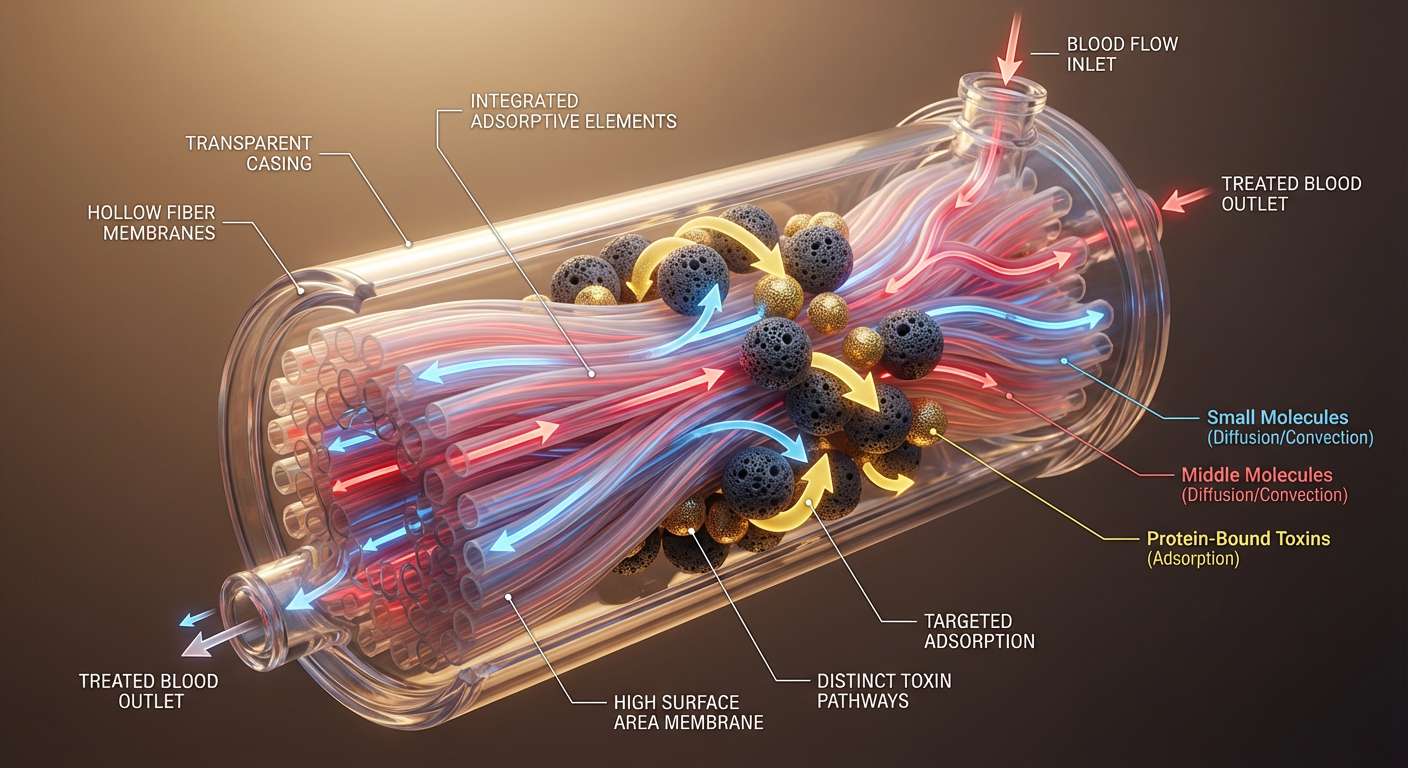
21. Achieving Cardiovascular Neutrality in Kidney Dialysis
The intricate interplay between renal dysfunction and cardiovascular disease (CVD) represents a profound clinical challenge, often culminating in exacerbated morbidity and mortality in patients undergoing kidney dialysis. Achieving "cardiovascular neutrality" in this cohort signifies a paradigm shift towards therapeutic strategies and equipment designs that not only sustain renal replacement but also actively mitigate or eliminate the systemic cardiovascular harm traditionally associated with kidney failure and its treatment. This deep dive explores the pathophysiological underpinnings, advanced monitoring modalities, and preventative strategies critical to realizing this ambitious goal.
21.1 The Pervasive Cardiorenal Syndrome in End-Stage Kidney Disease
Patients with chronic kidney disease (CKD) and end-stage kidney disease (ESKD) face a disproportionately high burden of cardiovascular complications, including heart failure (HF), coronary artery disease, myocardial infarction (MI), stroke, and peripheral vascular disease 221 . This heightened risk is multifactorial, encompassing traditional cardiovascular risk factors alongside unique consequences of kidney dysfunction such as volume overload, anemia, systemic inflammation, and uremic cardiomyopathy. The goal of cardiovascular neutrality aims to interrupt these deleterious feedback loops, preventing the progression of CV damage and improving patient outcomes.
21.2 Hemodynamic Instability: A Central Challenge and its Monitoring Imperative
Hemodynamic instability, characterized by fluctuations in blood pressure and cardiac output, is a critical issue in patients with kidney disease, particularly those undergoing dialysis or at high risk for acute kidney injury (AKI). Intraoperative hypotension (IOH), for instance, defined as mean arterial blood pressure (MAP) < 65 mm Hg for at least 1 minute, is directly correlated with adverse perioperative outcomes, including cardiovascular events, AKI, and increased mortality, with organ damage being dose-dependent to the duration and severity of hypotensive events 222 .
21.2.1 Evolution and Applications of Hemodynamic Monitoring
The demand for precise hemodynamic assessment has driven significant advancements in monitoring technologies. These systems are crucial across various clinical settings, including critically ill patients with multiple organ system disease, post-operative cardiovascular patients, and those with underlying cardiovascular conditions 223 224 225 .
21.2.1.1 Invasive Monitoring Techniques
Historically, invasive methods such as pulmonary artery catheters have been considered the gold standard for hemodynamic monitoring, particularly in cases of severe cardiovascular disease 226 194 227 .
21.2.1.2 Non-Invasive and Minimally Invasive Hemodynamic Monitoring
The focus has shifted towards technologies that offer comprehensive hemodynamic data without the invasiveness of traditional methods. Impedance cardiography, explored for over half a century, provides a noninvasive "look into a patient's hemodynamic health," assisting clinicians in determining early appropriate therapeutic interventions for conditions like artery blockages, heart failure, and hypertension 228 229 230 231 232 233 .
21.2.1.3 Specialized Monitoring in Critical Care and Dialysis
In critically ill patients, hemodynamic monitoring systems are increasingly utilized due to the rising prevalence of cardiovascular disorders and their diverse applications 234 235 236 237 221 238 .
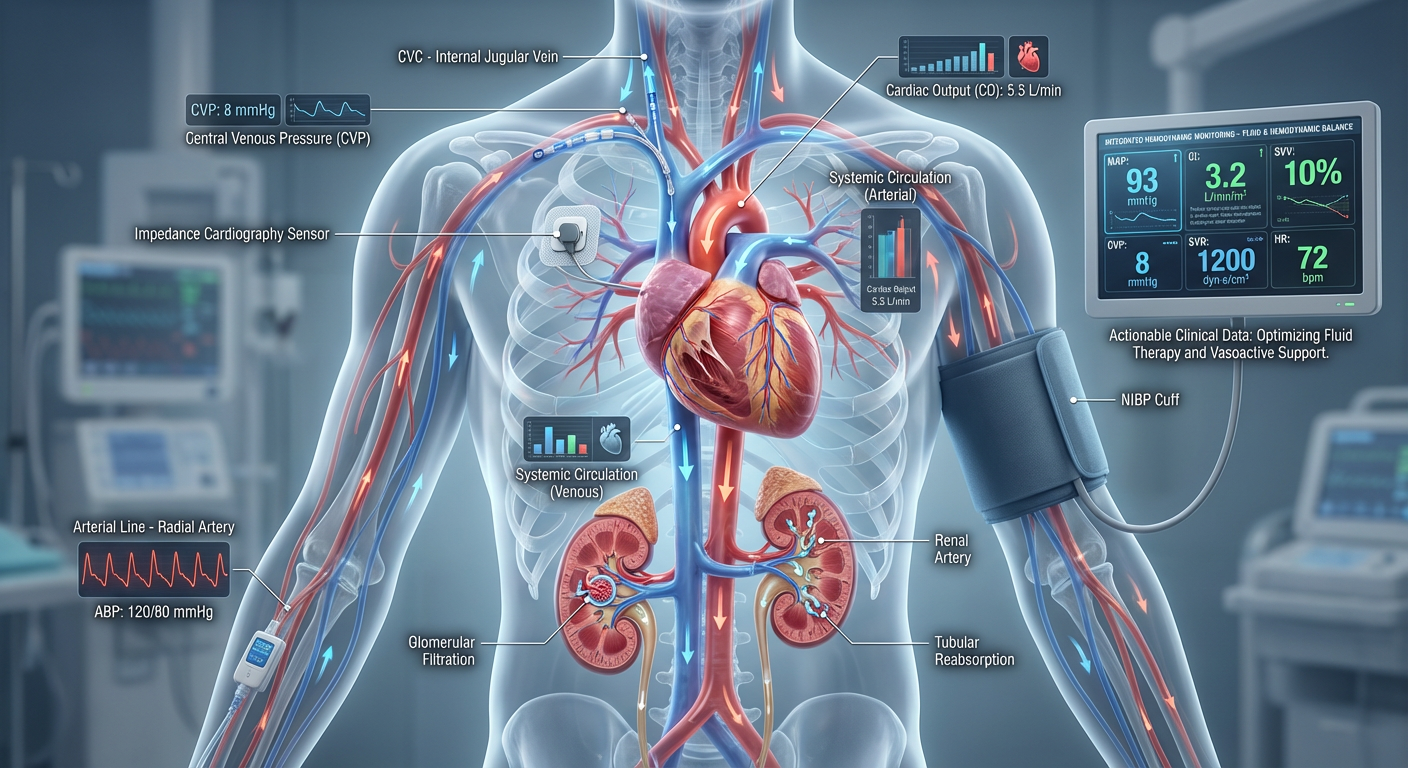
21.3 Proactive Prevention of Acute Kidney Injury for Cardiovascular Protection
Preventing AKI is a cornerstone of achieving cardiovascular neutrality, as AKI not only impacts short-term morbidity and mortality but also influences long-term outcomes, including CKD progression and increased cardiovascular risk 239 .
21.3.1 The KDIGO Bundle of Care and its Implementation
The 2012 KDIGO guidelines recommend a bundle of supportive measures to prevent and treat AKI, particularly in high-risk patients. These measures include discontinuing nephrotoxins, optimizing fluid status and hemodynamics, utilizing functional hemodynamic monitoring, regular monitoring of serum creatinine and urine output, and avoiding hyperglycemia 175 239 237 .
(TIMP2, IGFBP7)" participant KDIGO as "KDIGO Guidelines" participant HDMonitoring as "Hemodynamic Monitoring" participant Treatment as "Intervention/Treatment" HCP->>Patient: "Identify high-risk patient for AKI (e.g., post-cardiac surgery)" Patient->>BioMarkers: "Biomarker assessment (TIMP2, IGFBP7)" BioMarkers-->>HCP: "Positive for high AKI risk" HCP->>KDIGO: "Initiate KDIGO Bundle",, KDIGO->>HDMonitoring: "Recommend functional hemodynamic monitoring", KDIGO->>HCP: "Advise meticulous volume management" KDIGO->>HCP: "Recommend blood pressure optimization", KDIGO->>HCP: "Advise avoidance of nephrotoxins", KDIGO->>HCP: "Recommend prevention of hyperglycemia",, HCP->>Treatment: "Implement KDIGO-guided interventions" Treatment->>Patient: "Optimized fluid status, hemodynamics, reduced nephrotoxin exposure" HDMonitoring->>HCP: "Provide real-time data for ongoing adjustment", HCP->>Patient: "Continuous monitoring and adjustment to prevent AKI and CV harm"
21.3.2 Broader Implications for Cardiovascular Health
Beyond direct AKI prevention, proactive fluid management and blood pressure optimization, guided by advanced hemodynamic monitoring, are critical for mitigating cardiovascular stress. For instance, in patients with pre-existing cardiovascular disease, conditions like erectile dysfunction treatments require appropriate hemodynamic monitoring due to potential hypotensive effects 240 . Early intervention and continuous monitoring help maintain cardiac function and prevent adverse remodeling, contributing to overall cardiovascular neutrality.
21.4 Dialysis Modalities and Associated Cardiovascular Considerations
Kidney dialysis itself, whether hemodialysis or peritoneal dialysis, introduces specific cardiovascular challenges that must be addressed to achieve neutrality.
21.4.1 Vascular Access and Bacteremia Risks
Vascular access for hemodialysis, particularly temporary catheters, carries risks. The National Kidney Foundation-Dialysis Outcomes Quality Initiative (NKF-DOQI) guidelines recommend specific duration limits for temporary catheters in different venous sites (e.g., no longer than 5 days in the femoral vein and 21 days in the internal jugular/subclavian site) to minimize the cumulative risk of bacteremia 194 241 .
21.4.2 Fluid Shifts and Myocardial Stress
Dialysis procedures involve significant fluid removal and electrolyte shifts, which can induce hemodynamic instability and myocardial stunning. Advanced hemodynamic monitoring during dialysis sessions is crucial to optimize fluid removal rates, prevent hypotensive episodes, and minimize cardiac stress. Non-invasive methods are particularly advantageous here to avoid further invasiveness in this already vulnerable patient population.
21.5 Advanced Technologies and Future Directions
The quest for cardiovascular neutrality is increasingly supported by innovative technologies.
21.5.1 Artificial Intelligence in Monitoring and Diagnostics
Artificial intelligence (AI) is transforming disease detection and drug screening by analyzing large datasets from patient monitoring systems. AI can predict drug performance, toxicity, and therapeutic potential with higher precision 119 . This capability is directly applicable to managing complex cardiorenal patients, allowing for more personalized and predictive hemodynamic management.
21.5.2 Microrobotics for Targeted Interventions
Micro- and nanoscale robots are emerging tools that can replicate key aspects of organ behavior, fluid dynamics, or cell interactions, creating advanced models for cardiovascular disorders. AI can interpret data from these platforms to better understand disease progression, identify biomarkers, or test therapeutic responses in a highly localized manner 119 . While still nascent, this technology holds promise for future targeted diagnostics or drug delivery systems in cardiorenal disease.
21.5.3 Integrated Monitoring Systems
The market for hemodynamic monitoring systems is experiencing growth driven by the rising prevalence of cardiovascular diseases and diverse applications in critically ill patients 234 235 236 178 215 242 . The integration of such diverse monitoring capabilities into a unified platform will facilitate a holistic approach to patient management, moving closer to true cardiovascular neutrality.
21.6 Conclusion
Achieving cardiovascular neutrality in kidney dialysis represents a multifaceted endeavor requiring a comprehensive understanding of cardiorenal pathophysiology, the judicious application of advanced hemodynamic monitoring, strict adherence to preventative guidelines like KDIGO, and the integration of emerging technologies. The ultimate goal is to provide renal replacement therapy that not only sustains life but also actively protects and preserves cardiovascular health, thereby improving the long-term prognosis and quality of life for patients with ESKD.
22. Mitigation of Systemic Inflammatory and Immunological Responses
The systemic inflammatory and immunological responses elicited by conventional dialysis modalities represent a critical challenge, contributing significantly to patient morbidity and mortality. A paradigm shift in kidney dialysis necessitates the meticulous redesign of processes and equipment to abrogate these detrimental reactions. The fundamental principle driving this evolution is the strategic deployment of biocompatible materials and advanced biomolecular platforms that minimize foreign body reactions and chronic inflammation.
22.1 The Imperative of Biocompatibility in Dialysis Systems
Traditional dialysis exposes a patient's blood to non-native surfaces, invariably triggering immune responses and inflammatory cascades. Modern advancements focus on materials and systems engineered to be immunologically inert, thereby mitigating these adverse effects.
22.1.1 Material Selection and Design for Immunological Inertness
The core strategy revolves around selecting materials that are inherently less provocative to the host immune system. Natural materials possessing a three-dimensional structure exhibit inherent biocompatibility with cells, facilitating superior cellular attachment, proliferation, tissue formation, regeneration, and healing processes 244 .
However, a critical consideration is the origin of these natural materials; when derived from other mammalian sources (e.g., bovine, porcine, or murine), they can still elicit immuno-pathological reactions 244 245 246 .
The deployment of biocompatible materials is not a one-size-fits-all approach; a biological dentistry perspective underscores the importance of considering each patient's unique body chemistry, as a material safe for one individual might induce allergic reactions or inflammation in another 35 . This highlights the potential future for personalized material selection in dialysis.
22.1.1.1 Advanced Manufacturing for Biocompatible Components
The versatility of additive manufacturing technologies, specifically 3D printing, significantly expands the scope for incorporating biocompatible materials into complex designs. This technology supports the use of a wide range of materials, including plastics, metals, ceramics, and specialty biocompatible filaments, thereby fostering innovation in medical device design 247 248 .
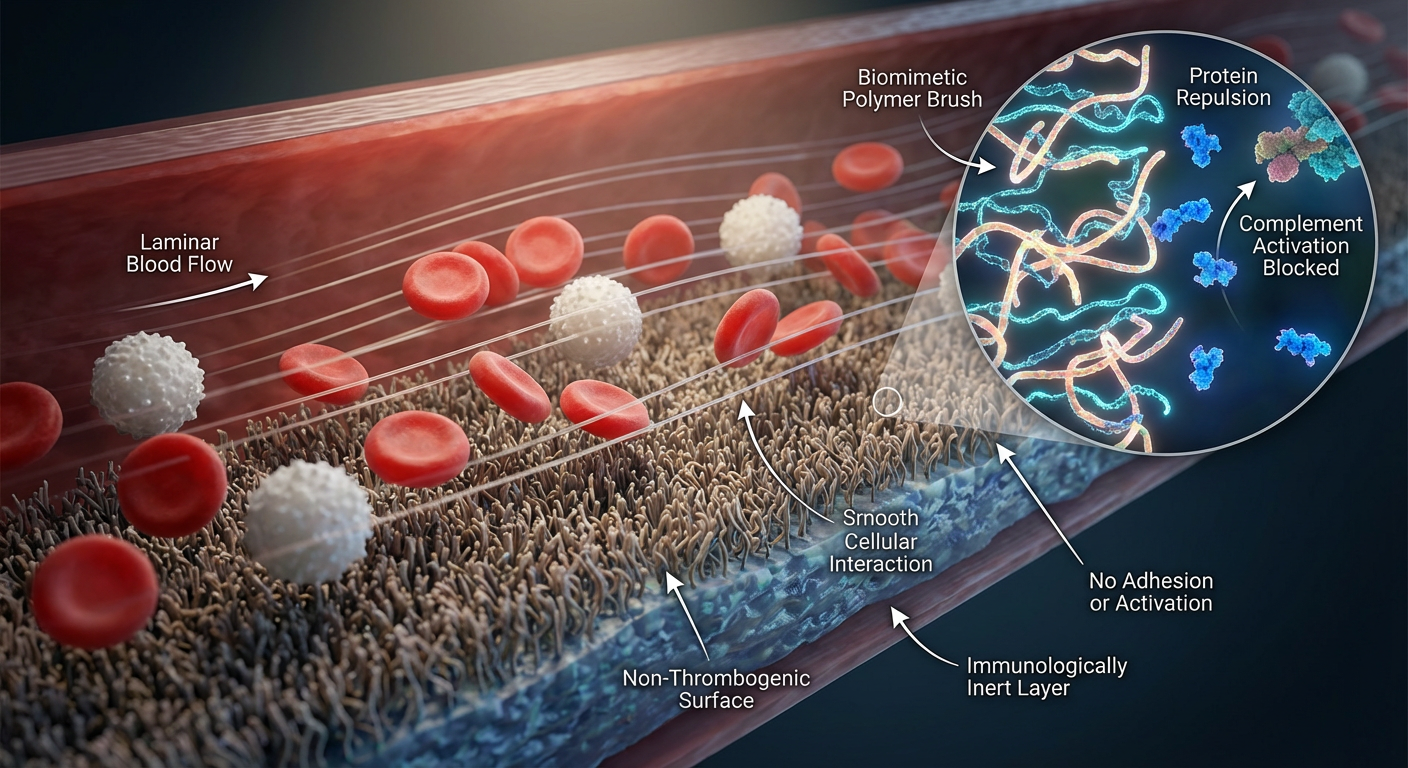
22.1.2 Novel Biomolecular Platforms for Systemic Mitigation
Beyond passive material biocompatibility, active biomolecular platforms are emerging that specifically target and neutralize immunological triggers. A groundbreaking development is a biomolecular anticoagulant platform designed for critical applications, including kidney dialysis 249 .
This platform leverages communication via the extracellular environment, allowing for the design of structures with any desired shape and the integration of a 'kill switch' mechanism 249 .
22.1.3 The Future Role of Biohybrid Microrobotics
Looking further into the future, biohybrid microrobots hold immense promise for precise internal interventions, including potential roles within the dialysis landscape 36 . The successful integration of such systems would represent an ultimate achievement in mitigating foreign body responses.
23. Optimization of Dialysis Treatment Time and Patient Workflow
23.1 Introduction: The Multifactorial Nature of Efficiency in Renal Replacement Therapy
The global prevalence of End-Stage Renal Disease (ESRD) necessitates renal replacement therapy (RRT), with dialysis serving as a critical intervention for sustaining life when native renal function is inadequate. Achieving optimal patient outcomes, enhancing quality of life, and ensuring economic sustainability within dialysis care mandates a rigorous focus on the optimization of treatment time and patient workflow. This optimization is not merely a matter of clinical protocol but is profoundly influenced by a complex interplay of financial viability, technological innovation, regulatory frameworks, and logistical efficiency. While direct clinical parameters of treatment time are implicitly linked to technology and staffing, the overarching systemic factors discussed herein dictate the feasibility and extent of such improvements.
23.2 Economic and Policy Impediments to Advanced Dialysis Optimization
The foundational ability of dialysis providers to implement advanced, time-efficient treatments and streamlined patient workflows is critically contingent upon their financial robustness and the prevailing regulatory landscape.
23.2.1 Prohibitive Capital Expenditure for Advanced Modalities
The acquisition and maintenance of advanced dialysis equipment represent a significant financial barrier. Hemodialysis machines, for instance, can range from USD 10,000 to over USD 45,000, with costs varying based on installed technology and advancements. This substantial capital investment extends beyond initial procurement to include installation, routine maintenance, and periodic upgrades. Such expenditures can impose a significant financial burden on healthcare systems, particularly those with constrained budgets, thereby limiting the capacity of providers to invest in technologies that could potentially shorten treatment durations (e.g., higher efficiency dialyzers, advanced online hemodiafiltration capabilities) or automate aspects of patient care, thus optimizing workflow. The resultant financial strain can restrict the expansion of services and the adoption of cutting-edge technologies, ultimately impacting the availability and quality of dialysis care.
23.2.2 Impact of Evolving Regulatory and Payment Structures
Policy and payment models exert direct pressure on provider financial viability, which in turn dictates the scope for operational optimization.
23.2.2.1 The ESRD Treatment Choices (ETC) Model
The ETC model, implemented from January 1, 2021, through June 30, 2027, mandates participation for enrolled dialysis providers and facilities. Its stated objective is to augment ESRD beneficiary treatment choices and elevate home dialysis and kidney transplant rates through structured payment enhancements and penalties, with a notable bias towards home dialysis 250 .
23.2.2.2 Government Price Controls and Revenue Caps
Legislative measures, such as the "Fair Pricing for Dialysis Act" discussed in California, have sought to cap charges for outpatient kidney dialysis and impose penalties for excessive revenues. Such proposals require clinics to issue rebates to commercial health insurers if total revenues surpass 115% of certain direct patient care and quality improvement costs 251 252 .
23.3 Technological Advancements and Market Dynamics Shaping Future Workflow
The trajectory of dialysis equipment innovation holds direct implications for treatment time reduction and workflow optimization, albeit often challenged by economic realities.
23.3.1 Evolution of Dialysis Equipment
The United States Dialysis Equipment Market encompasses a range of vendors including Asahi Kasei Corporation, B. Braun Melsungen AG, Baxter International Inc., Fresenius Kabi AG, and NxStage Medical, Inc. 253 . These entities continuously innovate in both hemodialysis and peritoneal dialysis equipment. Advanced instruments are pivotal for shortening treatment times through enhanced dialyzer efficiency, real-time physiological monitoring, and improved solute clearance kinetics. Furthermore, integrated automation features and user-friendly interfaces embedded in next-generation machines can significantly streamline clinical workflow, reducing preparation times, minimizing manual interventions, and improving data management. However, the high cost associated with these advanced instruments remains a significant impediment to their widespread adoption.
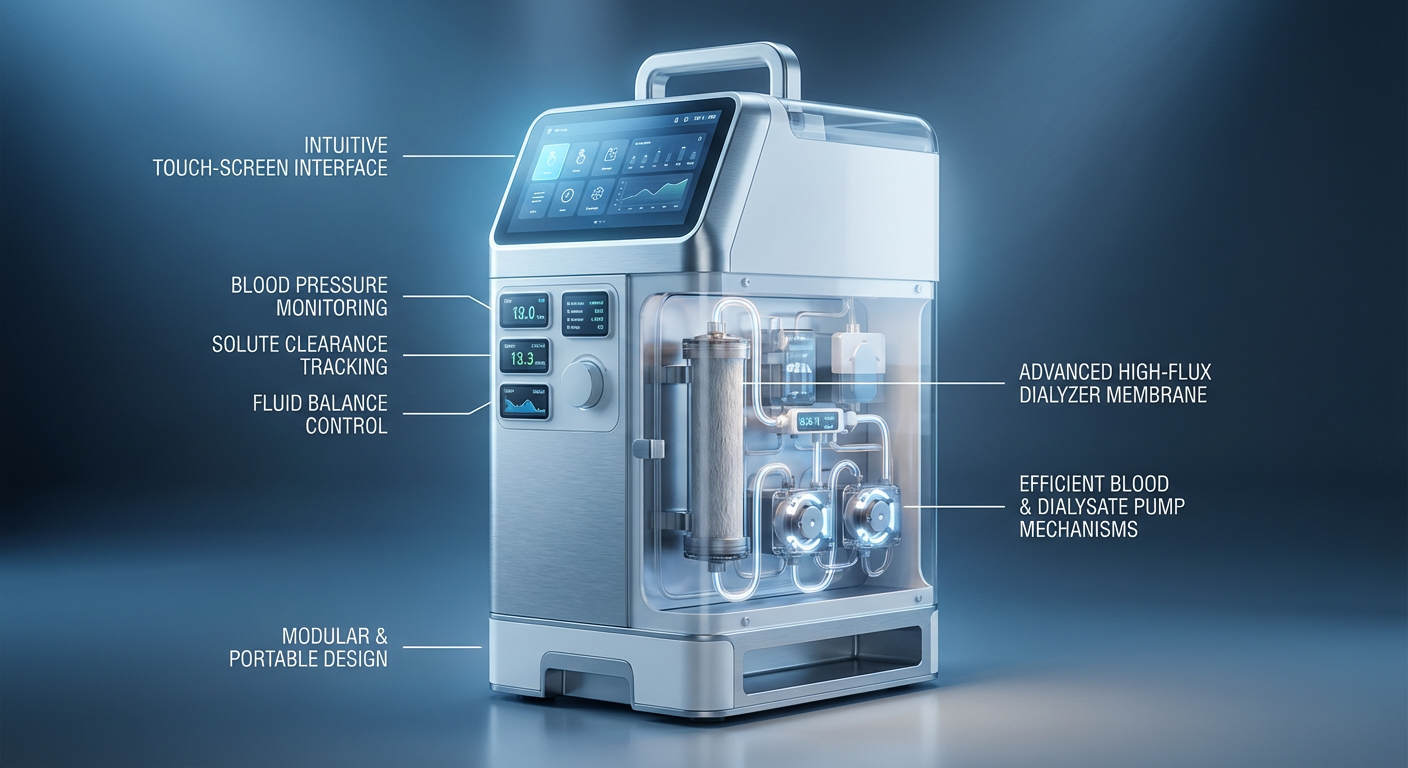
23.3.2 Strategic Positioning in the Dialysis Equipment Market
Vendor evaluation within the Dialysis Equipment Market considers factors such as business strategy (e.g., growth, industry coverage, financial viability) and product satisfaction (e.g., value for money, ease of use, product features, customer support) 253 .
23.4 Strategic Approaches to Enhancing Patient Workflow and Access
Beyond direct clinical technologies, broader systemic and logistical strategies are essential for holistic optimization.
23.4.1 Reengineering Workflow for Home Dialysis Modalities
The pronounced incentivization of home dialysis through models like ETC 250 mandates a fundamental reengineering of patient workflow. This transition moves from a clinic-centric model, where appointments are rigidly scheduled and managed by healthcare staff, to a patient-centric paradigm where individuals assume greater responsibility for self-management. This shift necessitates comprehensive patient education and training, the establishment of robust remote monitoring and telemedicine support systems, and the development of highly efficient, reliable supply chain logistics for dialysate, dialyzers, and ancillary supplies delivered directly to patients' homes. Successful implementation profoundly optimizes patient time by reducing travel and wait times, while simultaneously reallocating clinic resources to support home care rather than solely in-center treatments.
23.4.2 Optimizing Logistical Support and Patient Transportation
Effective patient workflow is not confined to the treatment itself but encompasses the entire patient journey, crucially including transportation to and from dialysis facilities. Public transit serves as a critical lifeline for millions requiring medical transportation for kidney dialysis and other critical care 254 255 . Ensuring dependable and timely transportation is paramount for maintaining clinic schedules, optimizing patient throughput, and ultimately improving the overall patient experience.
23.4.3 Innovative Models for Financial Viability and Access
Innovative organizational and funding models offer promising avenues for mitigating financial constraints and expanding access, thereby indirectly fostering an environment conducive to workflow optimization. Charitable trusts and public-private partnerships (PPPs) exemplify viable strategies for delivering cost-effective dialysis care. For instance, the Sarbat Da Bhala Charitable Trust provides dialysis services at a significantly reduced rate (Rs 650, including a free dialyzer kit) compared to private clinics (Rs 2000-4500), achieving financial viability through Memorandums of Understanding (MoUs) with hospitals 256 257 . These models, by alleviating financial pressures on patients and providers, create opportunities for investment in workflow-enhancing technologies and practices that might otherwise be unattainable.
23.5 Conclusion: A Multi-faceted Approach to Optimization
Optimizing dialysis treatment time and patient workflow represents a complex, multi-faceted challenge requiring integrated solutions across economic, technological, and policy domains. The high capital cost of advanced dialysis equipment, coupled with evolving and sometimes restrictive payment models and regulatory frameworks, frequently impedes the adoption of innovations that could enhance efficiency and reduce treatment durations. However, the push towards home dialysis, driven by models like ETC, forces a necessary re-evaluation and reengineering of care delivery pathways. Concurrently, advancements in dialysis technology, underpinned by competitive market dynamics, continually offer opportunities for improved efficiency. Ultimately, a synergistic approach, encompassing strategic investment in technology, intelligent policy design that balances cost control with provider sustainability, and innovative public-private partnerships to enhance access and affordability, will be critical for achieving truly optimized dialysis treatment times and patient workflows, thereby eliminating systemic and cardiovascular harm in the ESRD population.
24. Improvement of Patient Quality of Life and Experience
The landscape of kidney dialysis is undergoing a profound transformation, driven by innovations aimed at ameliorating the systemic and cardiovascular harm historically associated with conventional treatments. This paradigm shift directly translates into significant improvements in the quality of life (QoL) and overall experience for patients with End-Stage Kidney Disease (ESKD) and those requiring renal support. By enhancing vascular access, refining hemodynamic monitoring, mitigating adverse effects, and exploring advanced biocompatible technologies, the burden of disease and treatment is progressively being alleviated.
24.1 Enhancing Vascular Access Longevity and Functionality
Reliable and durable vascular access is the cornerstone of effective hemodialysis, directly impacting patient comfort, treatment efficiency, and long-term outcomes. Innovations in this area are critical for improving patient QoL by reducing the frequency of interventions and associated complications.
24.1.1 Advanced Arteriovenous Fistula (AVF) Development
The arteriovenous fistula (AVF) remains the preferred vascular access for hemodialysis due to its lower rates of infection and thrombosis compared to grafts and catheters. However, primary AVF failure and complications necessitating repeated surgeries significantly detract from patient QoL. Emerging technologies aim to optimize AVF formation and maintenance.
24.1.1.1 Nitric Oxide (NO) Releasing Nanomatrix Gels
A promising development involves the direct application of nitric oxide (NO) releasing nanomatrix gels to the AVF anastomosis immediately following surgical creation. This localized delivery of NO is hypothesized to enhance AVF development, fostering long-term and durable vascular access 258 .
24.1.1.2 Infrared Sensor-Based Monitoring and Treatment
Beyond initial AVF formation, maintaining patency and preventing complications is vital. Infrared sensor detection methods, combined with far-infrared treatment, offer a novel approach to monitor and manage AVFs. Unlike existing vein detection methods that are often independent and individual, this integrated system allows for simultaneous observation of the venous sphenoid tube status and targeted treatment 79 .
24.2 Revolutionizing Hemodynamic Monitoring for Patient Safety and Comfort
Hemodynamic instability is a significant concern during hemodialysis and in critically ill patients with kidney dysfunction. Advanced hemodynamic monitoring systems are instrumental in preventing adverse events, optimizing fluid status, and guiding treatment decisions, thereby improving patient safety and comfort.
24.2.1 Non-Invasive and Minimally Invasive Hemodynamic Assessment
The evolution from traditional invasive pulmonary artery (PA) catheter monitoring, which typically necessitates intensive care unit (ICU) stays due to potential dangers 259 to less invasive and non-invasive methods, marks a substantial improvement in patient experience.
24.2.1.1 Remote and Home Care Integration
The emergence of implants for hemodynamic monitoring is poised to enhance the adoption of remote monitoring in personal and home care settings 260 261 .
24.2.1.2 Functional Hemodynamic Monitoring in Critical Care and AKI Prevention
In critical care settings, functional hemodynamic monitoring plays a pivotal role in optimizing volume status and hemodynamics, particularly in patients at high risk for acute kidney injury (AKI) 262 263 264 265 .
24.2.2 Technological Advancements in Monitoring Devices
The market offers a range of sophisticated hemodynamic monitoring technologies. Companies like Baxter International Inc. have expanded their portfolios by acquiring providers such as Cheetah Medical, known for its non-invasive hemodynamic monitoring technologies that provide dynamic measurements of fluid responsiveness 72 265 266 267 .
24.2.3 Biocompatible Materials in Monitoring Systems
The integration of advanced materials, particularly biocompatible forms, is critical for the long-term implantation of hemodynamic monitoring devices. For example, apparatuses can be integrated into biocompatible, biodegradable forms for hemodynamic monitoring of pressure and blood flow within the body 144 . This not only ensures physiological compatibility but also minimizes adverse tissue reactions, thereby enhancing the safety and efficacy of these implanted systems and further contributing to patient QoL.
24.3 Mitigation of Systemic Harm and Adverse Effects
Beyond direct dialysis interventions, advancements in biocompatible materials and targeted therapies are reducing systemic harm, allowing patients to live more comfortably and with fewer complications.
24.3.1 Role of Biocompatible Materials in Implantable Devices
The use of biocompatible materials is a cornerstone of modern medical device development, preventing immune responses, inflammation, and rejection, which can severely impact patient QoL.
24.3.1.1 Eliminating Immunosuppression and Improving Graft Survival
For implantable devices like the "Freedom Heart," encapsulation in biocompatible materials eliminates the need for anti-rejection drugs 268 269 270 271 272 .
24.3.2 Addressing Dialysis-Related Complications
Dialysis, particularly hemodialysis, can lead to several uncomfortable side effects that diminish QoL. These include persistent itching due to mineral buildup, fluid overdose, and insomnia 174 273 .
24.3.3 Impact of Pharmacological Interventions and Public Health Initiatives
The advent of new pharmacological agents, such as Ozempic (semaglutide), which has shown promise in kidney trials, could significantly impact the dialysis patient population. While some dialysis providers initially expressed concern regarding a potential reduction in patient numbers, the overall sentiment suggests a limited impact, implying a continued need for dialysis services, but with a potential shift in patient demographics or disease progression 266 270 .
24.4 Future Horizons in Patient-Centric Dialysis Care
The ongoing commitment to innovation promises further improvements in the QoL for kidney dialysis patients, focusing on portability, personalization, and enhanced sensory experiences.
24.4.1 Wearable Artificial Organs and Advanced Prosthetics
The development of wearable artificial organs represents a significant leap towards enhancing patient autonomy and mobility. These devices aim to provide continuous renal support outside of traditional clinical settings, leveraging advancements in battery-free systems, AI-driven monitoring, and lightweight biocompatible materials 271 269 .
24.4.2 Smart Sensors and Bio-Telemetry
Future advancements include the development of revolutionary biomimetic olfactory chips and other smart sensors designed to be placed on or within the human body. With suitable biocompatible materials, these sensors could provide unprecedented real-time bio-telemetry, enabling enhanced sensory experiences or crucial physiological monitoring previously impossible 274 272 . This integration of smart technology with biocompatible design promises a future where medical interventions are not just life-sustaining but also profoundly QoL-enhancing.

25. Comprehensive Financial Benefits and Healthcare Economic Models
25.1 The Economic Imperative for Innovation in Kidney Care
The management of End-Stage Renal Disease (ESRD) necessitates renal replacement therapy (RRT), encompassing modalities such as kidney transplantation and various forms of dialysis 275 . Addressing this economic imperative through innovative funding models and cost-efficient therapeutic strategies is paramount for enhancing global kidney care delivery.
25.2 Public-Private Partnerships (PPPs) as a Paradigm for Sustainable Kidney Care Delivery
Public-Private Partnerships (PPPs) represent a robust economic model for overcoming the financial barriers inherent in large-scale healthcare infrastructure and service delivery. A landmark example is the collaborative agreement between the government of Uzbekistan and NephroPlus, India's largest dialysis and kidney care provider 276 .
25.2.1 Operationalizing the PPP Model: Mechanisms and Stakeholder Contributions
The establishment of this PPP involved a sophisticated framework of expert consultation and international cooperation 276 .
(World Bank Group)" participant R as "Rebel
(Finance & Investment Consulting)" participant Pat as "Patients" Gov->>R: Seeks Technical & Financial Advice for PPP R-->>Gov: Provides Advisory Services on PPP Structure & Viability Gov->>IFC: Seeks Global Best Practices & Standard Frameworks IFC-->>Gov: Provides Advisory; Upgrades Patient Selection/Referral System for Transparency Gov->>NP: Awards Contract via Competitive International Bidding Process NP-->>Gov: Enters Public-Private Partnership Agreement NP->>Pat: Delivers Comprehensive Dialysis Services (incl. Peritoneal Dialysis) Note right of NP: Services provided at no personal cost to patients Gov-->>NP: Establishes Payment/Incentive Structure Rewarding Good Patient Outcomes Pat-->>Gov: Benefits from Widespread Rural Access, Reduced Travel Costs, & Improved Care
25.2.2 Financial and Social Benefits of the PPP Model
Beyond direct cost elimination for patients, the Uzbekistan PPP exemplifies several key economic and social benefits. It facilitates widespread rural access to kidney care, effectively mitigating the substantial travel costs that often serve as a barrier to treatment in underserved areas 276 . This structural alignment between provider reimbursement and patient well-being represents a significant advancement in healthcare economic models.
25.3 Mitigating Financial Strain: Technology-Driven Cost Reduction and Accessibility
25.3.1 Decentralized Dialysis Modalities: Peritoneal Dialysis and its Economic Advantages
The integration of peritoneal dialysis (PD) into national kidney care strategies offers a compelling economic advantage, particularly in extending care accessibility. As demonstrated in the Uzbekistan PPP, the provision of PD capabilities allows for treatment at a patient's residence, circumventing the need for frequent travel to a centralized clinic 276 . From a systemic perspective, widespread home-based PD can potentially reduce the capital investment required for constructing and maintaining large hemodialysis centers, reallocating resources towards training and supply chain management for home therapy.
25.3.2 Enteric Dialysis and Supplementary Therapies: A New Economic Frontier
The development of novel therapeutic approaches, such as "enteric dialysis" via dietary supplements, presents another avenue for enhancing affordability and accessibility in kidney health management. Kibow Biotech, for instance, is dedicated to providing affordable, readily available, and easily administered healthcare supplements aimed at supporting kidney health 277 278 275 .
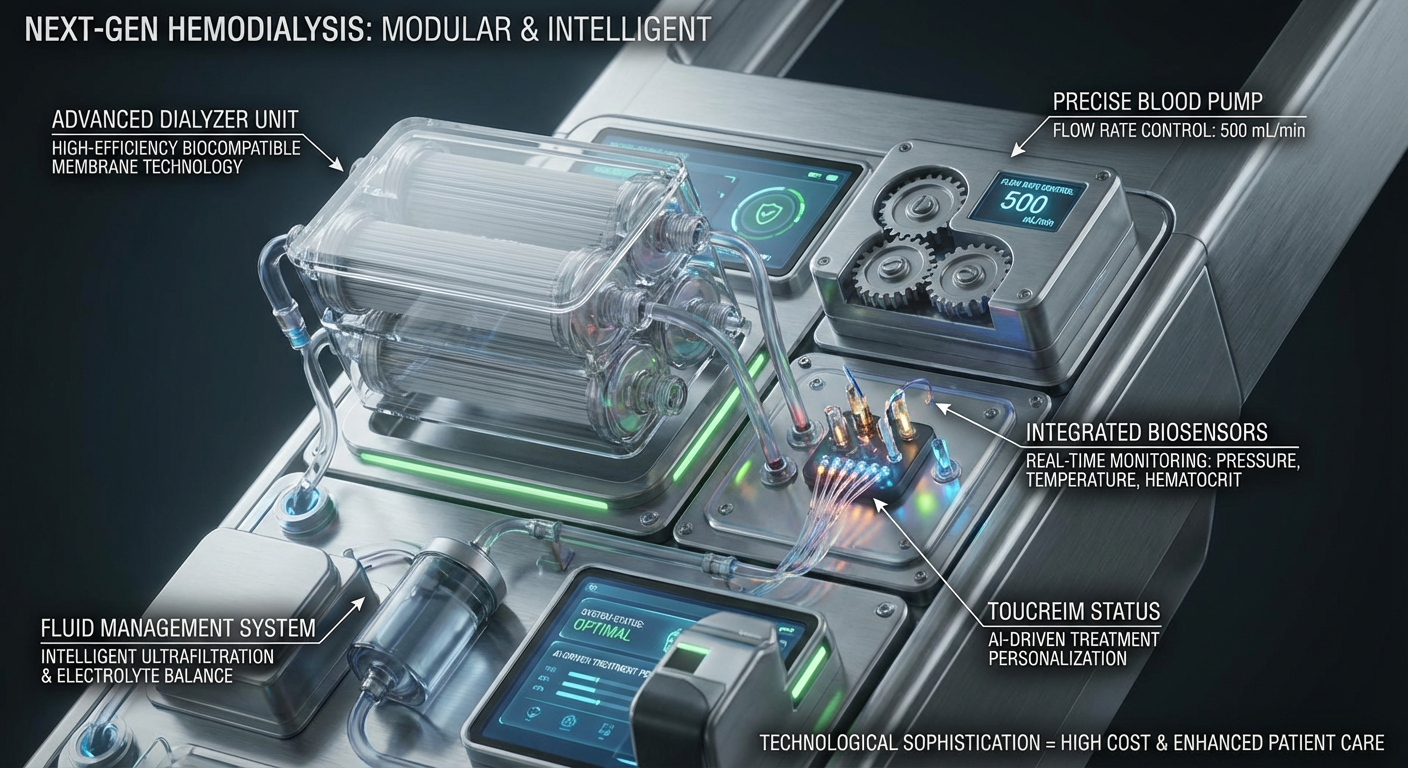
25.4 Regulatory Frameworks and Financial Integrity in Healthcare Provision
25.4.1 Combating Fraud and Ensuring Program Sustainability
The financial integrity of healthcare economic models, particularly those reliant on governmental programs like Medicare and Medi-Cal, is continuously threatened by fraudulent activities. Instances of ambulance-related fraud schemes, as highlighted by federal agents, demonstrate how dubious operations can exploit reimbursement systems, siphoning resources that are intended for essential services, including patient transportation for kidney dialysis appointments 279 276 .
25.4.2 Governmental Support and Stimulus Measures
Governmental interventions and stimulus packages play a crucial role in ensuring the financial viability of critical healthcare support systems. The $2 trillion Coronavirus Aid, Relief, and Economic Security (CARES) Act in the United States, for example, allocated $25 billion in federal funds to support public transit systems 254 . Such measures highlight the interconnectedness of various sectors within the healthcare economic model and the necessity of comprehensive governmental strategies to maintain the functional ecosystem of patient care.
26. Global Health Impact and Patient Population Reach
The global landscape of kidney disease management faces an escalating imperative for advanced dialysis modalities, driven by the substantial patient population, persistent systemic and cardiovascular morbidities associated with conventional treatments, and complex socioeconomic factors influencing care accessibility. The drive for innovation in dialysis equipment and processes is underscored by the current market dynamics and regulatory shifts, aiming to transform renal care delivery worldwide.
26.1 Market Dynamics and Innovation Ecosystem in Kidney Dialysis
The United States Dialysis Equipment Market represents a significant segment of the global healthcare economy, characterized by intense competition and a continuous push for technological advancement. Key players, including Asahi Kasei Corporation, B. Braun Melsungen AG, Baxter International Inc., Fresenius Kabi AG, Nipro Corporation, and NxStage Medical, Inc., are actively innovating within this sector 253 .
26.1.1 Industry Landscape and Competitive Strategy
Vendor evaluation in this market hinges on a FPNV Positioning Matrix, assessing Business Strategy (including Business Growth, Industry Coverage, Financial Viability, and Channel Support) and Product Satisfaction (covering Value for Money, Ease of Use, Product Features, and Customer Support) 253 .
26.1.2 Technological Trends and Regulatory Frameworks
The market is subject to continuous technological advancements and evolving regulatory frameworks 253 .
26.2 Addressing the Global Challenge of Accessibility and Affordability
Despite technological advancements, the global reach of dialysis care is profoundly impacted by issues of accessibility and affordability, particularly in developing economies and even within developed nations facing cost pressures.
26.2.1 Cost Barriers and Patient Financial Strain
The cost of dialysis services remains a significant barrier to care. For instance, in some regions, private clinics charge between Rs 2,000 and Rs 4,500 for a single dialysis session, a substantial burden for many patients 256 . Such costs often render critical, life-sustaining treatment inaccessible, leading to adverse health outcomes and increased mortality.
26.2.2 Public-Private Partnerships and Charity Models for Cost Reduction
Innovative models are emerging to address cost disparities and expand patient access. Organizations like the Sarbat Da Bhala Charitable Trust (SDBCT) demonstrate the financial viability of offering dialysis at significantly reduced rates, such as Rs 650, inclusive of a free dialyzer kit 256 257 .
26.2.3 Regulatory Interventions and Their Impact on Clinic Viability
Governmental efforts to control healthcare costs, while well-intentioned, can have unintended consequences on the financial viability of dialysis clinics and, consequently, patient access. Measures that limit the amounts outpatient kidney dialysis clinics may charge for patient care, imposing penalties for excessive charges, and requiring rebates to commercial health insurers when revenues exceed a certain percentage (e.g., 115%) of direct costs, are examples of such interventions 280 281 . This regulatory environment necessitates advanced equipment and process redesigns that not only improve clinical outcomes but also enhance cost-efficiency to ensure long-term sustainability.
26.3 Policy-Driven Transformation: Shifting Paradigms in Care Delivery
Government policies play a pivotal role in shaping the delivery of dialysis care, particularly in driving shifts towards models that prioritize patient choice and home-based therapies.
26.3.1 The End-Stage Renal Disease (ESRD) Treatment Choices (ETC) Model
The Centers for Medicare & Medicaid Services (CMS) introduced the ESRD Treatment Choices (ETC) model to fundamentally transform kidney disease prevention, diagnosis, and treatment 282 .
26.3.2 Impact on Home Dialysis and Beneficiary Options
The ETC model heavily favors home dialysis through weighted payment enhancements and penalties 282 . The model's emphasis on home-based care necessitates advancements in user-friendly, portable, and clinically effective home dialysis equipment, aligning with the broader goal of reducing systemic harm by offering more frequent, gentle therapies. While beneficiaries can opt out by transferring to a non-enrolled facility, the policy aims to steer a significant portion of the patient population towards home-based modalities.
26.4 Understanding Systemic Harm: The Rationale for Enhanced Dialysis Therapies
The need for "eliminating systemic and cardiovascular harm" through advanced dialysis redesign is deeply rooted in the inherent pathologies of kidney disease and the limitations of current treatment modalities.
26.4.1 Illustrative Examples of Complement-Mediated Systemic Pathologies
Conditions such as Paroxysmal Nocturnal Hemoglobinuria (PNH) and Atypical Hemolytic Uremic Syndrome (aHUS) exemplify how uncontrolled complement activity can lead to profound systemic complications, primarily through intravascular hemolysis and platelet activation 53 52 . While these conditions are not directly treated by dialysis equipment redesign, they highlight the complex interplay of systemic inflammatory and thrombotic processes in patients with significant comorbidities, including those with kidney disease. The broader context of kidney failure itself often involves chronic inflammation, oxidative stress, and uremic toxin accumulation, all contributing to systemic harm, particularly cardiovascular disease. Advanced dialysis processes and equipment aim to more effectively remove these toxins and mitigate inflammatory responses, thereby reducing the systemic burden.
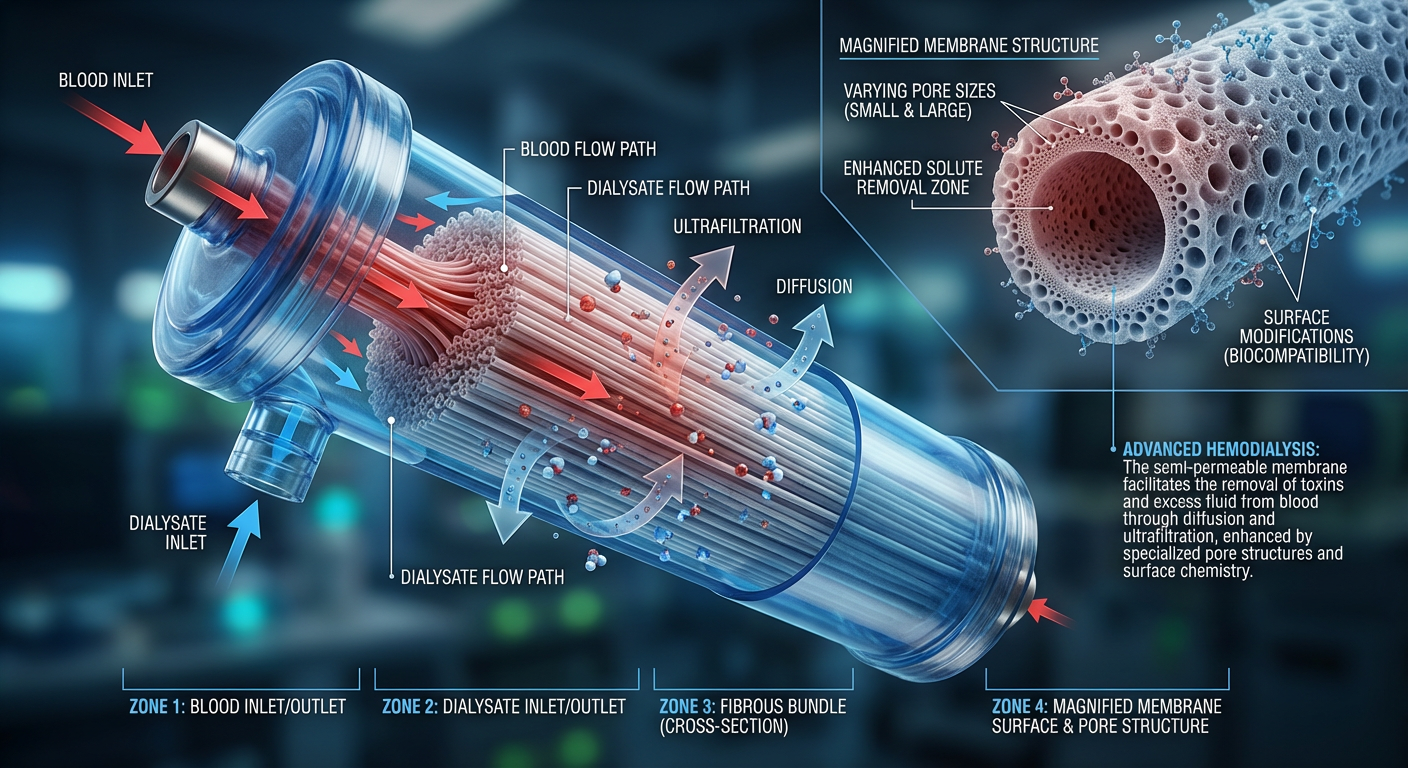
26.5 Logistical Complexities: Ensuring Patient Access to Critical Care
Beyond the clinical and financial aspects, the logistical challenges of transporting patients to and from dialysis centers represent a significant hurdle to ensuring equitable access and patient well-being.
26.5.1 Medical Transportation for Dialysis Patients
Reliable transportation is a critical lifeline for millions of Americans requiring regular medical appointments, including kidney dialysis 254 255 . The advent of advanced home dialysis equipment could potentially alleviate some of these logistical burdens, allowing for greater patient autonomy and reduced reliance on external transport services.
27. Regulatory Pathways and Clinical Validation Strategies
27.1 Introduction to Advanced Renal Replacement Modalities and the Regulatory Imperative
The persistent morbidity and mortality associated with end-stage kidney disease (ESKD) necessitate a transformative paradigm in renal replacement therapy (RRT), moving beyond conventional dialysis to modalities that proactively mitigate systemic and cardiovascular harm 283 284 285 78 286 underscores the critical demand for structured validation frameworks capable of addressing both inherent safety and multifaceted clinical outcomes.
27.2 Biocompatible Material Development and Regulatory Considerations
The bedrock of next-generation dialysis systems and their ancillary therapeutics is predicated on the meticulous selection, synthesis, and engineering of biocompatible materials 284 285 287 .
27.2.1 Material Selection and Synthesis for Reduced Systemic Impact
27.2.1.1 Advanced Polymer and Gel Technologies
Innovations in materials science encompass polymers with precisely controlled degradation profiles and tailored pore structures, enabling specific drug release kinetics 288 . Specific examples include: * Nitric Oxide (NO)-releasing nanomatrix gels: These gels are engineered to augment arteriovenous fistula (AVF) development and maturation by significantly reducing intimal hyperplasia, a major cause of AVF failure, by over 70% in preclinical models. Concurrently, they improve vein diameter and promote smooth blood flow 286 . * Silicone-based biomimetics: Research into silicone's intrinsic self-healing properties and its capacity to mimic biological tissues, including its ability to transiently increase stiffness akin to muscle post-exertion and revert upon thermal stimulus, suggests vast potential for advanced medical applications beyond traditional implants 289 . * Hydrogels and foams: A diverse array of biocompatible materials, including pericardial tissue, synthetic polymers, sponges, foams, and various gels, are being explored for critical medical device components, such as prosthetic heart valve docking assemblies 290 .
27.2.1.2 Minimizing Non-Specific Interactions
A significant technical hurdle in the development of materials for medical devices is the prevention of non-specific adsorption of biomolecules, particularly proteins, onto device surfaces, even those considered highly biocompatible 287 291 .
27.2.2 Regulatory Pathway for Novel Biomaterials
The trajectory for developing and translating advanced biomaterials, such as the NO-releasing nanomatrix gel, mandates navigating a stringent regulatory landscape. This encompasses securing grant funding for upscaling manufacturing processes and conducting comprehensive safety studies, which are prerequisite steps for pursuing FDA approval as an investigational new drug (IND) 286 . This structured regulatory pathway is critical to ensure that novel materials meet rigorous safety and efficacy criteria prior to their clinical application.
27.3 Clinical Validation of Advanced Dialysis Technologies
27.3.1 Wearable Artificial Kidney (WAK)
A pivotal innovation is the wearable artificial kidney, meticulously designed to provide continuous or near-continuous renal replacement therapy for patients suffering from chronic kidney failure 78 .
27.3.1.1 Pilot Study Design and Primary Outcomes
Initial pilot studies for wearable artificial kidney devices are strategically designed to evaluate crucial parameters such as solute clearances, overall tolerability, and inherent safety 78 . * Enrollment: These studies typically involve a limited cohort of patients, exemplified by an enrollment of 8 individuals in one such pilot 78 . * Inclusion Criteria: Strict criteria ensure patient suitability, typically requiring end-stage renal failure, current regular hemodialysis, demonstrated cardiovascular stability, and robust, stable vascular access 78 . * Primary Outcome Measures: Comprehensive assessment includes: * Quantification of clearances for critical uremic toxins and electrolytes, specifically urea, potassium, phosphate, and beta-2 microglobulin (B2M) 78 .
27.3.1.2 Technological Integration for WAK
The operational robustness of a WAK is contingent upon the sophisticated integration of multiple miniaturized components. These include self-contained dialysate supply mechanisms, the artificial kidney module itself, efficient recirculation pumps, and advanced heat reclaiming units meticulously designed to maintain optimal dialysate temperature 205 .
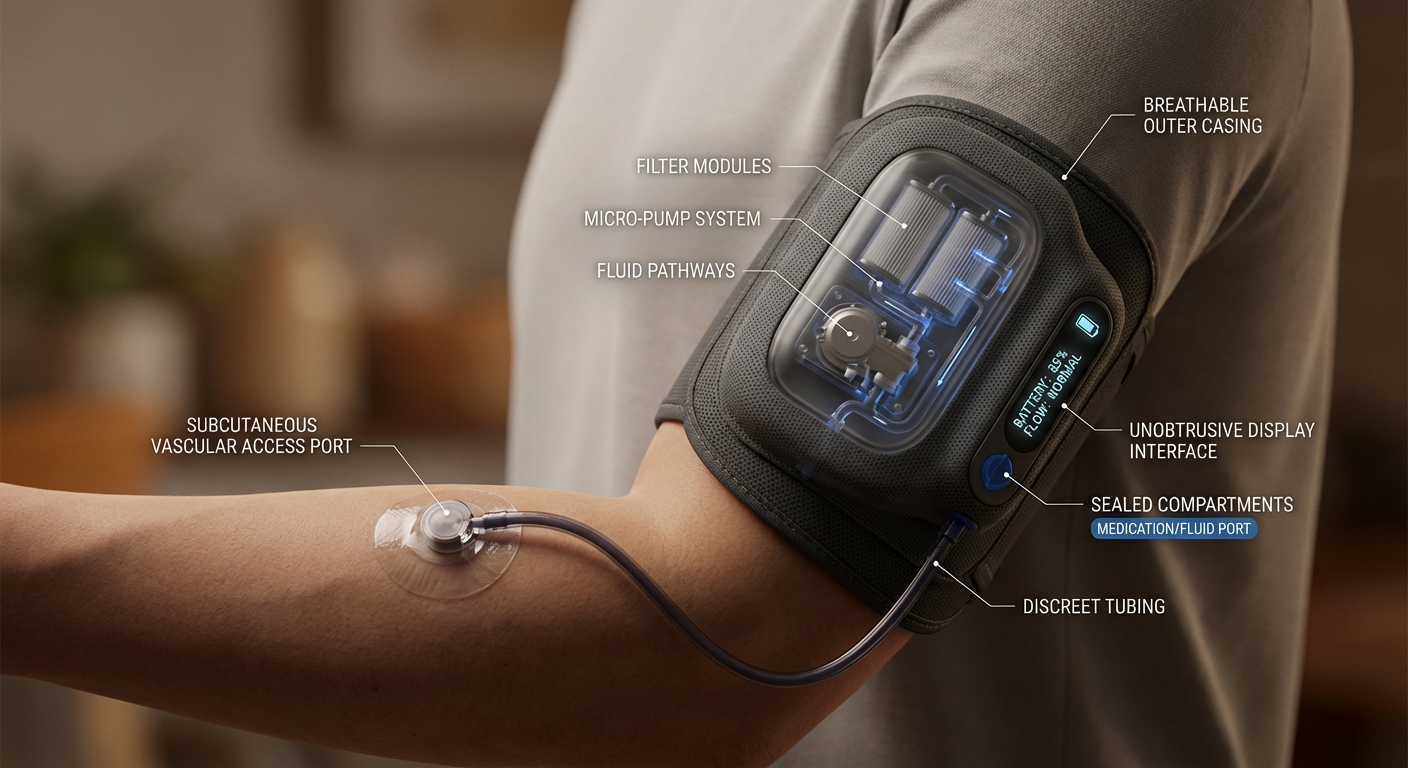
27.3.2 Vascular Access Enhancement: The NO-Releasing Nanomatrix Gel
The development of a nitric oxide (NO)-releasing nanomatrix gel constitutes a targeted therapeutic intervention aimed at substantially improving the patency and maturation outcomes of arteriovenous fistulas (AVFs) 286 .
27.3.2.1 Mechanistic Basis and Preclinical Validation
Nitric oxide plays a critical, multifaceted regulatory role in the intricate process of AVF development 286 . Preclinical in vivo studies conducted in rats provided compelling validation, showing a substantial reduction in intimal hyperplasia exceeding 70%, concomitant improvements in vein diameter, and enhanced laminar blood flow following direct application of the novel gel to the AVF anastomosis site 286 .
27.3.2.2 Clinical Translation and Economic Impact
The successful demonstration of a significant improvement in AVF development success rates through such innovative interventions holds the potential to dramatically elevate patient quality of life. Simultaneously, it is projected to substantially decrease the considerable economic burden historically associated with AVF creation, subsequent complications, and repeated interventions 286 .
27.4 Advanced Monitoring and Diagnostic Tools for Personalized Dialysis Care
Beyond the core dialysis equipment, advanced monitoring technologies are indispensable for optimizing patient management, enabling proactive intervention, and ultimately preventing systemic complications in the dialysis population.
27.4.1 Continuous Biomarker Monitoring
Emerging sensor technologies facilitate super-sensitive, real-time monitoring of human biomolecules, offering unprecedented potential for continuous, dynamic assessment of a patient's physiological status 292 .
27.4.2 Bioimpedance-Guided Volume Status Monitoring
Fluid overload represents a critical and highly prevalent complication in chronic kidney disease (CKD) and ESKD patients, affecting an estimated 40% to 50% of individuals undergoing maintenance dialysis 283 .
27.5 Addressing Systemic Harm and Complications in Renal Failure
The overarching, imperative goal of advanced dialysis modalities and their supportive therapeutic interventions is to profoundly mitigate the extensive systemic harm inextricably linked to renal failure and the inherent challenges of its conventional treatments.
27.5.1 Cardiovascular Stability and Dialysis
Maintaining cardiovascular stability is an absolute prerequisite and a critical inclusion criterion for patients participating in clinical trials for advanced dialysis technologies, unequivocally underscoring its profound importance in this population 78 283 . Consequently, innovations in dialysis must extend beyond mere solute clearance to comprehensively address hemodynamic stability, preserve myocardial function, and provide robust cardiac protection.
27.5.2 Prevention of Acute Kidney Injury (AKI) Complications
Acute kidney injury (AKI), particularly when precipitated by conditions such as exertional rhabdomyolysis, can rapidly escalate to a state necessitating dialysis and carries an alarmingly high mortality risk, ranging from 10% to as much as 50% in severe cases requiring renal replacement therapy 293 . While not directly a dialysis innovation per se, the profound understanding of these acute complications reinforces the urgent need for RRTs that are not only highly effective in solute and fluid management but are also exquisitely gentle on the cardiovascular system and adept at maintaining electrolyte homeostasis.
27.6 Regulatory and Clinical Validation Pathway: A Sequential Overview
The regulatory and clinical validation pathway for novel renal replacement therapies is an inherently multi-staged and highly structured process. It commences with exhaustive preclinical research and development, focusing on the synthesis and optimization of advanced materials and the sophisticated design and prototyping of device platforms 288 284 78 205 . This initial phase includes rigorous in vitro biocompatibility testing to identify and proactively mitigate potential secondary interactions with biological systems 287 followed by comprehensive in vivo animal model studies designed to demonstrate preliminary efficacy and safety for specific interventions, such as the AVF gel 286 .
Subsequently, a formal Investigational New Drug (IND) or Investigational Device Exemption (IDE) application must be submitted to the relevant regulatory body, such as the FDA, to secure approval for initiating human clinical trials 286 78 .
28. Scalability and Manufacturing Challenges for Advanced Dialysis Systems
28.1 Introduction: The Critical Need and Inherent Hurdles for Advanced Dialysis Systems
The imperative to transition towards advanced renal replacement therapies (RRT) stems from the recognition that conventional dialysis modalities, while life-sustaining for patients with End-Stage Renal Disease (ESRD), are often associated with significant systemic and cardiovascular sequelae. A paradigm shift aiming to eliminate such harm necessitates fundamental redesigns in both the process and equipment of dialysis 2. However, the widespread implementation and scalability of these innovative solutions are inextricably linked to surmounting substantial economic, logistical, and manufacturing challenges. The high capital investment, complex operational ecosystem, and intrinsic manufacturing demands of advanced systems collectively present formidable barriers to their broad adoption within global healthcare infrastructures.
28.2 Economic Impediments to Widespread Adoption and Market Growth
28.2.1 Prohibitive Capital Outlay for Advanced Instrumentation
The initial procurement cost of advanced dialysis instruments constitutes a primary economic barrier to scalability 275 .
28.2.2 Sustained Financial Strain on Healthcare Providers
Beyond the initial capital expenditure, the total cost of ownership for advanced dialysis systems is compounded by ongoing expenses associated with installation, maintenance, and periodic technological upgrades 275 .
28.3 Interconnected Logistical and Regulatory Challenges within the Dialysis Care Continuum
28.3.1 The Ancillary, Yet Critical, Cost of Patient Transport
While not a direct manufacturing challenge, the logistical framework surrounding dialysis care significantly influences the overall scalability and financial feasibility of advanced systems. The necessity for reliable patient transport, particularly for individuals requiring conveyance from skilled nursing facilities or other care settings to specialized dialysis centers, introduces a substantial operational cost 255 . The financial burden associated with these transport services, if inefficient or subject to abuse, can indirectly inflate the holistic cost of dialysis access, thereby impacting the perceived economic viability of expanding advanced dialysis networks.
28.3.2 Regulatory Complexities and Fraud Mitigation in Healthcare Logistics
The financial integrity of governmental healthcare programs, such as Medicare and Medi-Cal, is continuously threatened by fraudulent activities, as evidenced by historical ambulance-related fraud schemes 255 .
(Basic Life Support)" participant DC as "Dialysis Center
(Advanced System)" participant HC as "Healthcare System/Payer" participant R as "Regulatory Body" P->>SNF: Requires Dialysis Treatment Appointment SNF->>A: Requests Transport to Dialysis Center A-->>HC: Bills for Transport Service A->>DC: Transports Patient for Dialysis Treatment DC->>P: Delivers Advanced Dialysis Treatment DC-->>HC: Bills for Advanced Dialysis Treatment & Equipment HC->>A: Reimbursement for Transport Service HC->>DC: Reimbursement for Dialysis Treatment & Equipment R-->>A: Audits Transport Documentation & Practices R-->>HC: Monitors Program Integrity (e.g., Medicare/Medi-Cal) A--xR: (Historical) Resisted Ordinance Upgrades R-->>A: Implements Stricter Regional Regulations (e.g., LA County)
28.4 Manufacturing Complexities as Core Cost Drivers for Advanced Systems
The inherent "advancements and technology installed" 275 within next-generation dialysis systems are direct progenitors of manufacturing complexity and, consequently, elevated costs. To achieve the paradigm shift of eliminating systemic and cardiovascular harm, these systems must integrate highly sophisticated components and processes:
- High-Precision Component Manufacturing: Advanced fluid management systems demand miniaturized, high-tolerance pumps, valves, and flow sensors. Membrane technologies, crucial for enhanced solute clearance and biocompatibility, often involve multi-layered, engineered nanomaterials requiring highly controlled fabrication environments.
- Specialized Materials: The use of novel, biocompatible polymers, sophisticated sorbents for toxin removal, and advanced filtration media contributes significantly to raw material costs. These materials often necessitate specialized handling and processing techniques.
- Integrated Sensing and Control Systems: Real-time monitoring of blood chemistry, hemodynamic parameters, and precise control over dialysate composition and temperature require embedded microprocessors, intricate sensor arrays, and robust feedback loops. The integration and calibration of these diverse electronic and mechanical components are technically demanding.
- Complex Assembly and Quality Assurance: Assembling these intricate systems typically requires cleanroom environments, highly skilled labor, and stringent quality control protocols to ensure reliability, safety, and consistent performance. Each unit must undergo rigorous testing to meet regulatory and clinical efficacy standards.
- Research and Development Amortization: The significant upfront investment in fundamental and translational research, alongside the protracted development cycles required to bring these advanced technologies to market, must be recouped through the product's unit cost. This amortization of R&D expenses is a substantial factor contributing to the price range of USD 10,000 to over USD 45,000 for advanced hemodialysis machines 275 .
These manufacturing complexities directly underpin the high unit cost of advanced dialysis equipment, presenting a critical challenge for achieving broad scalability and equitable access.
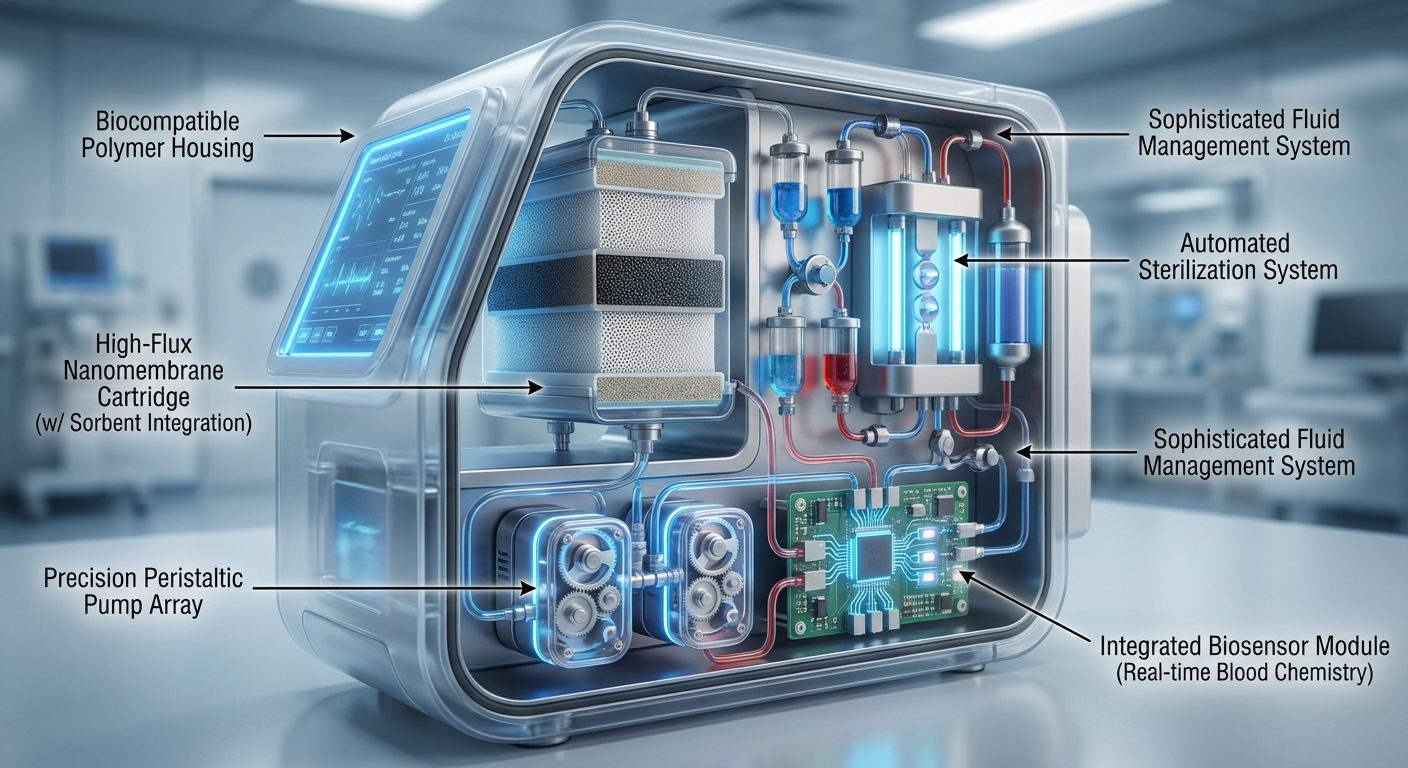
29. Training and Adoption Strategies for Healthcare Professionals
The envisioned paradigm shift in kidney dialysis, centered on the elimination of systemic and cardiovascular harm through advanced process and equipment redesign, necessitates a concomitant evolution in the training and adoption strategies for healthcare professionals (HCPs). This shift is underpinned by significant technological advancements in hemodynamic monitoring and an increasingly sophisticated approach to integrated patient care. Successful implementation hinges on a comprehensive, multi-modal educational framework that addresses both the technical proficiency and clinical acumen required for these novel modalities.
29.1 Foundational Principles for Enhanced Clinical Competency
The integration of advanced monitoring and therapeutic techniques into renal replacement therapy (RRT) demands a robust foundational understanding, extending beyond traditional nephrology curricula. The emphasis must parallel the intensive care unit (ICU model), where HCPs gain "hands-on practical experience" to develop "an organized diagnostic and therapeutic approach to the critically ill patient with multiple organ system disease" 294 .
29.1.1 Evolution of Hemodynamic Monitoring and its Renal Interface
Advanced hemodynamic monitoring (AHM) systems, which have seen "repeated and advanced technological modifications" 295 296 297 298 299 300 . This commercial activity underscores the market's trajectory towards integrated solutions for patient fluid management and cardiovascular stability.
29.1.1.1 Mechanisms of Advanced Hemodynamic Assessment
Functional hemodynamic monitoring is explicitly recommended by guidelines, such as KDIGO, for the prevention and treatment of Acute Kidney Injury (AKI), emphasizing "optimizing fluid status and hemodynamics" 301 302 303 144 304 305 .
29.2 Curriculum Design and Implementation Strategies
Effective training for the advanced dialysis paradigm must be structured, iterative, and clinically relevant, mirroring the complexity of the technologies involved.
29.2.1 Core Competency Development
A specialized curriculum must be developed to ensure HCPs, including nephrologists, critical care nurses, and dialysis technicians, achieve mastery in:
- Physiological Principles: Deep understanding of cardio-renal interactions, fluid dynamics, electrolyte balance, and their modulation by advanced dialysis techniques.
- Advanced Monitoring Modalities: Proficiency in operating, calibrating, and interpreting data from both invasive and non-invasive hemodynamic monitoring systems 294 297 .
- Procedural Skills: Competency in establishing and maintaining vascular access for advanced RRT, as well as the insertion and management of monitoring devices.
- Equipment Operation: Detailed knowledge of redesigned dialysis apparatus, including understanding flow loops, temperature control mechanisms for dialysate solution, and heat reclaiming units 306 .
29.2.2 Experiential Learning and Simulation
Hands-on training is indispensable. Simulation centers can replicate complex clinical scenarios encountered during advanced dialysis, allowing HCPs to practice decision-making and procedural skills without patient risk. This directly aligns with the "hands-on practical experience" and "active and integral part of the ICU team" model that has proven effective in critical care education 294 .
29.2.3 Interdisciplinary Training and Collaboration
The intricate nature of cardio-renal medicine necessitates a highly collaborative approach. Training programs must facilitate interdisciplinary learning, fostering communication and shared understanding between nephrologists, cardiologists, intensivists, nursing staff, and biomedical technicians. This ensures a holistic approach to patient management, particularly in cases involving "multiple organ system disease" 294 .
29.3 Adoption Pathways and Overcoming Implementation Barriers
The successful adoption of these advanced strategies hinges on more than just training; it requires systemic support and a proactive approach to evidence generation.
29.3.1 Addressing the Evidence and Infrastructure Gaps
A recognized challenge is the "lacking" quality of evidence for care, support, and monitoring systems, as well as the necessary infrastructure, particularly for managing HF patients in outpatient settings 296 .
29.3.2 Phased Implementation and Continuous Professional Development
A phased rollout, starting with pilot programs in specialized centers, allows for refinement of protocols and training methods. Continuous professional development (CPD) is critical given the rapid pace of "advanced technological modifications to pre-existing monitoring systems" 295 . Regular updates, workshops, and recertification programs will ensure HCPs remain current with the latest equipment, techniques, and best practices.
29.3.3 Data-Driven Quality Improvement
Implementing robust data collection and analysis systems will allow for continuous monitoring of treatment efficacy, safety, and HCP performance. Feedback loops from these systems can inform ongoing training adjustments and protocol optimizations, fostering a culture of continuous quality improvement.
29.4 Future Directions in Training and Technological Integration
The landscape of kidney care is dynamic, with market forces like the "Global Kidney Dialysis Equipment Market" projected to reach significant valuations, indicating sustained investment and innovation 307 303 308 . This underscores the need for adaptability in training programs, preparing HCPs for evolving treatment algorithms that may integrate pharmaceutical interventions with advanced RRT and monitoring.
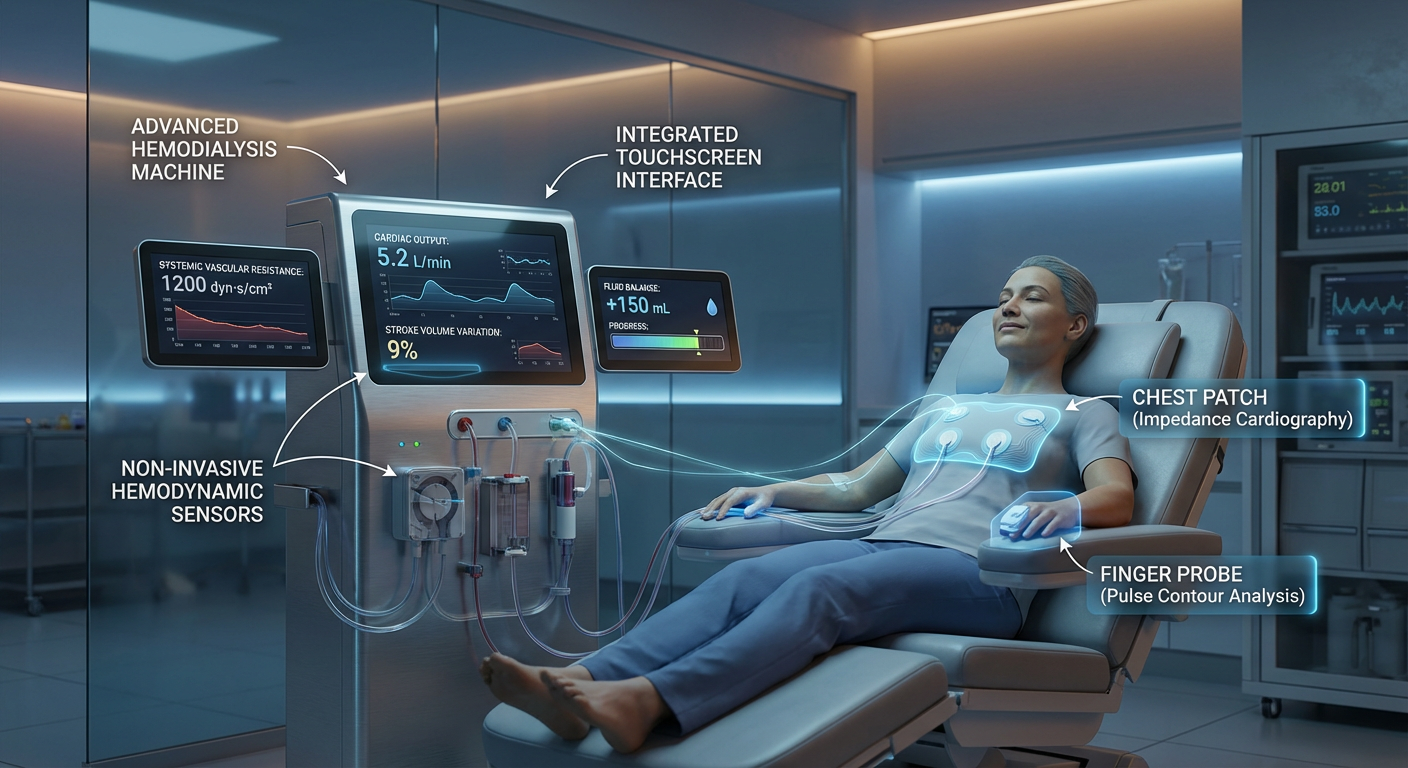
30. Future Directions and Emerging Technologies in Renal Replacement
30.1 The Imperative for Paradigm Shift in Renal Replacement Therapy
Current conventional renal replacement therapy (RRT) modalities, while life-sustaining, are associated with substantial systemic and cardiovascular morbidity and mortality, necessitating a paradigm shift in their design and execution. The existing therapeutic landscape is challenged by persistent clinical sequelae, including increased mortality risk (e.g., a 6% higher death risk in women compared to men within the first five years post-dialysis initiation) 309, the exacerbation of autoimmune conditions such as lupus nephritis flares affecting 26.4% of patients within a median of 17 months 309, and the ongoing burden of managing complex secondary complications like mineral and bone disorders. These outcomes underscore the critical need for advanced RRT solutions that transcend the limitations of current practices by more closely replicating native kidney function and thereby mitigating systemic harm. The objective is not merely to remove uremic toxins, but to achieve a homeostatic balance that fundamentally improves patient quality of life and long-term prognosis 310.
30.2 Advancing Beyond Conventional Dialysis: Mimicking Native Kidney Physiology
The future trajectory of RRT is oriented towards the development of "artificial kidneys" that embody sophisticated mechanical filtration units designed to deliver dialysis superior to present standards 310. This endeavor, championed by initiatives such as the KidneyX Redesign Dialysis competition, focuses on engineering solutions capable of replicating normal kidney functions, a principle directly linked to enhanced patient quality of life and improved clinical outcomes 310. The anticipated benefits extend beyond physiological improvements, projecting significant healthcare economic advantages through reduced complications and hospitalizations 310. The mechanical filtration unit, as a core component, is undergoing intensive redesign to achieve a higher degree of physiological fidelity, moving beyond the current, relatively indiscriminate solute removal. This advanced filtration aims to more precisely manage fluid, electrolyte, and solute balance, thereby reducing systemic stresses that contribute to cardiovascular disease, bone mineral disorders, and other long-term complications inherent to chronic kidney disease (CKD) on dialysis.
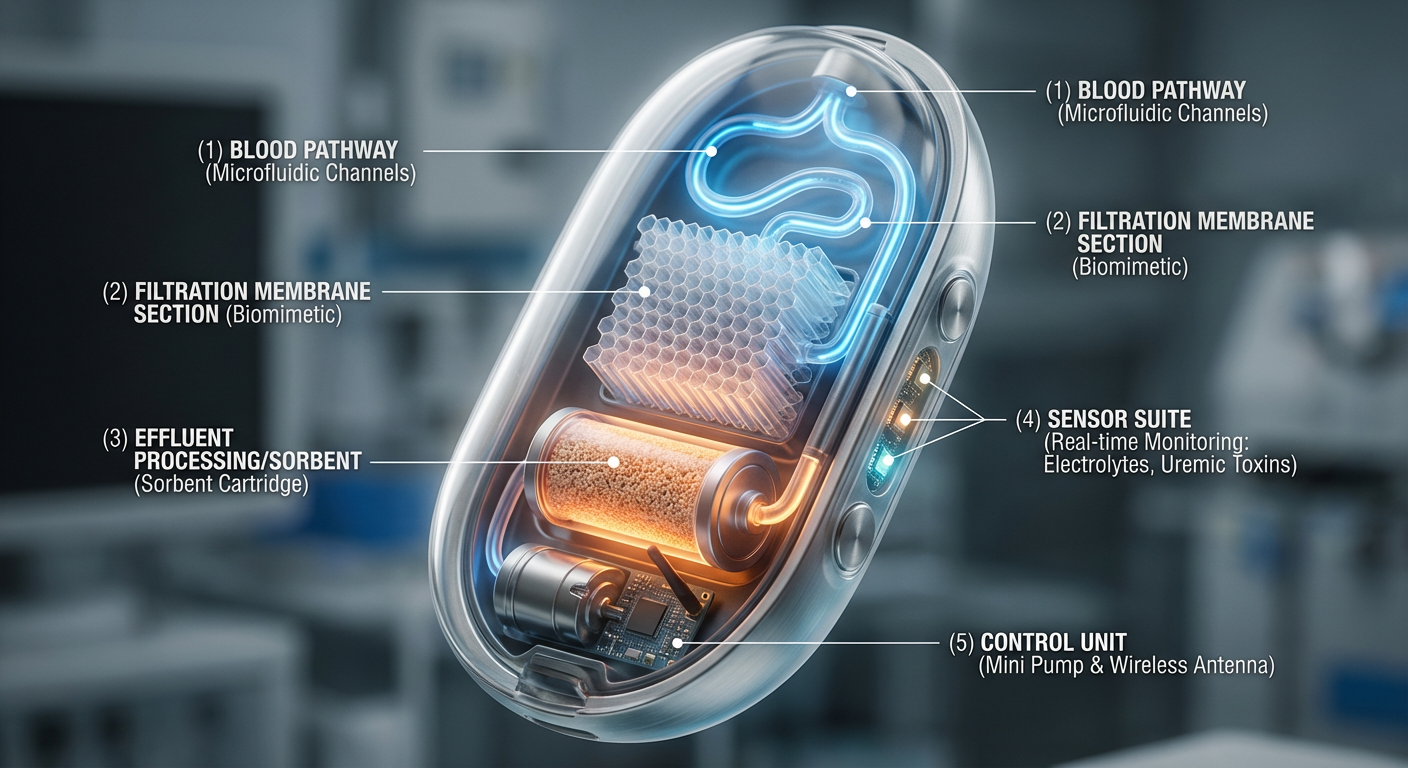
30.2.1 Core Principles of Advanced Filtration Redesign
The redesigned mechanical filtration units are predicated on several key principles:
30.2.1.1 Enhanced Solute Selectivity
Future devices aim to discriminate more effectively between essential and toxic solutes, potentially leveraging novel membrane materials or bio-hybrid systems. This contrasts with current membranes which, while improving, still exhibit non-selective removal patterns.
30.2.1.2 Physiological Fluid Dynamics
Optimization of blood flow patterns and ultrafiltration control to minimize shear stress on blood components and maintain cardiovascular stability, thereby reducing the risk of intradialytic hypotension and its long-term sequelae.
30.2.1.3 Continuous or Near-Continuous Operation
Moving towards prolonged, gentler RRT, akin to native kidney function, which could ameliorate the "feast-or-famine" cycle of conventional intermittent hemodialysis. This would address issues such as diurnal variations in solute levels, for instance, serum phosphate and parathyroid hormone (PTH) which are observed to be lower early in the day and higher late in the day 309.
30.3 Integrated Approaches to Mitigate Dialysis-Associated Complications
Future RRT systems are envisioned not merely as standalone filtration devices, but as integrated platforms for comprehensive patient management, directly addressing and mitigating common dialysis-associated complications.
30.3.1 Holistic Management of Mineral and Bone Disorder
Secondary hyperparathyroidism (SHPT) remains a significant challenge, especially in patients with coronary artery disease (CAD) requiring percutaneous coronary intervention (PCI), where strict management of SHPT is crucial for improving prognosis 309. While parathyroidectomy (PTx) can be effective, it carries its own morbidities, including increased hospitalization rates and hospital days in the year following the procedure compared to the preceding year 309. Future RRT technologies could integrate enhanced phosphate removal capabilities, potentially through novel sorbent technologies or improved filtration kinetics, to stabilize serum phosphate and PTH levels more effectively throughout the day, thus obviating or reducing the need for aggressive pharmacological or surgical interventions. The observed diurnal variation in phosphate and PTH 309 further emphasizes the need for continuous or adaptive RRT strategies that can respond to these fluctuations, moving beyond fixed-schedule intermittent treatments.
30.3.2 Electrolyte Homeostasis and Hyperkalemia Mitigation
Hyperkalemia is a life-threatening complication in end-stage renal disease (ESRD). While potassium binders such as sodium polystyrene sulfonate (SPS) and patiromer have demonstrated efficacy in lowering serum potassium levels in hemodialysis patients meeting hyperkalemia criteria 309, future RRT innovations could aim to integrate more precise, real-time potassium management. This might involve sensor-driven adjustment of dialysate potassium concentration or novel exchange resins embedded within the RRT circuit to maintain physiological potassium levels continuously, thereby reducing reliance on external pharmacological interventions and their associated side effects.
30.3.3 Personalized and Adaptive Dialysis Modalities
The future of RRT points towards highly personalized and adaptive systems. Incremental hemodialysis, for instance, has already demonstrated safety comparable to conventional hemodialysis with respect to mortality risk in appropriately selected patients, concurrently reducing hospitalization likelihood 309. This concept forms a foundational step towards RRT systems that dynamically adjust treatment parameters based on an individual patient's real-time physiological status, biomarker profiles, and clinical needs. Advanced RRT devices will incorporate sophisticated biosensors and machine learning algorithms to monitor parameters like uremic toxin levels, electrolyte balance, volume status, and even inflammatory markers. This data-driven approach will enable the system to optimize filtration rates, dialysate composition, and treatment duration on a minute-by-minute basis, moving beyond standardized prescriptions to truly tailored therapy. Such adaptive systems could proactively address systemic harms, potentially reducing inflammatory burden, stabilizing cardiovascular function, and minimizing the risk of complications such as acute cardiac events or progressive bone disease.
30.4 Economic and Quality of Life Considerations
The overarching goal of these technological advancements is not solely clinical efficacy but also a substantial improvement in patient quality of life and healthcare economics. By providing "better dialysis" that approximates native kidney function, advanced RRT systems are projected to deliver "better patient outcomes" and concurrently "save money" 310. This economic benefit stems from a reduction in the incidence and severity of dialysis-related complications, leading to fewer hospitalizations, emergency department visits, and decreased reliance on costly medications or interventions for managing sequelae such as SHPT or hyperkalemia. The ability of incremental hemodialysis to reduce hospitalization likelihood 309 serves as a tangible precursor to the broader impact anticipated from more comprehensive RRT redesigns. Ultimately, by mitigating systemic harm and enhancing physiological stability, these emerging technologies promise a future where RRT sustains life with significantly improved health and autonomy for patients, reshaping the landscape of chronic kidney disease management.
Appendix (Cited Content)
| 1 |
Motion Artifacts Reduction for Noninvasive Hemodynamic Monitoring of Conscious Patients Using Electrical Impedance Tomography: A Preliminary Study 2023-06-02
Specifically, noninvasive hemodynamic monitoring is important for patients undergoing hemodialysis (HD) because the hemodynamic imbalance induced by HD leads to significant stress on the heart and peripheral vasculature [11,12,13,14]....
|
| 2 |
The Activity of the Dorsal Anterior Cingulate Cortex Promotes the Top - down Regulation of Sensorimotor Synchronization 2023-12-08
... bounded energy function demonstrates system convergence's stability. The simulation verification confirmed that the AUV formation could achieve the convergence of the formation state under local obstacle avoidance. doi:10.20944/preprints202304.1076. Motion Artifacts Reduction for Noninvasive Hemodynamic Monitoring of Conscious Patients using Electrical Impedance Tomography Thi Hang Dang, Geukyung Jang, Kyonghun Lee, Tong In Oh Subject: Medicine And Pharmacology, Cardiac And Cardiovascula...
|
| 3 |
What is an Acute Kidney Injury (AKI)? ( 2023-09-28
Patients may also require mechanical ventilation and hemodynamic monitoring to monitor intravascular fluid volume. -Treatable causes are treated as soon as possible - if obstruction is the cause, a catheter, endoscopy, or surgery may be needed to relieve the obstruction. -Nephrotoxic drugs are stopped and drugs excreted by the kidneys are adjusted. -If AKI is caused by a lack of fluids, then IV fluids are given. If AKI has caused fluid excess & edema, then daily water intake is restricted. -...
|
| 4 |
Fulminant Nonocclusive Mesenteric Ischemia Just after Hip Arthroplasty 2023-02-08
... hemoglobin was 6.2 g/dL. Plasma biochemical tests furnished glycemia = 25 mg/dL, Na = 123 mmol/L, K = 5.3 mmol/L, and creatinine = 2.3 mg/dL. Due to circulatory instability, the patient was submitted to hemodynamic monitoring with Swan-Ganz catheter, which evidenced alteration in the main parameters (cardiac output = 3.9 mL/min/ m 2 , pulmonary capillary pressure = 36 mmHg, and systemic vascular resistance = 800 din/s/c m 5 ), thereby characterizing a septic shock with a clear left ventricul...
|
| 5 |
Estimation of the fluid balance in the ICU is generally held to be important because it offers some idea of whether or not the patient is "fluid overloaded", and by how much. 2023-12-10
... al. "Volume assessment in mechanically ventilated critical care patients using bioimpedance vectorial analysis, brain natriuretic peptide, and central venous pressure." International journal of nephrology 2011 (2010). Vincent, Jean-Louis, et al. "Clinical review: Update on hemodynamic monitoring-a consensus of 16." Crit Care 15.4 (2011): 229. Wiedemann HP, Wheeler AP, Bernard GR et al. Comparison of two fluid-management strategies in acute lung injury. N Engl J Med 2006; 354: 2564 - 2575. ...
|
| 6 |
Hemodynamic Adaptation and Cardiac Effects of High-Flow Arteriovenous Access in Hemodialysis Patients: A Prospective Study 2025-06-25
This study reveals AV access-driven cardiac adaptations in patients with high Qa/CO and low COef, emphasizing the necessity for ongoing clinical and hemodynamic monitoring. 1. Introduction The adoption and development of techniques to establish arteriovenous fistula (AVF) present a viable option for hemodialysis (HD) therapy....
|
| 7 |
First Real-Time Imaging of Acute Effects of Arteriovenous Fistula on Regional Distribution of Pulmonary Perfusion in a Novel Porcine Model 2025-01-31
Continuous hemodynamic monitoring was performed throughout the protocol. The following functional images were analyzed by electrical impedance tomography (EIT): perfusion and ventilation distributions. We found an increased cardiac output and right ventricular work, which was strongly correlated to an increased pulmonary artery mean pressure (r=0.878, P=0.001). The ventral/dorsal ratio of pulmonary perfusion decreased from 1.9 1.0 to 1.5 0.7 (P=0.025). The percentage of total pulmonary blood flo...
|
| 8 |
Positioning of the Central Venous Catheter for Hemodialysis Using Wireless Intracavitary ECG: A Case Series and Narrative Review of the Literature 2025-04-01
Historically, the arteriovenous fistula (AVF) has been regarded as the gold standard vascular access for hemodialysis; however, in a growing number of cases, the process now begins with temporary or tunneled cuffed catheters. Traditionally, there has been an associated survival benefit for patients on hemodialysis who have an arteriovenous fistula compared to those using a central venous catheter. This survival advantage is attributed to the superior hemodynamics and reduced risk of infection as...
|
| 9 |
Ultrafiltration rate is an important determinant of microcirculatory alterations during chronic renal replacement therapy 2017-02-19
In phase I all patients were subject to their routine 4-h HD session, using a standard bicarbonate dialysate on normal temperature. During this period linear UF was maintained at a constant rate, in order to achieve a quantitative ultrafiltrate target, based upon the registered ideal dry weight of the patient. Primary endpoint is the difference in MFI between baseline and post intervention. In phase II patients from the Netherlands were subject to 2 additional combinations of HD and UF: 4 h of ...
|
| 10 |
INTRADIALYTIC MONITORING OF HEMODYNAMIC STATUS BASED ON DETECTION OF OXYGEN SIGNATURE PHASE SHIFT | Fresenius Medical Care Holdings, Inc 2021-10-06
In a further exemplary embodiment, the modification includes: lowering an ultrafiltration rate; pausing the hemodialysis treatment; adjusting the patient position; lowering dialysate temperature; infusing saline; increasing sodium concentration in dialysate; and/or triggering a relatively higher frequency of blood pressure measurements. In a further exemplary embodiment, the at least one controller is further configured to analyze the one or more determined OSPS values or the one or more determ...
|
| 11 |
Critical Care Equipment Market 2019: Size, Share, Demand, Trends, Growth, Industry Analysis till 2026 - Data Bridge Market Research 2019-11-21
... market research report offers lucrative opportunities by breaking down complex market data into segments based on - Critical Care Equipment (Patient Monitors, Sleep Apnea Devices, Defibrillator, Anesthesia Machine, Ventilators, Infusion Pump, Blood Warmer), Type of Monitoring (Hemodynamic Monitoring, Vital Signs Monitoring, Neurologic Monitoring, Brain Function Monitoring), (Adult, Geriatric, Pediatric and Neonates), (Surgeries, Coronary Angioplasty, Atrial Fibrillation, Acute Coronary Syn...
|
| 12 |
Sodium Nitroprusside (Nitropress) Injection (Sodium Nitroprusside for Injection): Uses, Dosage, Side Effects, Interactions, Warning 2023-06-06
When sodium nitroprus side is used in the treatment of acute conges tive heart failure, titration of the infusion rate must be guided by the results of invasive hemodynamic monitoring with simultaneous monitoring of urine output....
|
| 13 |
Risk factors associated with adverse cardiovascular events during orthotopic liver transplantation and the early post-transplant period 2025-05-31
Standard hemodynamic monitoring, including arterial and central venous lines, was conducted....
|
| 14 |
Acute Kidney Injury: Criteria, Risks And Therapy 2023-12-07
... for the haemodialysis therapy. Fluid resuscitations are performed on her with infusions of crystalloid packed cells and colloids. Infusions of Dobutamine and Noradrenaline are commenced. A pulmonary artery catheter is inserted at 0400 hours for hemodynamic monitoring. Her initial blood glucose level is 12.1 According to Kakajiwala et al. (2016), it is effective to prevent the kidney problems by providing the patient with lots of fluid and salts or bicarbonates. The alternative therapy could...
|
| 15 |
Nurses' Knowledge and Behavior in Hospitals Regarding the Prevention of Central Line-Associated Bloodstream Infections: A Systematic Review 2025-05-29
These catheters facilitate the administration of intravenous fluids, blood products, medications, hemodialysis, and hemodynamic monitoring....
|
| 16 |
All fellows are expected to maintain certification in basic and advanced cardiopulmonary resuscitation. 2023-12-08
Insert central venous catheters, temporary hemodialysis catheters, and arterial catheters and know how to properly calibrate hemodynamic monitoring equipment....
|
| 17 |
PLASMA DETOXIFICATION AND VOLUME CONTROL SYSTEM AND METHODS OF USE | HemoLife Medical Inc 2007-08-08
... also no evidence of adsorption column-related electrolyte abnormalities or consumption of clotting factors. There was minor anticoagulation-related bleeding noted at the cut down sites for the hemodialysis catheter in addition to the invasive hemodynamic monitoring catheters (pulmonary artery catheter and arterial catheter). TABLE 2 A comparison of the effect of the toxin removal device of the present invention inclusion into an extracorporeal circuit in a canine model prior to and follow...
|
| 18 |
Plasma detoxification and volume control system and methods of use | Hemolife Medical, Inc 2011-10-17
... also no evidence of adsorption column-related electrolyte abnormalities or consumption of clotting factors. There was minor anticoagulation-related bleeding noted at the cut down sites for the hemodialysis catheter in addition to the invasive hemodynamic monitoring catheters (pulmonary artery catheter and arterial catheter). TABLE 2 A comparison of the effect of the toxin removal device of the present invention inclusion into an extracorporeal circuit in a canine model prior to and follo...
|
| 19 |
PLASMA DETOXIFICATION AND VOLUME CONTROL SYSTEM | Hemolife Medical, Inc 2016-05-17
... also no evidence of adsorption column-related electrolyte abnormalities or consumption of clotting factors. There was minor anticoagulation-related bleeding noted at the cut down sites for the hemodialysis catheter in addition to the invasive hemodynamic monitoring catheters (pulmonary artery catheter and arterial catheter). Table 2: A comparison of the effect of the toxin removal device inclusion into an extracorporeal circuit in a canine model prior to and following conclusion of 4 hours ...
|
| 20 |
Interference of Continuous Renal Replacement Therapy on PiCCO Hemodynamic Monitoring: A Case Report 2025-10-16
... advanced management. At the time of transfer, he required continuous infusions of norepinephrine (0.4 μg/kg/min) and epinephrine (0.1 μg/kg/min), administered through a central venous catheter, to maintain adequate blood pressure. Invasive hemodynamic monitoring was initiated using the PiCCO2 system (Pulsion Medical Systems, Munich, Germany). To facilitate continuous venovenous hemodiafiltration (CVVH - DF), a 13.5 Fr Niagara double - lumen hemodialysis catheter (Bard, Murray Hill, NJ, USA)...
|
| 21 |
'Fulminant hepatic failure' anesthesiologic considerations 2025-05-31
In contrast, invasive hemodynamic monitoring may be necessary to optimize fluid management and the use of vasopressors or inotropes....
|
| 22 |
General Principles of Poisoning - Injuries; Poisoning - MSD Manual Professional Edition 2022-05-25
https://www.msdmanuals.com/professional/injuries-poisoning/poisoning/general-principles-of-poisoning
If fluids are ineffective, invasive hemodynamic monitoring may be necessary to guide fluid and vasopressor therapy....
|
| 23 |
General Principles of Poisoning - Injuries; Poisoning - Merck Manuals Professional Edition 2023-09-22
If fluids are ineffective, invasive hemodynamic monitoring may be necessary to guide fluid and vasopressor therapy....
|
| 24 |
Intra-abdominal hypertension/abdominal compartment syndrome of pediatric patients in critical care settings 2025-07-16
This procedure and hemodialysis aim to achieve a net negative or zero fluid balance in patients with IAH to reduce the progression of secondary ACS . In addition, the administration of vasoactive drugs and hemodynamic monitoring are often crucial in ensuring an adequate level of APP . These suggestions of the author cannot be recommended yet. However, the current Abdominal Compartment Society guidelines do not recommend the use of APP in the resuscitation process ....
|
| 25 |
Autonomic Testing / Sudomotor Tests - Medical Clinical Policy Bulletins | 2023-12-10
Finapres NOVA is a non-invasive hemodynamic monitoring system which provides continuous blood pressure monitoring using a finger cuff....
|
| 26 |
Differential Effects of E-Cigarette on Microvascular Endothelial Function, Arterial Stiffness and Oxidative Stress: A Randomized Crossover Trial 2023-09-29
Finger systolic and diastolic blood pressure (SBP and DBP) waveforms were obtained throughout the sessions with a beat-to-beat hemodynamic monitoring system (Finometer Pro, FMS , Amsterdam, the Netherlands) on the right middle finger24....
|
| 27 |
SYSTEMS, METHODS AND WEARABLE BIOSENSING DEVICES FOR USE IN A DIAGNOSTIC ARCHITECTURE | Alio, Inc 2024-06-27
... changes in photon absorption and reflectance can be detected in the PPG waveform. The PPG sensor module contains multiple optical paths arranged in a specific geometric configuration that has been specifically configured for use in hemodynamic monitoring of blood vessels, arteriovenous fistulas, or homogenously perfused tissue sites. One of the other key physiologic parameters measured by the sensor is hematocrit (Hct). The association between PPG signals and hemoglobin concentration has be...
|
| 28 |
Jan Berkow is a medical device industry consultant and serves as a contractor to the Center for Military Medicine Research at the University of Pittsburgh as the TRACIR Program Manager. 2023-05-28
He has extensive domain expertise in the field of non-invasive cardiovascular hemodynamic monitoring and related sensor technologies. He was previously the Chief Technology Officer, co-founder, and inventor of Intelomed's CVInsight, a non-invasive cardiovascular patient monitoring platform that has been commercialized in the hemodialysis market to aid in providing treatment optimization. Prior to his current healthcare "treat-to-order" healthcare focus, he was an industrial process consultant fo...
|
| 29 |
Phenotypic and Genotypic Assays to Evaluate Coagulase-Negative Staphylococci Biofilm Production in Bloodstream Infections 2024-01-07
Bacteria can attach to a wide range of surfaces, the physicochemical properties of which influence the adhesion behaviour of cells on the surface of the material and the subsequent process of biofilm formation . Charge and hydrophobicity are two major components that influence bacterial - surface interactions. The chemical properties of the bacterial cell envelope may vary, but as a general rule, they are often negatively charged; therefore, surfaces with positive or neutral charges are more eas...
|
| 30 |
Central Venous Catheter Placement Gone Awry: A Case Report of Right Internal Jugular Central Line Entering Subclavian Artery 2022-11-03
While central venous access is necessary for a variety of situations including inadequate peripheral venous access, medication administration, hemodynamic monitoring, vasopressor administration, and hemodialysis, complications during the insertion process are not uncommon....
|
| 31 |
Biocompatibility of a Marine Collagen-Based Scaffold In Vitro and In Vivo 2020-08-10
The overall goal is to find a replacement to synthetic polymer materials used as medical devices, which do not integrate with the body and may trigger an immune response such as chronic inflammation . The use of natural materials as scaffolds is beneficial, and recently it has been shown that certain marine organisms are a promising bio-source to obtain collagen for scaffold formation in a variety of biomedical applications. The great interest in the field is highlighted by a series of studies f...
|
| 32 |
Hepatic tissue engineering: from transplantation to customized cell-based liver directed therapies from the laboratory 2007-12-31
... systems, porcine hepatocytes are being used. The advantage of these cells is their cheap and easy availability. As long as the porcine hepatocytes are kept outside the patients' circulation there is no danger of immunological reactions. For cell transplantation the possible usage of genetically altered porcine hepatocytes that lack α-galactose is currently discussed . For cell culture different types of bioreactors exist. For BAL devices mostly hollow fibre bioreactors loaded with porcine he...
|
| 33 |
Each of the research projects below centers around the creation, characterization and modeling of nanostructured materials for biological and energy applications. 2023-12-09
Each of the research projects below centers around the creation, characterization and modeling of nanostructured materials for biological and energy applications. --- Discovering, designing, characterizing and applying nanomaterials are national research priorities because of the crucial importance of nanomaterials in solving the looming energy crisis, their growing application in medicine (in bio-mimetic and bio-compatible materials), and in post- silicon nanoelectronics....
|
| 34 |
BIDIRECTIONAL NEURON-ELECTRONIC DEVICE INTERFACE STRUCTURES | NeuroSilica, Inc 2023-03-14
The dielectric polymer layers employed in the interface structure 100e depicted in FIG. 6 may be composed of bio-compatible materials with high dielectric properties....
|
| 35 |
Benefits of Choosing a Biological Dentist for Your Dental Care Masstamilan Online clenbuterol for sale - steroids-usa.net 2023-11-30
A biological dentist prioritizes the importance of utilizing bio-compatible materials, holistic approaches, and minimally invasive techniques for all dental procedures. They also focus on improving the overall well-being of their patients by emphasizing nutrition and lifestyle changes that may positively impact their oral and general health. Principles of Biological Dentistry Principle #1: Minimally Invasive Procedures At the core of biological dentistry is a commitment to minimally invasive ...
|
| 36 |
From vessel-repairing in our bloodstream to drug-delivering in our synapses, will these bots wage war against or repair our bodily systems? 2023-09-26
While self-destructing biohybrid microbots concepts already exist, Akolpuglu adds that scientists still need to ensure "that these microrobots can be operated within a body for the long term, even in the face of potential immunological reactions." Simply put, scientists must ascertain whether these machines will be able to pass through the body without instigating an immune response or pose other problems that could have far-reaching consequences. Right now, the ability to steer and direct bio...
|
| 37 |
Biomolecular Anticoagulant Platform Could Revolutionize Heart Surgery 2022-07-18
... that are tiny, harmless, inactive and easily excreted by the renal system. The entire process takes place outside the cell, through extracellular communication with the thrombin. The researchers note that this is important as immunological reactions do not appear to occur, based on their extensive studies. The team has tested and validated the platform using computer models, human blood and various animal models. The technology may provide a foundation for other biomedical applications that...
|
| 38 |
Reduction of Pro-Inflammatory Markers in RAW264.7 Macrophages by Polyethylenimines 2024-03-06
The physiological problem of chronic inflammation and its associated pathologies attract ongoing attention with regard to methods for their control. Current systemic pharmacological treatments present problematic side effects. Thus, the possibility of new anti-inflammatory compounds with differing mechanisms of action or biophysical properties is enticing. Cationic polymers, with their ability to act as carriers for other molecules or to form bio-compatible materials, present one such possibili...
|
| 39 |
Intermittent Convective Therapies in Patients with Acute Kidney Injury: A Systematic Review with Meta-Analysis 2021-04-25
We conducted a systematic review and meta-analysis to determine the safety, clinical efficacy, and clearance efficiency of hemofiltration (HF) and hemodiafiltration (HDF) compared to hemodialysis (HD) in patients with acute kidney injury (AKI) receiving intermittent RRT. We searched Medline, Embase, Cochrane Library, and PROSPERO. We included clinical trials and observational studies that reported the use of intermittent HF or HDF in adult patients with AKI. The following outcomes were include...
|
| 40 |
A Critical Role of Neutrophil-Driven Amplification of Chronic Microinflammation in the Biocompatibility of Hemodialysis 2025-07-03
Cool dialysate hemodialysis is a therapeutic approach aimed at preventing intradialytic hypotension and improving cardiovascular stability . Hypothermic conditions have been shown to suppress the activation of neutrophils and monocytes, suggesting that dialysate temperature may influence biocompatibility. One study reported that reducing the dialysate temperature to 20 °C attenuated the decline in leukocyte counts during dialysis ....
|
| 41 |
Ultrafiltration - sodium profiles and their impact on thirst and xerostomia in hemodialysis patients 2025-11-04
The observed improvements can be mechanistically explained by the synergistic effect of sodium and ultrafiltration profiling on hemodynamic stability and plasma osmolality. Thirst in dialysis patients is primarily triggered by osmotic and volume changes. Rapid fluid removal can lead to increased plasma osmolality, stimulating thirst mechanisms15 . The linear sodium reduction protocol (150→138 mmol/L) mitigated the rapid decline in plasma osmolality typically seen during conventional hemodialysis...
|
| 42 |
(Health-NewsWire.Net, March 10, 2022 ) As per Persistence Market Research's latest revised industry analysis, the global Hemodynamic Monitoring Systems Market was valued at over US$ 1.5 Bn in 2020 an 2022-07-02
(Health-NewsWire.Net, March 10, 2022 ) As per Persistence Market Research's latest revised industry analysis, the global Hemodynamic Monitoring Systems Market was valued at over US$ 1.5 Bn in 2020 an --- Growth is set to lead to management of cardiac output with minimal continuous observation and a patient- and physician-adaptable interface to provide feedback and alerts predicting hemodynamic instability. Although the market has witnessed the advancement of technology in terms of hemodynamic m...
|
| 43 |
Perioperative Blood Pressure Optimization to Improve Outcomes in Orthopedic Patients: A Clinical Review 2025-12-07
Future research should validate personalized blood pressure targets and explore the role of advanced hemodynamic monitoring in enhancing patient safety. Introduction Orthopedic surgery is one of the most frequently performed procedures worldwide, with millions of joint arthroplasties, spinal reconstructions, limb operations, and trauma-related interventions annually.1 - 3 Blood pressure instability in the perioperative period (encompassing preoperative, intraoperative, and postoperative phases...
|
| 44 |
SARS-CoV-2 Aiming for the Heart: A Multicenter Italian Perspective About Cardiovascular Issues in COVID-19 | 2022-06-26
... medullary nucleus or of the dorsal motor nucleus of the vagus nerve might evoke nausea and vomiting frequently observed in COVID-19 patients (Goldstein, 2020). Electrical evaluation of both heart and brain activities, echocardiography, invasive hemodynamic monitoring, and serum brain natriuretic peptide can help clarify the cardiogenic component (Yufu et al., 2006; Mazeraud et al., 2016). Notably, any infection of central nervous tissues is accompanied by massive infiltration of leukocytes, ...
|
| 45 |
Infrared Sensor Detection and Actuator Treatment Applied during Hemodialysis 2020-04-28
This irradiation process can reduce the number of times kidney dialysis patients need to perform fistula surgery due to a fistula embolization; thereby the kidney dialysis patients can have a more stable quality of life and relieve the physical discomfort caused by the kidney dialysis process. The biggest difference from the existing vein detection method is that the existing vein detection method only exists individually and independently for infrared imaging. This study has combined the functi...
|
| 46 |
The Hemodynamic Monitoring Systems Market is bound to grow on a gracious note in the next 10 years. 2022-03-13
The Hemodynamic Monitoring Systems Market is bound to grow on a gracious note in the next 10 years. --- Growth is set to lead to management of cardiac output with minimal continuous observation and a patient- and physician-adaptable interface to provide feedback and alerts predicting hemodynamic instability. Although the market has witnessed the advancement of technology in terms of hemodynamic monitoring, the lack of trained professionals for the operation of instruments poses a restrictive fa...
|
| 47 |
The Hemodynamic Monitoring Systems Market to Ride On Converting Healthcare Consumerism Challenges into Opportunities - MENA NEWS | 2023-12-10
The growth of hemodynamic monitoring systems is supported by rising health expenditure by governments as well as private players, especially in developed economies. Growth is set to lead to management of cardiac output with minimal continuous observation and a patient- and physician-adaptable interface to provide feedback and alerts predicting hemodynamic instability....
|
| 48 |
COVID-19 impact on the renal system: Pathophysiology and clinical outcomes 2021-09-30
... treatment, avoiding nephrotoxic drugs, and, if possible, an early application of RRT . Implementation of the KDIGO supportive care guideline (e.g., avoidance of nephrotoxins, regular monitoring of serum creatinine and urine output, consideration of hemodynamic monitoring) in critically ill patients with kidney involvement is likely to reduce both occurrence and severity of AKI in COVID-19, but requires validation . Evidence suggests that conservative management of volume overload, metabolic...
|
| 49 |
PLASMA DETOXIFICATION AND VOLUME CONTROL SYSTEM | Hemolife Medical, Inc 2016-05-17
characterized in that said adsorbents are coated with albumin prior to use in said adsorption device, and in that the hemofilter (128) combines zero-balance ultrafiltration and continuous veno-venous hemofiltration. ... The test results obtained demonstrated that treatments using the adsorptive toxin removal device in conjunction with a commercially available kidney dialysis system, the Diapact ™ continuous renal replacement therapy (CRRT) system (B|BRAUN Medical Inc., Bethlehem, PA) in plasma a...
|
| 50 |
Plasma detoxification system and methods of use - ROBERTS CRAIG P. 2022-05-24
... for an additional four hours (total of 6 liters of plasma processed by present invention). Testing demonstrated that inclusion of the present invention into an extracorporeal circuit did not result in evidence of hemodynamic instability, hemolysis, thrombocytopenia, leukopenia, or nonspecific loss of fibrinogen or albumin (see FIG. 7a-f. ET=End of Treatment values). Over the course of the 4 hours of extracorporeal circulation, including the present invention, there was an increase in mean ...
|
| 51 |
Hepatic tissue engineering: from transplantation to customized cell-based liver directed therapies from the laboratory 2007-12-31
BAL systems, porcine hepatocytes are being used. The advantage of these cells is their cheap and easy availability. As long as the porcine hepatocytes are kept outside the patients' circulation there is no danger of immunological reactions. For cell transplantation the possible usage of genetically altered porcine hepatocytes that lack α-galactose is currently discussed . For cell culture different types of bioreactors exist. For BAL devices mostly hollow fibre bioreactors loaded with porcine he...
|
| 52 |
DOSAGE AND ADMINISTRATION OF ANTI-C5 ANTIBODIES FOR TREATMENT OF PAROXYSMAL NOCTURNAL HEMOGLOBINURIA (PNH) AND ATYPICAL HEMOLYTIC UREMIC SYNDROME (AHUS) | Alexion Pharmaceuticals, Inc 2025-05-07
PNH is a condition in which uncontrolled complement activity leads to systemic complications, principally through intravascular hemolysis and platelet activation (see Socie G, et al., French Society of Haematology....
|
| 53 |
DOSAGE AND ADMINISTRATION OF ANTI-C5 ANTIBODIES FOR TREATMENT OF PAROXYSMAL NOCTURNAL HEMOGLOBINURIA (PNH) AND ATYPICAL HEMOLYTIC UREMIC SYNDROME (AHUS) | Alexion Pharmaceuticals, Inc 2025-04-23
PNH is a condition in which uncontrolled complement activity leads to systemic complications, principally through intravascular hemolysis and platelet activation (see Socid G, et al., French Society of Haematology....
|
| 54 |
The Risk Factors of Hypotension in Patients with End-Stage Chronic Glomerulonephritis During Maintenance Hemodialysis 2025-08-27
Finally, low plasma albumin level reflects malnutrition and inflammation, which may reduce plasma colloid osmotic pressure, aggravate tissue edema, and reduce effective circulating blood volume. At the same time, the release of inflammatory factors (such as IL-6 and TNF-α) can induce nitric oxide-mediated vasodilation, and the above pathophysiological processes together promote hypotension.33 In this study, multivariate analysis was used to confirm its independent predictive value, which provide...
|
| 55 |
Pulse wave-driven machine learning for the non-invasive assessment of coronary artery calcification in patients with end-stage renal disease undergoing hemodialysis 2025-08-28
During the hemodialysis process, patients typically experience a progressive decline in circulating blood volume....
|
| 56 |
Cardiac Surgery - Associated Acute Kidney Injury 2024-04-30
The 2012 guidelines from KDIGO suggest various supportive measures to prevent and treat AKI. These measures include discontinuing nephrotoxins, optimizing fluid status and hemodynamics, using functional hemodynamic monitoring, regularly monitoring serum creatinine and urine output, and avoiding hyperglycemia, among other recommendations.71 Perioperative Medications, Nephrotoxins Certain medications can significantly increase the risk of AKI, particularly in vulnerable populations. When administ...
|
| 57 |
List of PDF Full Texts available from EurekaMag Chapter 59530 2022-08-18
... density Magnetic Resonance Imaging (MRI) through a visual grading analysis (VGA) study , Radiography 23(2): 117-124 (2017) Comparison of Iodixanol and Iopromide in Patients With Renal Insufficiency and Congestive Heart Failure Undergoing Coronary Angiography by Hemodynamic Monitoring , Angiology 68(10): 907-913 (2017) Comparison of Ion Personal Genome Machine Platforms for the Detection of Variants in BRCA1 and BRCA2 , Cancer Research and Treatment: Official Journal of Korean Cancer Ass...
|
| 58 |
Apparatus for extracorporeal treatment of blood | Gambro Lundia AB 2025-07-21
... the dialysate solution and to prevent hemolysis. Document WO 2014121157 discloses a flow loop for hemodialysis, hemodiafiltration and hemofiltration for the treatment of pathological conditions provided with a heater. A temperature sensor is used for closed loop control of dialysate temperature by action of the controller and heater. The temperature of the dialysis solution is controlled to achieve the correct disinfection temperature or to determine the sodium bicarbonate concentration. D...
|
| 59 |
Vesical perfusion volume and internal iliac pressure during double balloon-occluded arterial infusion chemotherapy for bladder cancer 2025-08-10
The findings demonstrate a significant positive correlation between blood perfusion volume in the vesical artery region and the reduction in IIABP following balloon occlusion. Relevance statement Our results suggest that decreased IIABP after balloon occlusion could result in high concentrations of anticancer drugs in the vesical artery region, and favorable local tumor control in bladder cancer. Key Points D-BOAI chemotherapy can treat invasive bladder cancer without radical cystectomy. II...
|
| 60 |
Biofeedback in dialysis 2004-04-01
The traditional control of the dialysis session comes about by means of an open-loop system. At the beginning of the session some parameters are set, such as the kind of dialyzer, the blood flow, the ultrafiltration rate, the dialysate conductivity and the dialysate temperature. Generally speaking, these parameters are not modified unless there occur complications in the patient that call for adjustments to be made. The biofeedback concept, which is synonymous with a closed-loop control of biol...
|
| 61 |
Info: 4355 words (17 pages) Nursing Essay 2023-02-02
In the future it may become possible to integrate blood volume monitoring, blood temperature monitoring and sodium profiling , within a closed-loop of bio feed back system. Which automatically set the U.F rate the dialysis sodium concentration, and the dialysate temperature....
|
| 62 |
This essay describes about intradialytic hypotension in haemodialysis patients. 2023-06-02
In the future it may become possible to integrate blood volume monitoring, blood temperature monitoring and sodium profiling , within a closed-loop of bio feed back system. Which automatically set the U.F rate the dialysis sodium concentration, and the dialysate temperature....
|
| 63 |
Comparison of blood volume biofeedback hemodialysis and conventional hemodialysis on cardiovascular stability and blood pressure control in hemodialysis patients: a systematic review and meta-analysis of randomized controlled trials 2023-12-31
These systems are based on the control of biological parameters (temperature, conductivity, blood volume reduction, blood pressure, etc.). Among these, blood volume tracking is a 'biofeedback system' that, via closed-loop control of blood volume variations, modifies the ultrafiltration rate and/or dialysate conductivity to maintain the blood volume stable and prevent blood volume from dropping below a defined threshold ....
|
| 64 |
Dialysis-Induced Cardiovascular and Multiorgan Morbidity 2020-09-08
Closed-loop feedback control of ultrafiltration rate based on changes of absolute or relative blood volume has resulted in improved hemodynamic stability and reduced incidence of hypotension in some,155 , 159 but not all,157 , 160 studies. However, no studies have explored the effect of ultrafiltration feedback control on patient outcomes.155 , 161 , 162 In addition, these "intelligent" systems should be used with caution, and some researchers advocate cross-checking with other technologies (e.g...
|
| 65 |
Medically reviewed by Darragh O'Carroll, MD - By Adam Felman on October 20, 2023 2023-11-28
Key points: About dialysis for kidney failure. (n.d.). https://www.kidney.org/patients/peers/dialysis Kidney failure. (n.d.). MacEwen C, et al. (2017) Relationship between hypotension and cerebral ischemia during hemodialysis. https://pubmed.ncbi.nlm.nih.gov/28270412/ Mustafa RA, et al. (2016). Effect of lowering the dialysate temperature in chronic hemodialysis: A systematic review and meta-analysis....
|
| 66 |
Apparatus for extracorporeal treatment of blood | Gambro Lundia AB 2025-07-21
A temperature sensor is used for closed loop control of dialysate temperature by action of the controller and heater. The temperature of the dialysis solution is controlled to achieve the correct disinfection temperature or to determine the sodium bicarbonate concentration. Document U.S. Pat. No. 3,809,241 discloses a kidney dialysis apparatus for the dialysis of blood comprising: dialysate supply means; artificial kidney means; a recirculation pump having dialysate solution input and output te...
|
| 67 |
Patient Portal Market Analysis, Size And Trends Global Forecast To 2022-2030 2022-09-26
The patient portal market consists of sales of web portal services by entities (organizations, sole traders, and partnerships) that are used by patients for easy access to personal health information. ... Monitoring Devices and Equipment 2) By End-User: Hospitals and Clinics, Diagnostic Laboratories, Others 3) By Type of Expenditure: Public, Private 4) By Product: Instruments/Equipment, Disposables Subsegments Covered: Fetal Monitoring Devices, Neonatal Monitoring Devices, Temperature Monitoring...
|
| 68 |
Patient Monitoring Devices Market Analysis, Size And Trends Global Forecast To 2022-2030 2022-12-08
Subsegments Covered: Fetal Monitoring Devices, Neonatal Monitoring Devices, Temperature Monitoring Devices, Weight Monitoring Devices, Cardiac Monitoring Devices, Neuromonitoring Devices, Respiratory Monitoring Devices, Hemodynamic Monitoring Devices, Multiparameter Monitoring Devices, Cardiac Monitors, Respiratory Monitors, Hematological Monitors, Vital Parameter Monitors And Other End Users...
|
| 69 |
Vital Parameter Monitoring Devices And Equipment Market Analysis, Size And Trends Global Forecast To 2022-2030 2022-09-28
Monitoring Devices and Equipment 2) By End-User: Hospitals and Clinics, Diagnostic Laboratories, Others 3) By Type of Expenditure: Public, Private 4) By Product: Instruments/Equipment, Disposables Subsegments Covered: Fetal Monitoring Devices, Neonatal Monitoring Devices, Temperature Monitoring Devices, Weight Monitoring Devices, Cardiac Monitoring Devices, Neuromonitoring Devices, Respiratory Monitoring Devices, Hemodynamic Monitoring Devices, Multiparameter Monitoring Devices, Cardiac Monitors...
|
| 70 |
SYSTEM AND METHODS FOR TREATMENT AND MANAGEMENT OF ONE OR MORE SUBJECTS | The Board of Trustees of the University of Illinois 2014-09-17
presenting on a display the information relative to the one or more subject representations. 2. ... Such devices may include heart monitoring equipment, hemodynamic monitoring equipment including blood pressure and blood flow monitoring equipment, temperature monitoring equipment, oxygen saturation and other respiratory monitoring equipment, assisted breathing apparatuses, neurological monitoring equipment including brain activity monitoring and intracranial pressure monitoring equipment, kidne...
|
| 71 |
Baxter : Top Global Medical Device Companies in 2020 | 2023-06-08
... strategy, Baxter made a pair of noteworthy moves in 2019, both occurring in the second half of the year. Announced in September, the first was the purchase of Cheetah Medical, a provider of non-invasive hemodynamic monitoring technologies. Cheetah was viewed as a natural complement to Baxter given the acquirer's breadth of infusion and IV systems, as well as its presence in critical care and IV therapy. The monitoring technologies of the firm provide dynamic measurements of fluid responsiven...
|
| 72 |
Baxter International Inc: Ex-99.1 (ex-99.1) 2021-04-29
These products are used by hospitals, kidney dialysis centers, nursing homes, rehabilitation centers, doctors' offices and patients at home under physician supervision. Our global footprint and the critical nature of our products and services play a key role in expanding access to healthcare in emerging and developed countries. For financial information about our segments, see Note 16 in Item 8 of this Annual Report on Form 10-K. Recent Business Combinations and Asset Acquisitions Seprafilm A...
|
| 73 |
Accurate Non-invasive Cardiac Output Monitoring with Bioreactance - New Tools May Empower Dramatic Progress in Disease Management | 2023-12-02
... of cardiac output. Existing monitoring devices, both invasive and non-invasive, have notable limitations. For example, the thermodilution technique using a PAC is invasive, risks infection, is time-consuming, and, recently, the use of invasive hemodynamic monitoring has been increasingly criticized because of its uncertain risk - benefit ratio and cost. 30 - 32 As a result, there has been a continuing search for a method of cardiac output measurement that is less invasive than its predecess...
|
| 74 |
Methods, apparatus and articles-of-manufacture for noninvasive measurement and monitoring of peripheral blood flow, perfusion, cardiac output biophysic stress and cardiovascular condition 2007-03-19
... is appropriate to now consider specific aspects of the invention, as claimed herein. Accordingly, generally speaking, and without intending to be limiting, one aspect of the invention relates to a method of continuous non invasive, hemodynamic monitoring, comprising: receiving a radius and pulsatile signal related to pressure and its pulsations in a patient's artery; and processing the signal, at least in part in the frequency domain, to obtain pressure and flow waveforms, as well as a compo...
|
| 75 |
Flexible Printed Electronics 2020-01-01
... modulated pulse width, frequency and intensity. In various embodiments, the apparatus integrated into TENS electrodes includes processing capability that can enable chronic monitoring of biological electrical signals to facilitate diagnostic monitoring as well as therapeutic control. In further applications and/or embodiments, the flexible device can be constructed with the processor operable to accumulate and communicate information about at least one entity in association with the product...
|
| 76 |
Infrared Sensor Detection and Actuator Treatment Applied during Hemodialysis 2020-04-28
... continuous noninvasive monitoring of severe blood pressure, heart rate increase, or risk of morbidity within 4 h of admission. All severe trauma patients that could be monitored were studied and were not excluded. Non-invasive hemodynamic monitoring was started during hemodialysis for 4 h (average 240 10 min), and patients were followed up to the treatment room for emergency instruction. In addition, the database also contains the following data: age, gender, poor nutritional status, poor hy...
|
| 77 |
New Therapeutic Targets in Cardiovascular Diseases (Mar 2022) 2022-04-05
Beyond kidney dialysis and transplantation: what's on the horizon? Hamid Rabb, Kyungho Lee, and Chirag R. Parikh Rabb, H. Division of Nephrology, Department of Medicine, Johns Hopkins University School of Medicine, Baltimore, Maryland, USA. Parikh, C. https://doi.org/10.1172/JCI159308 . 2022 Rabb et al. There are currently over 750,000 patients with end-stage renal disease (ESRD) in the United States. Globally, 2.6 million patients receive renal replacement therapy with either dialysis or ...
|
| 78 |
Preliminary Study to Assess the Safety and Efficacy of a Wearable Artificial Kidney Device for the Treatment of Patients With Endstage Renal Failure 2007-04-01
This is a pilot study of a wearable type of kidney dialysis machine to treat patients with chronic kidney disease. This is a pilot study to evaluate the clearances, tolerability and safety of a wearable artificial kidney device for treating patients with chronic kidney failure. Primary Outcome: urea, potassium, phosphate and B2M clearances fluid removal patient satisfaction questionnaire affect of treatment of cytokines Condition: Renal Failure Enrollment: 8 Intervention: Wearable arti...
|
| 79 |
Infrared Sensor Detection and Actuator Treatment Applied during Hemodialysis 2020-04-28
... times kidney dialysis patients need to perform fistula surgery due to a fistula embolization; thereby the kidney dialysis patients can have a more stable quality of life and relieve the physical discomfort caused by the kidney dialysis process. The biggest difference from the existing vein detection method is that the existing vein detection method only exists individually and independently for infrared imaging. This study has combined the functional mechanism of far-infrared treatment, so t...
|
| 80 |
Noninvasive Medical Technologies Inc: Sb-2 2007-02-12
... status. This need arises in connection with the fact clinicians face several major problems in determining how best to treat patients with artery blockages, heart failure, high blood pressure, shortness of breath, a pacemaker, and kidney dialysis, as well as in trauma and other emergency situations. One of the largest problems faced by clinicians is obtaining specific objective data to assist the medical professional in accurately determining early appropriate therapeutic intervention. The I...
|
| 81 |
BIO ELECTRIC IMPEDANCE MONITORS, ELECTRODE ARRAYS AND METHOD OF USE | SeeMedX, Inc 2023-03-01
... does minimize discomfort to the patient on which the system is used, thereby permitting relatively long-term monitoring of the patient's condition. The device and method disclosed herein may use the above methods to perform hemodynamic monitoring of the patient using the multiple frequency impedance and ECG voltage measurements. FIGS. A and B are a front view and back view, respectively of a second embodiment of a fluid impedance monitor that has a tablet computer form factor. The monitor d...
|
| 82 |
Flexible Printed Electronics 2020-01-01
... being, a non-living being, an organization (business, political, or otherwise), a device, a computer, a network, or the like. For purposes of example, the apparatus can be integrated into a biocompatible, biodegradable form for hemodynamic monitoring of pressure and blood flow within the circulatory system. Thus, the processor and integrated memory in the apparatus can enable Holter monitoring of an ambulatory patient independently of any external device, although supporting communication wi...
|
| 83 |
Hepatorenal syndrome: the 8th international consensus conference of the Acute Dialysis Quality Initiative (ADQI) Group 2011-12-31
We suggest using hemodynamic monitoring, when possible, to help with the management of fluid balance in patients with HRS (2D) (2012)...
|
| 84 |
Preventing acute kidney injury and its longer-term impact in the critically ill 2024-12-31
... to be both feasible and safe and may be an effective method to reduce elevated circulating levels of myoglobin . Furthermore, a recent propensity-matched study demonstrated that the use of hemadsorption was associated with improved kidney outcomes in terms of need for RRT . Of interest, further studies have highlighted that the saturation kinetics of myoglobin may be reached within hours, hence early change of the adsorber in patients with severe rhabdomyolysis might increase the efficacy . ...
|
| 85 |
Treatment or prevention of acute renal failure | GenoMed, LLC 2006-02-13
... the inclusion and exclusion criteria) 48 hour intravenous of either aminophylline. Renal function, dialysis requirements and mortality are monitored for up to 21 days. A subject's history, physical examination, assessment of fluid status (including central hemodynamic monitoring, if available), and laboratory tests (including urinary parameters, if appropriate) are used to determine if acute renal dysfunction is due to ATN or to other causes (such as postrenal, acute renovascular obstructive...
|
| 86 |
Researchers have developed an ultrasound-guided cancer immunotherapy platform that generates systemic antitumor immunity and improves the therapeutic efficacy of immune checkpoint blockade. 2022-07-01
... to temporarily replace heart/ lung function was successfully used in a clinical setting. Survival of SAPIEN high-risk patients equivalent to surgery Edwards Lifesciences Corporation, the global leader in the science of heart valves and hemodynamic monitoring, announced the three-year results of a pivotal clinical study of severe aortic stenosis patients at high-risk for surgery. Patients with cardiac implantable electric devices (CIED) need ongoing and lifelong follow-ups. Due to the grow...
|
| 87 |
Maybe you're looking for a publicly traded medical device, medical instrument, or biotechnology company that might want to acquire your company or license your research, or perhaps you're looking for 2023-01-29
32,000 Website: http://www.bostonscientific.com/ Boston Scientific Corporation, doing business as Boston Scientific, is a manufacturer of medical devices used in interventional medical specialties, including interventional radiology, interventional cardiology, peripheral interventions, neuromodulation, neurovascular intervention, electrophysiology, cardiac surgery, vascular surgery, endoscopy, oncology, urology, and gynecology. Boston Scientific is primarily known for the development of the T...
|
| 88 |
Baxter International Inc: 10-k (10-k) 2021-02-11
... cash acquired, with the potential for additional cash consideration, up to $40 million, based on clinical and commercial milestones for which the acquisition date fair value was $18 million. Cheetah is a leading provider of hemodynamic monitoring technologies. Refer to Note 2 in Item 8 of this Annual Report on Form 10-K for additional information regarding the acquisition of Cheetah. Recothrom and Preveleak In March 2018, we acquired two hemostat and sealant products from Mallinckrodt plc:...
|
| 89 |
Baxter International Inc: Ex-99.1 (ex-99.1) 2021-04-29
... cash acquired, with the potential for additional cash consideration, up to $40 million, based on clinical and commercial milestones for which the acquisition date fair value was $18 million. Cheetah is a leading provider of hemodynamic monitoring technologies. Refer to Note 2 in Item 8 of this Annual Report on Form 10-K for additional information regarding the acquisition of Cheetah. Recothrom and Preveleak In March 2018, we acquired two hemostat and sealant products from Mallinckrodt plc:...
|
| 90 |
IV Fluid Monitoring Devices Market Size, Share Forecast 2032 | 2023-05-30
Hospitals, kidney dialysis clinics, rehabilitation facilities,nursing homes, and patients' homes all use the company's products. Baxter distributes its goods through a network of medication wholesalers, independent distributors, specialty pharmacies, and other providers of alternate sites in addition to its own direct sales staff. Operationally, the corporation is present across the Americas, the Middle East, Africa, Europe, and Asia-Pacific. The U.S. city of Deerfield, Illinois, serves as the h...
|
| 91 |
A tumor that arises from glandular epithelial tissue. 2022-09-26
... contractions. Diastole represents the period of time when the two ventricles are dilated by the blood flowing into them. An approximation of the average pressure in the systemic circulation throughout the cardiac cycle; used in hemodynamic monitoring. Mean arterial pressure must be between 60 and 70 mm Hg for adequate organ perfusion. A blood pressure decrease of more than 10 to 15 mm Hg of the systolic pressure or a decrease of more than 10 mm Hg of the diastolic pressure and a 10% to 20%...
|
| 92 |
Bolus tip design for a multi-lumen catheter | Bard Access Systems, Inc 2004-09-06
One such application for a multi-lumen catheter is for use in a hemodialysis process. During hemodialysis, a dual-lumen catheter can be employed to simultaneously accommodate opposing blood flow. (2004)...
|
| 93 |
Sensorineural Hearing Loss Pipeline Drugs Analysis Report, 2023-12-08
Vascular Graft Devices Market By Product Type (Endovascular Grafts [Abdominal And Thoracic], Access Grafts, Peripheral Grafts, And Others), By Type (Knitted, Woven, And Others), By Material (Synthetic[ Polytetrafluoroethylene , Polyester, Polyurethane], Biological, And Others), By End User (Hospitals, Ambulatory Surgical Centers, And Others), by geography is expected to register commendable revenue growth at a steady CAGR forecast till 2028 owing to increasing prevalence of cardiovascular diseas...
|
| 94 |
Temperature Monitoring Devices Market Analysis, Size And Trends Global Forecast To 2022-2030 2022-05-21
The global patient monitoring devices market is segmented - 1) By Type: Fetal and Neonatal Monitoring Devices, Weight Monitoring and Body Temperature Monitoring Devices and Equipment, Vital Parameter Monitoring Devices and Equipment, Remote Patient Monitoring Devices and Equipment 2) By End-User: Hospitals and Clinics, Diagnostic Laboratories, Others 3) By Type of Expenditure: Public, Private 4) By Product: Instruments/Equipment, Disposables Subsegments Covered: Fetal Monitoring Devices, Neonata...
|
| 95 |
Mobile Health Monitoring Market: Global Industry Analysis and Forecast 2017 - 2025 2022-05-27
America (Mexico. 1 Mobile Health Monitoring Market Overview 2 Mobile Health Monitoring Market Drivers 3 Mobile Health Monitoring Market Restraints 4 Mobile Health Monitoring Market Key Regions 5 Mobile Health Monitoring Market Key Market Players Hemodynamic Monitoring Systems Market Hemodynamic monitoring systems market is set to experience significant growth at 5.3% CAGR from 2021 to 2031.. Kidney Dialysis Equipment Market Global Kidney Dialysis Equipment Market forecasts the market rev...
|
| 96 |
Closed Loop Ultrafiltration Feedback Control in Hemodialysis: A Narrative Review 2024-08-09
... ultrafiltration are recognized as subjective and insufficient. More objective means to quantitate fluid overload include bioimpedance, lung and inferior vena cava ultrasound, and relative blood volume (RBV) measurements. While BP measurement is the cornerstone of hemodynamic monitoring during HD, its intermittent nature with long time intervals between measurements is problematic . Near-real-time prediction models have been developed to provide timely warning and measurements to prevent IDH,...
|
| 97 |
Journal of Clinical Monitoring and Computing 35(4 Suppl) 2023-11-30
Summary Computer-assisted fluid management systems (CAFMs) provide automated tools to support the task of fluid management, promoting precise fluid therapy that is continuously adjusted to meet the set goal. As advanced physiological sensors and algorithms continue to evolve and mature, the implementation of CAFMs within the realm of anesthesia and critical care will continue to grow. Hemodynamic Monitoring: Current Practice and New Perspectives Physiological closed-loop control in critical ca...
|
| 98 |
Closed-loop automated critical care as proof-of-concept study for resuscitation in a swine model of ischemia - reperfusion injury 2022-07-07
By combining ubiquitous continuous hemodynamic monitoring platforms, embedded microsystems to process these data using established rule sets or intelligent algorithms, and output devices that can administer or titrate fluids and drugs, many aspects of critical care management can be either partially or fully automated. There are several benefits to an automated critical care platform to administer and titrate fluids and drugs. First, the time required to complete the cycle of recognition of cli...
|
| 99 |
System, Device and Method Having Patient-Specific Myocardial Performance Modeling for Cardiovascular Performance Monitoring and Control 2025-04-30
Unlike other methods which have not been widely adopted given the wide-range of technical and financial limitations described above, aspects of the current invention employ commercially available and user-friendly hemodynamic monitoring devices to monitor and determine the hemometabolic state of a patient and their patient-specific tipping point. Although some examples disclosed are directed to specific parameters of the heart, other examples can employ parameters derived from other regions of t...
|
| 100 |
The Future of Haemodynamic Monitoring: From Planet Mars to Resource Limited Countries - HealthManagement.org 2023-10-01
Lopes MR, Oliveira MA, Pereira VO et al (2007) Goal-directed fluid management based on pulse pessure variation monitoring during high-risk surgery: a pilot randomized controlled trial. Crit Care 2007; 11:R100. Mallat J, Meddour M, Durville E et al. (2015) Decrease in pulse pressure and stroke volume variations after mini-fluid challenge accurately predicts fluid responsiveness. Br J Anaesth 115:449-56. Messina A, Montagnini L, Cammarota G et al. (2019) Tidal volume challenge to predict fluid r...
|
| 101 |
Association between high-sensitivity cardiac troponin I measured at emergency department and complications of emergency coronary artery bypass grafting 2019-11-14
... first postoperative day to assess graft patency. All patients were reevaluated at 1, 3, 6, and 12 months after surgery. Details of anesthetic techniques have been previously described elsewhere29 . After cannulating the radial artery for real-time blood pressure monitoring during induction of general anesthesia, all patients were induced and maintained either with propofol and remifentanil or etomidate and isoflurane inhalation. The femoral artery and internal jugular vein were cannulated f...
|
| 102 |
Methods And Systems For Multi-parameter Hemodynamic Monitoring | University Of Pittsburgh - Of The Commonwealth System Of Higher Education 2024-01-10
But additional parameters, such as cardiac output (CO) and left ventricular ejection fraction (EF), can be beneficial, including to diagnose the etiology of hypotension to select the proper therapy. CO and EF can also help titrate therapy. For example and without limitation, in patients undergoing major surgery or with COVID-19-induced acute respiratory distress syndrome, fluids can be given in selected amounts according to these parameters to avoid or prevent deleterious over-resuscitation. If ...
|
| 103 |
Continuous Non-Invasive Arterial Pressure Assessment during Surgery to Improve Outcome 2017-11-16
... elastance to predict pressure response on fluid administration is still in its basics (47), but may play important part in future decision-making how to treat hypotensive periods in the future. Use of closed-loops systems to deliver fluids (48) or vasopressors (49, 50) is now limited in their clinical applicability, but when combined with neuronal networks able to recognize the source of hemodynamic instability may open the door for their routine use. A combination of more information source...
|
| 104 |
Tight Systolic Arterial Pressure Control Using a Closed-loop System for Vasopressor Infusion in Patients Undergoing High-risk Abdominal Surgery: A Proof-of-Concept Study 2021-03-14
... from standard operating room hemodynamic monitoring (EV1000 monitoring device, Edwards Lifesciences, Irvine, USA). In this case series, the investigators will report the percentage of case time in hypotension (defined as systolic arterial pressure (SAP) < 117mmHg). The target mean arterial pressure (MAP) will be set at a SAP of 130mmHg in all patients. Definition of Hypotension is target SAP - 10% (130mmHg - 13 mmHg = 117 mmHg). We will use the same SAP target in all patients even if w...
|
| 105 |
Feasibility of Computer-assisted Vasopressor Infusion Using Continuous Noninvasive Blood Pressure Monitoring in High-risk Patients Undergoing Renal Transplant Surgery 2019-11-17
MAP) Stability Enrollment: 3 Intervention: the CLV system will correct hypotension by automated adjustment of norepinephrine. Eligibility: Inclusion Criteria: 1. Adult high risk patients undergoing renal transplant surgery 2. Patients equipped with a clearsight advanced hemodynamic monitoring system Exclusion Criteria: 1. Atrial fibrillation 2. No consent obtained from the patient. 3. Ejection fraction < 30% patient. 3. Ejection f (2019)...
|
| 106 |
Control of Postoperative Hypotension Using a Closed-Loop System for Norepinephrine Infusion in Patients After Cardiac Surgery: A Randomized Trial 2022-04-30
We have developed a closed-loop vasopressor (CLV) controller to help correct hypotension more efficiently during the perioperative period. We tested the hypothesis that patients managed using such a system postcardiac surgery would present less hypotension compared to patients receiving standard management. METHODS: A total of 40 patients admitted to the intensive care unit (ICU) after cardiac surgery were randomized into 2 groups for a 2-hour study period. In all patients, the objective was t...
|
| 107 |
Noninvasive Assessment of Acute Dyspnea in the ED 2013-07-31
Furthermore, the clinical assessment correlates poorly with either BNP levels or patient outcomes7 and serial BNP levels are of limited value in patient management.7,8 Additional diagnostic accuracy may be obtained from echocardiography or invasive hemodynamic monitoring but these tools are expensive and may not be available in the acute care. The combination of a wide variation in hospital admission rates for heart failure9 - 13 and inaccurate physician estimates of heart failure patient risk o...
|
| 108 |
Mechanical Circulatory Support Devices for Cardiogenic Shock: State of the Art 2019-03-08
This technique measures cardiac output in an intermittent way, but transpulmonary thermodilution devices can also provide a real-time measurement of cardiac output through pressure waveform analysis after initial calibration. Pressure waveform analysis also continuously provides PPV and/or stroke volume variation (SVV), two dynamic markers of preload responsiveness. The cardiac output measurement is accurate and precise, even in patients with high blood flow RRT. The mathematical analysis of the...
|
| 109 |
How to integrate hemodynamic variables during resuscitation of septic shock? 2022-11-09
21 , 22 ] PPV can be calculated automatically and displayed in real-time on the screen of bedside hemodynamic monitoring devices....
|
| 110 |
Personalized Versus Protocolized Fluid Management Using Noninvasive Hemodynamic Monitoring (Clearsight System) in Patients Undergoing Moderate-Risk Abdominal Surgery 2020-01-19
Advances in noninvasive hemodynamic monitoring systems allow delivery of goal-directed fluid therapy and could therefore be used in less-invasive surgical procedures. In this randomized controlled trial, we compared closed-loop-assisted goal-directed fluid therapy using a noninvasive cardiac output (Clearsight system) monitor (personalized approach) to a protocolized fluid therapy approach in 40 patients undergoing moderate-risk laparoscopic abdominal surgery. (2020)...
|
| 111 |
Electrocardiometry for Hemodynamic Categorization and Assessment of Fluid Responsiveness in Pediatric Septic Shock: A Pilot Observational Study 2021-01-31
... future studies before being recommended for routine use. A cost-effective analysis may also be included in such a study. Conclusion and Clinical Significance In this pilot feasibility study, we could demonstrate that continuous, noninvasive hemodynamic monitoring using electrocardiometry permits comprehensive hemodynamic categorization and assessment of fluid responsiveness in pediatric septic shock. This may provide real-time guidance for optimal. Categorization of pediatric septic shock ...
|
| 112 |
Point-of-care ultrasound (POCUS) is an imaging protocol performed at the patient's bedside by the treating clinician as an extension of the physical examination. 2023-11-28
Point-of-care ultrasound (POCUS) is an imaging protocol performed at the patient's bedside by the treating clinician as an extension of the physical examination. --- Inferior Vena Cava to Determine Fluid Responsiveness: A Systematic Review and Meta-Analysis. J Intensive Care Med. 2018; 35 (4): p. 354-363. doi: 10.1177/0885066617752308 . | Martin ND, Codner P, Greene W, Brasel K, Michetti C. Contemporary hemodynamic monitoring, fluid responsiveness, volume optimization, and endpoints of resusci...
|
| 113 |
Pulse Oximeter Index Offers Non-Invasive Guides for Fluid Therapy 2025-11-04
... stroke volume. Because PPI is generated automatically by standard pulse oximeters, it requires no additional hardware, cost, or technical expertise. This makes it especially valuable in resource-limited or emergency settings where echocardiography or invasive hemodynamic monitoring may not be available. The authors emphasize that larger multicenter studies are needed to validate the findings and refine ΔPPI thresholds for clinical use. While PPI should not replace echocardiography, it may s...
|
| 114 |
NIH has awarded a total of $1 million in prizes to the winners of the NIH Technology Accelerator Challenge for Maternal Health. 2023-03-31
The hemodynamic monitoring sock is a low-cost, portable, point-of-care system to monitor pregnant women for preeclampsia, anemia, and hemorrhage. It continuously tracks blood pressure and heart rate and monitors blood flow; it can be used during and after delivery in low-resource settings. Bernard Choi, Judith Chung Rami Kheyat, Michelle Khine Raydiant Oximetry, Inc., San Francisco LUMERAH ™ near infrared spectroscopy platform to diagnose maternal hemorrhage and fetal distress during pregnan...
|
| 115 |
DEVICE FOR HEMORRHAGE DETECTION AND GUIDED RESUSCITATION AND APPLICATIONS OF SAME | Vanderbilt University 2024-07-02
4) A method for assessing volume status in a spontaneously breathing as well as a mechanically ventilated patient. 5) A volume status monitor that uses a peripheral IV or non-invasive vascular monitor. 6) A closed loop system for controlling volume status with a peripheral vascular pressure monitor and intravenous fluid or medication delivery system. Among other things, the non-invasive device and the NIVA system as disclosed in certain embodiments of the present invention will gain a great d...
|
| 116 |
System for Cardiac Rhythm Management Which Ensures Good Oxygenation of Body Extremities | Medibotics LLC 2025-05-21
U.S. patent application 20220152397 (Kelley et al., May 19, 2022, "Neurostimulation Evaluation, Programming and Control Based on Sensed Blood Flow") discloses a neurostimulation device that receives blood flow information. U.S. patent application 20220160250 (Anderson et al., May 26, 2022, "Detection and Mitigation of Inaccurate Sensing by an Implanted Sensor of a Medical System") discloses techniques for detecting and mitigating inaccurate sensing in a medical system. U.S. patent application 2...
|
| 117 |
Digital Twins in Pediatric Infectious Diseases: Virtual Models for Personalized Management 2025-10-29
Recent studies demonstrate that machine learning-based systems outperform PEWS by capturing subtle physiologic patterns preceding overt decompensation. Park et al. developed a deep-learning pediatric early warning system using ward vital signs and showed significantly better discrimination for predicting cardiopulmonary arrest compared with traditional scores . Similarly, Scott et al. validated a model using data available within two hours of hospital arrival to predict progression to hypotensiv...
|
| 118 |
Bridging the gap in digital health: A framework for leveraging digital health technologies in cardiovascular diseases, hypertension, and diabetes - a narrative review 2025-12-11
... range from 3 - 75% to 86 - 97% and reducing insulin infusion by 14 - 29%.19 Besides glucose monitoring, AI enables risk stratification and behavioral modification, thereby expanding its role in the comprehensive management of diabetes.20 Closed-loop systems, also known as artificial pancreas technologies, automate insulin delivery based on CGM readings, which help reduce glycemic variability, especially in type 1 diabetes.21 Wearable devices are also increasingly integrating additional bioma...
|
| 119 |
AI-driven microrobots transform disease detection and drug screening | Technology 2025-12-04
AI analyzes large datasets from these systems to predict drug performance, toxicity or therapeutic potential with higher precision. The authors highlight disease modeling as another transformative domain. Micro- and nanoscale robots can replicate key aspects of organ behavior, fluid dynamics or cell interactions, creating advanced models of diseases such as cancer, neurodegeneration or cardiovascular disorders. AI interprets data from these platforms to better understand disease progression, id...
|
| 120 |
AI-driven microrobots transform disease detection and drug screening | Technology 2025-12-04
... drug performance, toxicity or therapeutic potential with higher precision. The authors highlight disease modeling as another transformative domain. Micro- and nanoscale robots can replicate key aspects of organ behavior, fluid dynamics or cell interactions, creating advanced models of diseases such as cancer, neurodegeneration or cardiovascular disorders. AI interprets data from these platforms to better understand disease progression, identify biomarkers or test therapeutic responses. A t...
|
| 121 |
Anesthesiology and Perioperative Medicine - Department of Basic and Applied Medical Sciences - Ghent University 2023-06-04
Validation of the Bispectral Index Controlled Bayesian-Based Closed-Loop System in Different Circumstances CO2 Absorbent Usage Measured by CO2 Mass Balances in the Circle Breathing System Versus Titration In Vitro Testing of Memsorb, a Novel Membrane CO2 Absorber, with the Zeus Anesthesia Machine In Vivo Testing of Memsorb, a Novel Membrane CO2 Absorber, during Target Controlled Low Flow Delivery with the Zeus Desflurane Usage at Equipotent Concentrations with the Flow-i, Zeus, and Aisys use...
|
| 122 |
Closed-loop assisted versus manual goal-directed fluid therapy during high-risk abdominal surgery: a case - control study with propensity matching 2014-12-31
Surgical Information Systems, Alpharetta, GA, USA): HR, MAP, SV, CO and SVV. Fluid volume, urine output, blood loss, and vasopressors were also recorded in the AIMS by the primary anesthesia team. In study cases, the closed-loop controller also recorded continuous hemodynamic data (HR, MAP, SV and SVV) provided by the EV-1000 at 2-second intervals, as well as fluid administration and provider interactions (set point changes, bolus stops and test boluses administered). Baseline values for HR and...
|
| 123 |
RANDOM-SEARCH ADAPTIVE TUNING FOR VOLUME CLAMP-BASED BLOOD PRESSURE MEASUREMENT | Becton, Dickinson and Company 2025-11-05
The method of claim 6, further comprising monitoring an open-loop peak-to-peak error value while calibrating the setpoint plethysmogram value, and a closed-loop peak-to-peak error value during operation of the closed-loop controller, wherein the generating of a random vector perturbation and the temporary adjustment of control parameters of the closed-loop controller according to the random vector perturbation are triggered in response to a ratio of the open-loop peak-to-peak error value to the ...
|
| 124 |
Evaluation of a Physiologic-Driven Closed-Loop Resuscitation Algorithm in an Animal Model of Hemorrhagic Shock 2024-10-22
In 10 ReFit1 and 17 ReFit2 animals, the time to stabilization from shock was not dissimilar to open controlled resuscitation performed by an expert physician (52 12, 50 13, and 60 15 min, respectively) with similar amounts of fluids and norepinephrine needed. In four ReFit1 animals after initial stabilization, the algorithm successfully resuscitated the animals after inducing an acute air embolism right heart failure, with all animals recovering stability within 30 minutes. Our physiologically ...
|
| 125 |
Control of Postoperative Hypotension Using a Closed-Loop System for Norepinephrine Infusion in Patients After Cardiac Surgery: A Randomized Trial 2022-04-18
We have developed a closed-loop vasopressor (CLV) controller to help correct hypotension more efficiently during the perioperative period. We tested the hypothesis that patients managed using such a system postcardiac surgery would present less hypotension compared to patients receiving standard management. A total of 40 patients admitted to the intensive care unit (ICU) after cardiac surgery were randomized into 2 groups for a 2-hour study period. In all patients, the objective was to maintai...
|
| 126 |
Evaluation of Closed-loop Control of Vasopressor Infusion in Critically Ill Patients: A Pilot Study 2019-11-17
The goal is to register a period of two hours of closed-loop control of MAP. Primary Outcome: Percentage of case Time in target (MAP within 5 mmHg of the predetermined MAP target). Time frame: 48 hours post-admission in the intensive care Description: The primary outcome will be the percentage of case time in target Percentage of case Time in hypotension (MAP <5 mmHg of the chosen target) Time frame: 48 hours post-admission in the intensive care Description: Percentage of case Time in hypo...
|
| 127 |
Monitoring of a cardiac assist device | OSLO UNIVERSITETSSYKEHUS HF 2025-11-10
Processing of these signals is integrated into the control system of the controller to thereby enable backward supervision (closed loop feedback control) to optimize the treatment of heart failure and the operation of the cardiac assist device. The control system may for example use position, motion and/or acceleration data from the sensors to determine heart movement and then monitor for changes in afterload, contractility, heart rate and other parameters of heart movement in order to identify ...
|
| 128 |
Hemodynamic Management System, Apparatus, And Methods | Baxter International Inc 2023-12-13
Hemodynamic Management System, Apparatus, And Methods | Baxter International Inc --- dorsal venous arch, metacarpal veins, and finger veins. However, it should be appreciated that the method, system, and apparatus disclosed herein may provide mapping to any patient access site. As disclosed herein, hemodynamic management includes hemodynamic monitoring, vasoactive administration/titration, fluid resuscitation, and urine output/fluid balance tracking. The example method, system, and apparatus ar...
|
| 129 |
External low energy electromagnetic fields affect heart dynamics: surrogate for system synchronization, chaos control and cancer patient's health 2025-01-02
Patients underwent exposure to a pre-programmed fixed range and sequence of modulation frequencies via the AutEMdev during the discovery phase in part 2 as described by Capareli et al. (2023). Thus, each patient underwent hemodynamic monitoring for 15 min immediately prior to EMF exposure, which consisted of a 15-minute session where they were exposed to a pre-programmed fixed sequence of modulation frequencies delivered by the AutEMdev. The carrier wave amplitude-modulated in sinusoidal form wi...
|
| 130 |
Preoperative renal functional reserve as a predictor of acute kidney injury in young adults with congenital heart disease 2025-07-02
Preoperative renal functional reserve as a predictor of acute kidney injury in young adults with congenital heart disease --- Although many patients with CHD have multiple cardiac surgeries beginning in infancy, leading to greater cumulative AKI risk, there is a lack of literature exploring methods to determine the risk of postoperative AKI in patients with CHD. The preoperative identification of high-risk patients could impact clinical decisions related to procedure timing, hemodynamic monitori...
|
| 131 |
Advances in resuscitation and deresuscitation 2025-04-20
Moreover, next-generation closed-loop systems and fluid management personalization as part of precision medicine are emerging as future directions. Advances in fluid resuscitation challenge traditional practices, with evidence favoring personalized and goal-directed strategies. Technological innovations in hemodynamic monitoring, automated fluid control, and machine learning are driving precision fluid management....
|
| 132 |
Smart Vascular Grafts with Integrated Flow Biosensors for Hemodynamic Real-Time Monitoring and Vascular Healthcare 2025-01-16
Real-time monitoring of hemodynamics is crucial for diagnosing disorders within implanted vascular grafts and facilitating timely treatment. Integrating vascular grafts with advanced flexible electronics offers a promising approach to developing smart vascular grafts (SVGs) capable of continuous hemodynamic monitoring. However, most existing SVG devices encounter significant challenges in practical applications, particularly regarding biomechanical compatibility and the effective evaluation of v...
|
| 133 |
AI-Powered Wearable Camera System Detects Errors in Medication Delivery 2024-10-23
"The thought of being able to help patients in real-time or to prevent a medication error before it happens is very powerful," said co-lead author Dr. Kelly Michaelsen, an assistant professor of anesthesiology and pain medicine at UW Medicine. " One can hope for a 100% performance but even humans cannot achieve that. In a survey of more than 100 anesthesia providers, the majority desired the system to be more than 95% accurate, which is a goal we achieved." Visit expo > STI Test Vivalytic Sex...
|
| 134 |
AI Tool Accurately Identifies Patients Who Could Require Emergency Hospital Admission 2024-10-24
... for emergency cases more effectively while managing healthcare resources more efficiently. They emphasize that although the tool will be a vital aid, it will not replace the critical clinical judgment of medical professionals. Visit expo > Real-Time Diagnostics Onscreen Viewer GEMweb Live Flocked Fiber Swabs Puritan patented HydraFlock Intensive Phototherapy Unit BC 250 LCD Countertop Blanket Warmer DC400 Latest Critical Care News AI-Powered Wearable Camera System Detects Errors in ...
|
| 135 |
The hidden cost of hypotension: redefining hemodynamic management to improve patient outcomes 2024-12-04
... investigation is the routine application of a uniform low MAP threshold of 65 mmHg for most patients, without accounting for individualized targets tailored to pressure, flow, and oxygen delivery needs. The integration of algorithm-driven hemodynamic monitoring systems, combined with a redefined approach to hemodynamic stability, has the potential to support intraoperative and postoperative teams in optimizing patient outcomes. Conflicts of interest The authors declare no conflicts of inte...
|
| 136 |
Advanced hemodialysis systems: Assessing inflammatory biomarkers, renal analytics, and metabolic stability in elderly patients with chronic kidney disease 2025-04-28
Chronic kidney disease (CKD) in the elderly necessitates innovative therapeutic technologies to address systemic complications. Advanced hemodialysis systems, integrating real-time biochemical monitoring and optimized filtration, offer potential enhancements in clinical outcomes, yet their impact on inflammatory pathways and metabolic equilibrium remains underexplored. This study evaluated the efficacy of a next-generation hemodialysis system in modulating inflammatory biomarkers, renal functio...
|
| 137 |
Abstracts of the ICARE 2025 79th SIAARTI National Congress 2025-10-19
New York Heart Association class was III. After optimization of metoprolol and disopyramide dosages, basal peak gradient fell to 14 mmHg (Valsalva 33 mmHg). Although orthopedic surgery could be perform with subarachnoid anesthesia, there was an elevate risk of reduce cardiac preload, increase heart rate worsening cardiac compensation, cause of peripheral vasodilatation and autonomic mismatch. Before anesthesia induction, we placed mini-invasive hemodynamic monitoring; then we utilized also trans...
|
| 138 |
Smart Dialysis Ecosystems: Next Generation Precision Care Using AI - ET HealthWorld 2025-07-03
As we now move into the age of 3D-printed organs, AI-augmented artificial kidneys, and real-time biomarker monitoring, our vision at NephroPlus extends beyond treatment. Our zero-cost Hepatitis C elimination program across Bihar and Andhra Pradesh has screened and treated hundreds of dialysis patients, showcasing the power of data-driven, integrated, and patient-first care. On top of that, NephroPlus uses data-driven insights to enhance patient care by spotting trends and refining treatment pla...
|
| 139 |
Extracorporeal treatment for poisoning to beta-adrenergic antagonists: systematic review and recommendations from the EXTRIP workgroup 2021-06-09
In the rare circumstance that intermittent hemodialysis is unavailable but other techniques are, then hemoperfusion, CKRT, sustained low-efficiency dialysis (SLED), or prolonged intermittent renal replacement therapy (PIRRT) can be used, preferably the modality providing the best solute clearance and quickest to deliver. Although CKRT and other "slower" techniques such as SLED/PIRRT are often preferred for patients with hemodynamic compromise, this applies specifically to those requiring net ult...
|
| 140 |
PLASMA DETOXIFICATION AND VOLUME CONTROL SYSTEM | Hemolife Medical, Inc 2016-05-17
PLASMA DETOXIFICATION AND VOLUME CONTROL SYSTEM | Hemolife Medical, Inc --- also no evidence of adsorption column-related electrolyte abnormalities or consumption of clotting factors. There was minor anticoagulation-related bleeding noted at the cut down sites for the hemodialysis catheter in addition to the invasive hemodynamic monitoring catheters (pulmonary artery catheter and arterial catheter). Table 2: A comparison of the effect of the toxin removal device inclusion into an extracorporeal...
|
| 141 |
PLASMA DETOXIFICATION AND VOLUME CONTROL SYSTEM AND METHODS OF USE | HemoLife Medical Inc 2007-08-08
PLASMA DETOXIFICATION AND VOLUME CONTROL SYSTEM AND METHODS OF USE | HemoLife Medical Inc --- also no evidence of adsorption column-related electrolyte abnormalities or consumption of clotting factors. There was minor anticoagulation-related bleeding noted at the cut down sites for the hemodialysis catheter in addition to the invasive hemodynamic monitoring catheters (pulmonary artery catheter and arterial catheter). TABLE 2 A comparison of the effect of the toxin removal device of the present...
|
| 142 |
Plasma detoxification and volume control system and methods of use 2005-12-21
... also no evidence of adsorption column-related electrolyte abnormalities or consumption of clotting factors. There was minor anticoagulation-related bleeding noted at the cut down sites for the hemodialysis catheter in addition to the invasive hemodynamic monitoring catheters (pulmonary artery catheter and arterial catheter). TABLE 2 A comparison of the effect of the toxin removal device of the present invention inclusion into an extracorporeal circuit in a canine model prior to and follow...
|
| 143 |
Plasma detoxification and volume control system and methods of use | Hemolife Medical, Inc 2011-10-17
Plasma detoxification and volume control system and methods of use | Hemolife Medical, Inc --- also no evidence of adsorption column-related electrolyte abnormalities or consumption of clotting factors. There was minor anticoagulation-related bleeding noted at the cut down sites for the hemodialysis catheter in addition to the invasive hemodynamic monitoring catheters (pulmonary artery catheter and arterial catheter). TABLE 2 A comparison of the effect of the toxin removal device of the prese...
|
| 144 |
Systems And Methods For Augmenting Human Muscle Controls 2019-08-14
... being, a non-living being, an organization (business, political, or otherwise), a device, a computer, a network, or the like. For purposes of example, the apparatus can be integrated into a biocompatible, biodegradable form for hemodynamic monitoring of pressure and blood flow within the cici (2019)...
|
| 145 |
Written by Dr. Kamal Kant Kohli Published On 2020-02-18T16:04:57+05:30 | 2022-10-07
The guidelines also include recommendations for blood pressure monitoring, including the use of invasive hemodynamic monitoring. Recommendations address the risks of bleeding and venous thromboembolism (VTE - blood clot-related complications) associated with ALF and ACLF. The guidelines address the prevention and treatment of VTE and assessment of bleeding risk before invasive procedures. Several recommendations address preferred strategies for mechanical ventilation in patients with ALF/ACLF....
|
| 146 |
New guidelines for hepatic failure in the intensive care unit 2020-02-14
The guidelines also include recommendations for blood pressure monitoring, including the use of invasive hemodynamic monitoring. Hematology. Recommendations address the risks of bleeding and venous thromboembolism (VTE - blood clot-related complications) associated with ALF and ACLF. The guidelines address prevention and treatment of VTE and assessment of bleeding risk before invasive procedures. Pulmonary. Several recommendations address preferred strategies for mechanical ventilation in pati...
|
| 147 |
Prevention of Intradialytic Hypotension in Hemodialysis Patients: Current Challenges and Future Prospects 2023-07-31
... intravascular hypovolemia without a qualifying drop in blood pressure. Occasionally, a paradoxical rise in blood pressure may even be observed when physiologic compensatory mechanisms are vigorous. Pathophysiology of Intra Hemodialysis Hypotension Blood pressure monitoring during dialysis is performed primarily for safety reasons to alert care personnel for impending hemodynamic destabilization. The pathogenesis of IDH involves an interaction between ultrafiltration rate (UFR), cardiac out...
|
| 148 |
Rationale and design of the HepZero study: a prospective, multicenter, international, open, randomized, controlled clinical study with parallel groups comparing heparin-free dialysis with heparin-coated dialysis membrane (Evodial) versus standard care: study protocol for a randomized controlled trial 2013-05-31
With either method, a heparinized, saline-rinsed polyamide dialyzer was used and no heparin was administered during dialysis. Ninety-two per cent (22 out of 24) and 100% of patients tolerated the procedure well in the citrate group and saline group, respectively. Eight per cent (two out of 24) of the treatments in each group had to be abandoned because of clotting in the extracorporeal circuit, while significantly less thrombus formation in the venous air traps was detected in the citrate group ...
|
| 149 |
The Rapid Atrial Swirl Sign for Ultrasound-Guided Tip Positioning of Retrograde-Tunneled Hemodialysis Catheters: A Cross-Sectional Study from a Single Center 2021-09-02
... length from tip to cuff, depending on the patient's height and on the site of insertion (right or left). After obtaining informed consent by the patient, the procedure was performed by two interventionists, with continuous hemodynamic monitoring in a dedicated area of our ICU, to ensure maximum sterility and patient safety. The right internal jugular vein (IJV) was the preferred access site. After sterile preparation and draping, local anesthesia (with 2% mepivacaine hydrochloride) was appli...
|
| 150 |
Jobs with Baxter International, Inc. | 2022-09-30
Baxter International Inc., a global innovator in renal care, announced today new data associating the use of its automated peritoneal dialysis (APD) cyclers and the Sharesource remote patient management platform with a 39% reduction in hospitalizations for home PD patients receiving care at Baxter Renal Care Services clinics in Colombia. Baxter Features Patient-Centered Innovation at the 2019 European Society of Intensive Care Medicine Congress Baxter International Inc., a leading global medic...
|
| 151 |
Baxter Reports Fourth-Quarter and Full-Year 2019 Results, Completes Financial Restatement Process | 2022-08-11
Initiated strategic planning in support of the Advancing American Kidney Health Initiative (AAKHI), a groundbreaking White House proposal focused on improving outcomes, lowering health system costs and offering quality-of-life benefits for patients with chronic kidney disease (CKD). Depending on the initiative's final form, Baxter plans to scale investments in U.S. manufacturing capacity to align with the proposed models from the Centers for Medicare and Medicaid Services (CMS) and patient and m...
|
| 152 |
Baxter Reports First-Quarter 2022 Results | 2022-07-04
Announced data indicating that the use of its Sharesource remote patient management platform with an automated peritoneal dialysis (APD) cycler may improve the clinical effectiveness of home kidney patients' care by extending their time on therapy by 3.4 months. Announced findings from an observational study on data from the Starling Registry that found that monitoring changes in stroke volume and cardiac input may help predict mortality in critically ill patients. The study assessed 127 critic...
|
| 153 |
Vietnam records over 100,000 dengue cases annually amid rising unpredictability 2025-12-09
However, complications progressed to kidney failure, pneumonia, sepsis, and multiple infections. According to Dr. Pham Thi Thao Uyen from the Intensive Care and Anti-Poison Department, the medical team had to perform continuous dialysis and use advanced-generation antibiotics, yet infection control remains difficult. The treatment process is expected to be prolonged and challenging. At Ba Ria General Hospital, doctors also saved a 19-year-old patient from Vung Tau Ward who went into shock thre...
|
| 154 |
Role of Mineralocorticoid Receptor Antagonists in Diabetic Kidney Disease 2023-09-30
Dialysis is life-saving for an exponentially growing number of kidney failure patients. Yet, the current concept also has several drawbacks, such as high societal cost, incomplete kidney function replacement, dismal outcomes, low quality of life and a considerable ecologic footprint. ... Medium-flux membranes Filter sterilization Hemodiafiltration On-line Post-dilution Mixed dilution Dialysis machines Automated peritoneal dialysis Dialysis water preparation Reverse osmosis Dialysate tempe...
|
| 155 |
System and method for monitoring the health of dialysis patients | Virginia Tech Intellectual Properties, Inc 2025-07-07
The method of claim 1, wherein the analytes comprise urea, urea-based compounds, urea nitrogen based compounds, sodium bicarbonate, glucose, fatty acids, triglycerides, and/or carbohydrates. 9. The method of claim 1, wherein the analyte clearance kinetics are based on peaks of interest disposed at wavelengths of about 930 cm-1, about 1000 cm-1, about 1040 cm-1, and/or about 1070 cm-1. 10. The method of claim 1, wherein the analyte clearance kinetics are based on changes over time of one or mor...
|
| 156 |
Linking Intradialytic Blood Volume Dynamics to Extracellular Fluid Status: Toward Personalized Fluid Assessment in Hemodialysis 2025-10-11
... parallel, we demonstrate feasibility and physiologic coherence of serial intradialytic BIS values under standardized conditions. 4.3. Alternative Explanations and Constraints A key alternative explanation for the RBV - ECW association is that unmeasured factors (e.g., dialysate sodium, dialysate temperature, vascular access type, vasoactive medications, or baseline blood pressure) modify refill kinetics and thus RBV levels independently of ECW. While such factors could attenuate or confoun...
|
| 157 |
Coronary Artery Disease and Intradialytic Myocardial Ischemia in Hemodialysis: An Exploratory Study Using Intradialytic Imaging 2025-09-23
Information The study visits were conducted midweek, and dialysis treatments were delivered on the Fresenius 5008 dialysis machine using high-flux polysulfone dialyzers by a single operator (JP). HD duration ranged from 3-4 hours. The dialysate composition was prescribed and delivered in accordance with the patient's individual prescription. Anticoagulation was achieved using low molecular weight heparin, and the dialysate temperature was 36.5 °C for all patients. Assessment of Hemodynamic Sta...
|
| 158 |
Functional Carbon-Based Materials for Blood Purification: Recent Advances Toward Improved Treatment of Renal Failure and Patient Quality of Life 2025-08-20
In particular, the UV/H2 O2 advanced oxidation process has demonstrated efficacy in regulating both the functional group composition and pore structure of carbon materials, thereby improving their contaminant removal capabilities . These modifications are essential, as the chemical characteristics of carbon surfaces strongly influence their affinity for diverse solutes, including endogenous toxins and pharmaceutical residues . Furthermore, adding oxygen-containing functional groups improves hydr...
|
| 159 |
Repurposing of End-of-Life Dialysate Production Polymeric Membrane for Achieving Sustainable Hemodialysis Process Water Management 2025-10-30
The capital and operational costs associated with RO systems are generally high . This includes not only energy consumption costs but also the maintenance cost. Usually, fouled and exhausted EoL membranes are discarded in landfills or incinerated, resulting in significant waste challenges. Muazu et al. in a recent review on hemodialysis polymeric membranes, advocated the adoption of a sustainable approach towards HD water management by implementing a closed-loop strategy for dialysate as illust...
|
| 160 |
Cardiac Surgery - Associated Acute Kidney Injury 2024-04-30
The 2012 guidelines from KDIGO suggest various supportive measures to prevent and treat AKI. These measures include discontinuing nephrotoxins, optimizing fluid status and hemodynamics, using functional hemodynamic monitoring, regularly monitoring serum creatinine and urine output, and avoiding hyperglycemia, among other recommendations...
|
| 161 |
SELECTIVE CYTOPHERESIS DEVICES | SeaStar Medical, Inc 2025-05-13
Anticoagulation protocols, such as systemic heparin or regional citrate, are currently established and routinely used in clinical hemodialysis....
|
| 162 |
SELECTIVE CYTOPHERESIS DEVICES AND RELATED METHODS THEREOF | The Regents of the University of Michigan 2023-09-06
Anticoagulation protocols, such as systemic heparin or regional citrate, are currently established and routinely used in clinical hemodialysis....
|
| 163 |
SELECTIVE CYTOPHERESIS DEVICES | SeaStar Medical, Inc 2025-09-23
Anticoagulation protocols, such as systemic heparin or regional citrate, are currently established and routinely used in clinical hemodialysis. 2. C. Selective Cytopheresis Inhibitory Device as part of a Cardiopulmonary Bypass System As shown in Figures 4A-4F and as described in Examples 8 and 9 herein, a SCID can be used within a cardiopulmonary bypass (CPB) circuit to treat and/or prevent inflammatory conditions secondary to surgeries (e.g., bypass surgery). Figures 4A,4B,4D,4E, and4F show t...
|
| 164 |
Predicting early outcomes of liver transplantation in young children: The EARLY study 2018-01-26
Treatment with antithrombin concentrate intravenously should be considered for low antithrombin levels in studies of anticoagulation protocols. Research conclusions Patients under 3-years-old having liver transplant had high patient (92%) and graft (80%) survival. These patients not infrequently experienced a combination of significant postoperative complications, including hepatic artery thrombosis, portal vein thrombosis, bile leak, bowel perforation, intraabdominal bleeding, abdominal compa...
|
| 165 |
Plasma detoxification and volume control system and methods of use 2005-12-21
an adsorption device for removing cytokines and toxins from the plasma. 2. The extracorporeal system of claim 1 further comprising a hemofilter for removing small molecules from the plasma and balancing plasma water. ... The test results obtained demonstrated that treatments using the adsorptive toxin removal device in conjunction with a commercially available kidney dialysis system, the Diapact ™ continuous renal replacement therapy (CRRT) system (B|BRAUN Medical Inc., Bethlehem, Pa.) in plasma...
|
| 166 |
Plasma detoxification and volume control system and methods of use 2005-12-21
100 adsorbent column confirmed that the inclusion of the adsorbent column was safe (see Table 2). There was also no evidence of adsorption column-related electrolyte abnormalities or consumption of clotting factors. There was minor anticoagulation-related bleeding noted at the cut down sites for the hemodialysis catheter in addition to the invasive hemodynamic monitoring catheters (pulmonary artery catheter and arterial catheter). TABLE 2 A comparison of the effect of the toxin removal device o...
|
| 167 |
Blood processing apparatus and method for detoxifying bacterial lipopolysaccharide in vivo | Orth Consulting, LLC 2024-08-27
It is possible to enhance catheters and stents for immobilization by incorporating hollow fiber bundles into them to increase the interior surface area for the immobilized enzymes and other materials. The fiber bundles in such devices may be made from bio-compatible materials including polyamide (nylon), polysulfone, polyether sulfone, polyvinylidene fluoride (PVDF), and cellulose di- and tri-acetate....
|
| 168 |
Mechanical Valve Systems With Improved Properties 2024-02-28
In another embodiment of the invention, the valve device, valve constraining ring is made from bio-compatible materials....
|
| 169 |
Method And Apparatus For Long-term Assisting A Left Ventricle To Pump Blood | Procyrion, Inc 2024-01-17
Alternatively, other bio-compatible materials, including plastic materials, having the requisite strength, expansion or spring, and bio-compatible characteristics to function in the manner hereinafter described in a person's aorta may also be utilized....
|
| 170 |
Baxter : Top Global Medical Device Companies in 2020 | 2022-12-08
Announced in September, the first was the purchase of Cheetah Medical, a provider of non-invasive hemodynamic monitoring technologies. Cheetah was viewed as a natural complement to Baxter given the acquirer's breadth of infusion and IV systems, as well as its presence in critical care and IV therapy. The monitoring technologies of the firm provide dynamic measurements of fluid responsiveness. This information empowers clinicians to make better decisions in treating patients to ensure they are ut...
|
| 171 |
The Hemodynamic Monitoring Systems Market to Ride On Converting Healthcare Consumerism Challenges into Opportunities 2023-09-27
This factor justifiably drives demand for hemodynamic monitoring systems and is followed by repeated and advanced technological modifications to pre-existing monitoring systems....
|
| 172 |
The Hemodynamic Monitoring Systems Market to Ride On Converting Healthcare Consumerism Challenges into Opportunities - MENA NEWS | 2023-03-21
This factor justifiably drives demand for hemodynamic monitoring systems and is followed by repeated and advanced technological modifications to pre-existing monitoring systems. To remain 'ahead' of your competitors, request for a sample @ https://www.persistencemarketresearch.com/samples/4396 The growth of hemodynamic monitoring systems is supported by rising health expenditure by governments as well as private players, especially in developed economies....
|
| 173 |
(Health-NewsWire.Net, March 10, 2022 ) As per Persistence Market Research's latest revised industry analysis, the global Hemodynamic Monitoring Systems Market was valued at over US$ 1.5 Bn in 2020 an 2022-07-02
This factor justifiably drives demand for hemodynamic monitoring systems and is followed by repeated and advanced technological modifications to pre-existing monitoring systems. To remain 'ahead' of your competitors, request for a sample @ https://www.persistencemarketresearch.com/samples/4396 The growth of hemodynamic monitoring systems is supported by rising health expenditure by governments as well as private players, especially in developed economies....
|
| 174 |
Dialysis: Need, Treatment Methods and Risks 2023-06-07
... process. It happens due to build up of minerals during sessions of dialysis in the body of the patients. Doctors can recommend moisturizing and smoothening creams for getting relief from itching. As a result of kidney dialysis, there can be fluid overdose in patients. To avoid this, patients need to consume a fixed quantity of fluid. There are some other side effects of hemodialysis process. These are listed herewith. Insomnia (difficulties in sleeping) Side Effects For Peritoneal Dialys...
|
| 175 |
Cardiac Surgery - Associated Acute Kidney Injury 2024-04-30
... preventing CSA-AKI. 69,70 The KDIGO Bundle of Care The 2012 guidelines from KDIGO suggest various supportive measures to prevent and treat AKI. These measures include discontinuing nephrotoxins, optimizing fluid status and hemodynamics, using functional hemodynamic monitoring, regularly monitoring serum creatinine and urine output, and avoiding hyperglycemia, among other recommendations.71 Perioperative Medications, Nephrotoxins Certain medications can significantly increase the risk of AK...
|
| 176 |
Home Teaching Academic Programs Undergraduate Medical Education Internal Medicine 2023-02-05
By the end of the rotation, you will begin to construct a solid foundation in ventilator management, invasive hemodynamic monitoring and procedural skills, which will be invaluable for those planning a future in virtually any aspect of clinical practice. In addition to the "high-tech" methods employed in a contemporary intensive care unit, however, strong emphasis remains on a compassionate approach to the patient, the importance of the physical exam, clinical problem solving and the learning of...
|
| 177 |
\n How to buy Heart Test Laboratories (HSCS) stock | 2022-07-03
... conduit for patients who require replacement of the valve, root, and ascending aorta; and HARPOON Beating Heart Mitral Valve Repair System for patients with degenerative mitral regurgitation. Further, the company provides critical care solutions, including advanced hemodynamic monitoring systems to measure a patient's heart function and fluid status in surgical and intensive care settings; and Acumen Hypotension Prediction Index software that alerts clinicians in advance of a patient develop...
|
| 178 |
Temperature Monitoring Devices Market Analysis, Size And Trends Global Forecast To 2022-2030 2022-05-21
3) By Type of Expenditure: Public, Private 4) By Product: Instruments/Equipment, Disposables Subsegments Covered: Fetal Monitoring Devices, Neonatal Monitoring Devices, Temperature Monitoring Devices, Weight Monitoring Devices, Cardiac Monitoring Devices, Neuromonitoring Devices, Respiratory Monitoring Devices, Hemodynamic Monitoring Devices, Multiparameter Monitoring Devices, Cardiac Monitors, Respiratory Monitors, Hematological Monitors, Vital Parameter Monitors, Others Vital Parameter Monito...
|
| 179 |
Temperature Monitoring Devices Market Size, Trends and Global Forecast To 2032 2023-02-01
3) By Type of Expenditure: Public, Private 4) By Product: Instruments/Equipment, Disposables Subsegments Covered: Fetal Monitoring Devices, Neonatal Monitoring Devices, Temperature Monitoring Devices, Weight Monitoring Devices, Cardiac Monitoring Devices, Neuromonitoring Devices, Respiratory Monitoring Devices, Hemodynamic Monitoring Devices, Multiparameter Monitoring Devices, Cardiac Monitors, Respiratory Monitors, Hematological Monitors, Vital Parameter Monitors And Other End Users Temperatur...
|
| 180 |
IV Fluid Monitoring Devices Market Size, Share Forecast 2032 | 2023-05-30
Hospitals, kidney dialysis clinics, rehabilitation facilities,nursing homes, and patients' homes all use the company's products. Baxter distributes its goods through a network of medication wholesalers, independent distributors, specialty pharmacies, and other providers of alternate sites in addition to its own direct sales staff. Operationally, the corporation is present across the Americas, the Middle East, Africa, Europe, and Asia-Pacific. The U.S. city of Deerfield, Illinois, serves as the h...
|
| 181 |
Synovial Sarcoma Pipeline Drugs Analysis Report (2023 2023-12-08
Ventilators Market By Mobility (Intensive Care Ventilators, Portable/Transportable Ventilators), By Type (Adult/Pediatric Ventilators, Neonatal/Infant Ventilators), By Interface (Invasive Ventilation, Non-Invasive Ventilation), By End-User (Hospitals, Home Care, Ambulatory Surgical Centers, Others), By Geography is expected to grow at a steady CAGR forecast till 2028 owing to launch of advanced devices and increasing prevalence of respiratory diseases such as COPD. https://www.delveinsight.com/...
|
| 182 |
Sensorineural Hearing Loss Pipeline Drugs Analysis Report, 2023-12-08
Sensorineural Hearing Loss Pipeline Drugs Analysis Report, --- Ventilators Market By Mobility (Intensive Care Ventilators, Portable/Transportable Ventilators), By Type (Adult/Pediatric Ventilators, Neonatal/Infant Ventilators), By Interface (Invasive Ventilation, Non-Invasive Ventilation), By End-User (Hospitals, Home Care, Ambulatory Surgical Centers, Others), By Geography is expected to grow at a steady CAGR forecast till 2028 owing to launch of advanced devices and increasing prevalence of re...
|
| 183 |
Biofluid Mechanics - 1st Edition Biofluid Mechanics 2019-06-28
6.1 Geometry and Cell Membrane of Red Blood Cell 6.2 Mechanical Properties and Deformation of RBC 6.3 Hemolysis Characterization 6.4 Hemolysis in Needles and Grafts 6.5 Hemolysis and Hemodialysis Process 6.6 Hemolysis in Oxygenation and Lung Machines 6.7 Hemolysis in TAH and Artificial Heart Valves (2019)...
|
| 184 |
Hepatic tissue engineering: from transplantation to customized cell-based liver directed therapies from the laboratory 2007-12-31
As long as the porcine hepatocytes are kept outside the patients' circulation there is no danger of immunological reactions. For cell transplantation the possible usage of genetically altered porcine hepatocytes that lack α-galactose is currently discussed . For cell culture different types of bioreactors exist. For BAL devices mostly hollow fibre bioreactors loaded with porcine hepatocytes are used, but there also exist monolayer bioreactors, perfused scaffolds and cell suspensions. The hollow ...
|
| 185 |
Apparatus for extracorporeal treatment of blood | Gambro Lundia AB 2025-07-21
Such heating is carried out to yield a proper dialysate solution temperature to prevent undue heating or cooling of the blood by heat exchange with the dialysate solution and to prevent hemolysis. Document WO 2014121157 discloses a flow loop for hemodialysis, hemodiafiltration and hemofiltration for the treatment of pathological conditions provided with a heater. A temperature sensor is used for closed loop control of dialysate temperature by action of the controller and heater. The temperature...
|
| 186 |
SYSTEMS AND METHODS FOR FLUID FLOWS AND/OR PRESSURES FOR CIRCULATION AND PERFUSION ENHANCEMENT | Procyrion, Inc 2025-06-24
... it is drawn into, pumped, or pulled into housing 114 by the rotation of impeller 115. Housing 114 is preferably made of a suitable metallic or plastic material, such as stainless steel, which is a bio-compatible material. Alternatively, other bio-compatible materials, including plastic materials, having the requisite strength and bio-compatibility characteristics which permit the desired use in a person's aorta or other vessel or chamber may be utilized. Pump 110 may be powered by an implan...
|
| 187 |
Biomolecular Anticoagulant Platform Could Revolutionize Heart Surgery - Surgical Techniques - Hospimedica.com 2022-10-06
The researchers note that this is important as immunological reactions do not appear to occur, based on their extensive studies. The team has tested and validated the platform using computer models, human blood and various animal models. The technology may provide a foundation for other biomedical applications that require communication via the extracellular environment in patients, according to the researchers. The technique permits the design of structures of any shape desired, with the kill ...
|
| 188 |
Biomolecular Anticoagulant Platform Could Revolutionize Heart Surgery 2022-07-18
The researchers note that this is important as immunological reactions do not appear to occur, based on their extensive studies. The team has tested and validated the platform using computer models, human blood and various animal models. The technology may provide a foundation for other biomedical applications that require communication via the extracellular environment in patients, according to the researchers. The technique permits the design of structures of any shape desired, with the kill ...
|
| 189 |
Chitosan Lactate Particles for Non-Compression Hemostasis on Hepatic Resection 2023-01-26
Chitosan Lactate Particles for Non-Compression Hemostasis on Hepatic Resection --- To date, bio-compatible materials loaded with hemostasis agents, such as thrombin/gelatin sponge, showed promising results in hemostasis for severe liver bleeding control ....
|
| 190 |
Optical-based sensing device | Sensors for Medicine and Science, Inc 2014-03-11
... tube or the like). As described above, the sensor 10 can also include a sensor/tissue interface layer 36 thereover or partially thereover (and/or over the membranes 14' and 14") made, for example, with bio-compatible materials, e.g., such as any materials described herein. FIGS. 16(A)-16(B) show an additional embodiment which is similar to that shown in FIGS. 15(A)-15(B), wherein the radiation source 18 is provided as two separate radiation sources, e.g., LEDs, 18-1 and 18-2 that are suppor...
|
| 191 |
New sensor technology enables super-sensitive live monitoring of human biomolecules 2018-06-29
One of the possibilities is to connect a sensor to a catheter with which patients in the operating room or in the intensive care unit can be accurately monitored. In addition to medical applications, Prins also thinks there are possibilities for monitoring biomolecules in industrial processes and water purification. Explore further: Tweak to assay could bolster disease detection Emiel W. A. Visser et al. Continuous biomarker monitoring by particle mobility sensing with single molecule resolutio...
|
| 192 |
New Ellipsys vascular access system improves patient quality of life, research shows. 2023-12-06
In a recent study, published in The Journal of Vascular Access, researchers showed that a new innovative technology, Ellipsys vascular access system, is less invasive, patient-friendly and highly functional based on two-year cumulative patency. The researchers conducted an analysis using health records from 105 patients. They found that the Ellipsys vascular access system is safe, functions better, and is linked with a higher level of patient satisfaction. Furthermore, Ellipsys system uses a si...
|
| 193 |
Hemodialysis: Prescription and Assessment of Adequacy - Renal and Urology News 2022-12-06
Generally, higher blood flow will lead to more efficient dialysis and higher solute clearance. Venous catheters as opposed to arteriovenous fistulae and arteriovenous grafts do not support higher blood flows. In general, it is a good rule of thumb to increase the blood flow to the maximum amount that the patient and dialysis access can safely tolerate. Blood flows during dialysis range from 150 ml/min up to 500 ml/min. Note that a mature fistula has a blood flow rate greater than 600 ml/min. H...
|
| 194 |
What is a neck catheter for dialysis? - 2023-11-29
The National Kidney Foundation-Dialysis Outcomes Quality Initiative (NKF-DOQI) guidelines recommend that temporary catheters should remain in place no longer than 5 days at the femoral vein and 21 days in the internal jugular site and subclavian site based on the cumulative risk of bacteremia1. What is subclavian catheter? Central catheters provide dependable intravenous access and enable hemodynamic monitoring and blood sampling ....
|
| 195 |
Methods And Devices For Biofluid Flow Assist | The Board Of Regents Of The University Of Texas System 2019-08-28
... can be reversed by cardiac interventions. Patients Undergoing Certain Medical Procedures: Stints, Heart Bypass Surgery and Dialysis. As pointed out by Furukawa et al. (2010), the internal jugular veins are a common catheterization site for " . . . hemodynamic monitoring, long-term administration of fluids, antibiotics, total parenteral nutrition, chemotherapeutic drugs, and hemodialysis," and although maintaining the competency of the internal jugular vein valves is clinically important, "...
|
| 196 |
Preventing acute kidney injury and its longer-term impact in the critically ill 2024-12-31
... avoid nephrotoxic drugs when possible, emphasizing that a risk - benefit assessment is always necessary. Optimizing the hemodynamic situation is another component of the kidney preventive strategy, recognizing that hemodynamic instability may cause AKI. Therefore, advanced hemodynamic monitoring is recommended to optimize the mean arterial blood pressure, cardiac output, and the fluid status. The optimization of the fluid status is important because observational studies have shown an asso...
|
| 197 |
Hemodynamic Monitoring System Market is expected to generate a revenue of USD 1,316.5 Million by 2026, Globally, at 6.1% CAGR: Verified Market Research® 2022-11-23
Hemodynamic monitoring systems are the tools and techniques used to closely examine a patient's blood flow and collect data on it, including metrics like the blood's oxygen content and blood pressure in different areas of the circulatory system. The early blood changes are picked up by this device very deep inside the body. It places a lot of emphasis on the heart's functionality. Cardiovascular patients undergoing post-operative rehabilitation use hemodynamic monitoring systems....
|
| 198 |
\n How to buy Heart Test Laboratories (HSCS) stock | 2022-07-03
... for patients who require replacement of the valve, root, and ascending aorta; and HARPOON Beating Heart Mitral Valve Repair System for patients with degenerative mitral regurgitation. Further, the company provides critical care solutions, including advanced hemodynamic monitoring systems to measure a patient's heart function and fluid status in surgical and intensive care settings; and Acumen Hypotension Prediction Index software that alerts clinicians in advance of a patient developing dang...
|
| 199 |
A tumor that arises from glandular epithelial tissue. 2022-09-26
Factors and conditions that would impede blood flow increase left ventricular afterload. The pressure of the blood against the arterial walls. Pressure can be measured indirectly by sphygmomanometer or directly by arterial catheter. Readings are expressed as systolic over diastolic. Arterial pressure increases when the cardiac output, peripheral resistance, or blood volume increases. Specialized nerve endings (also called pressoreceptors) located in the walls of the aortic arch and carotid sin...
|
| 200 |
Plasma detoxification system and methods of use - ROBERTS CRAIG P. 2022-05-24
... of present invention-related electrolyte abnormalities or consumption of clofting factors (data not shown). There was minor anticoagulation-related bleeding noted at the cut down sites for the hemodialysis catheter in addition to the invasive hemodynamic monitoring catheters (pulmonary artery catheter and arterial catheter). A comparison of the effect of the present invention inclusion into an extracorporeal circuit in a canine model prior to and following conclusion of 4 hours of treatmen...
|
| 201 |
Trends and Challenges in Noninvasive Hemodynamic Monitoring of Neonates Following Cardiac Surgery: A Narrative Review 2025-10-16
It has proven useful in a variety of clinical scenarios, such as predicting outcomes in critically ill children , evaluating fluid responsiveness in children with shock , detecting pulmonary congestion , monitoring fluid overload during hemodialysis , and distinguishing between hemodynamically significant and closing/restrictive patent ductus arteriosus (PDA) . Limitations of electrical cardiometry include sensor placement and interaction with other sensors placed nearby (ECG, NIRS), signal qua...
|
| 202 |
Evolution from electrophysiologic to hemodynamic monitoring: the story of left atrial and pulmonary artery pressure monitors 2015-10-06
Historically, ADHF was identified by physical exam findings or invasive hemodynamic monitoring during a hospital admission; however, advances in medical microelectronics and the advent of device-based diagnostics have enabled long-term ambulatory monitoring of HF patients in the outpatient setting. These monitors have evolved from piggybacking on cardiac implantable electrophysiologic devices to standalone implantable hemodynamic monitors that transduce left atrial or pulmonary artery pressures ...
|
| 203 |
Accurate Non-invasive Cardiac Output Monitoring with Bioreactance - New Tools May Empower Dramatic Progress in Disease Management 2022-05-18
... the onset of symptoms by an average of 15 days, potentially serving as a 'warning window' for early intervention. Such findings have led to the development by Medtronic of the implantable biventricular pacemaker with bioimpendance sensors that measure thoracic fluid content. The devices are expensive, however, and benefit only those fitted with the pacemaker. In this capacity, there remains a need for an inexpensive and reliable method for the chronic monitoring of fluid status. The enhance...
|
| 204 |
Temperature Management Market Analysis, Growth Factors Report 2023 To 2032 2023-10-05
3) By Type of Expenditure: Public, Private 4) By Product: Instruments/Equipment, Disposables Subsegments Covered: Fetal Monitoring Devices, Neonatal Monitoring Devices, Temperature Monitoring Devices, Weight Monitoring Devices, Cardiac Monitoring Devices, Neuromonitoring Devices, Respiratory Monitoring Devices, Hemodynamic Monitoring Devices, Multiparameter Monitoring Devices, Cardiac Monitors, Respiratory Monitors, Hematological Monitors, Vital Parameter Monitors And Other End Users The global ...
|
| 205 |
Apparatus for extracorporeal treatment of blood | Gambro Lundia AB 2025-07-21
... solution and to prevent hemolysis. Document WO 2014121157 discloses a flow loop for hemodialysis, hemodiafiltration and hemofiltration for the treatment of pathological conditions provided with a heater. A temperature sensor is used for closed loop control of dialysate temperature by action of the controller and heater. The temperature of the dialysis solution is controlled to achieve the correct disinfection temperature or to determine the sodium bicarbonate concentration. Document U.S. P...
|
| 206 |
Temperature Monitoring Devices Market Size, Trends and Global Forecast To 2032 2023-02-01
Temperature monitoring devices are the systems that control and regulate the temperature of a particular environment. ... The global patient monitoring devices market is segmented - 1) By Type: Fetal And Neonatal Monitoring Devices, Weight Monitoring And Body Temperature Monitoring Devices And Equipment, Vital Parameter Monitoring Devices And Equipment, Remote Patient Monitoring Devices And Equipment 2) By End User: Hospitals And Clinics, Diagnostic Laboratories, Other End Users 3) By Type of Ex...
|
| 207 |
Press Releases from Persistence Market Research Pvt. 2023-02-08
Persistence Market Research (PMR), in a recent report, "Global Market Study on Hemodynamic Monitoring System: Growing Demand for Critical Congenital Heart Disease Screening to Drive the Market by 2021 ", projected the hemodynamic monitoring systems market to expand at a healthy CAGR of 6.5% during the forecast period....
|
| 208 |
Top 100 Medical Device Companies in the World (Free Chart Included) 2023-12-03
It also develops hemodynamic monitoring systems that are used to measure a patient's cardiovascular function in the hospital setting....
|
| 209 |
How to Limit Interdialytic Weight Gain in Patients on Maintenance Hemodialysis: State of the Art and Perspectives 2025-03-08
Artificial intelligence (AI) is advancing predictive analytics by integrating wearable bioimpedance sensors and dialysis data to anticipate fluid overload and refine individualized dialysis prescriptions, driving precision-based volume management. Finally, optimizing dialysis frequency and duration has shown promise in achieving better fluid balance and cardiovascular stability, suggesting that a personalized, multimodal approach is essential for effective IDWG management. Conclusions: Despite d...
|
| 210 |
This page shows information about the 50 largest medical stocks including UnitedHealth Group, Johnson & Johnson, Eli Lilly and, and Pfizer. 2022-08-15
... for patients who require replacement of the valve, root, and ascending aorta; and HARPOON Beating Heart Mitral Valve Repair System for patients with degenerative mitral regurgitation. Further, the company provides critical care solutions, including advanced hemodynamic monitoring systems to measure a patient's heart function and fluid status in surgical and intensive care settings; and Acumen Hypotension Prediction Index software that alerts clinicians in advance of a patient developing dang...
|
| 211 |
AI-driven microrobots transform disease detection and drug screening | Technology 2025-12-04
AI enhances these diagnostics by improving pattern recognition, filtering noise and supporting closed-loop control systems that adjust sensing parameters automatically. The review notes that microrobots can perform single-cell analyses, measure localized chemical concentrations and monitor biochemical pathways, capabilities that are essential for personalized medicine....
|
| 212 |
Patient Portal Market Analysis, Size And Trends Global Forecast To 2022-2030 2022-09-26
The global patient monitoring devices market is segmented - 1) By Type: Fetal and Neonatal Monitoring Devices, Weight Monitoring and Body Temperature Monitoring Devices and Equipment, Vital Parameter Monitoring Devices and Equipment, Remote Patient Monitoring Devices and Equipment 2) By End-User: Hospitals and Clinics, Diagnostic Laboratories, Others 3) By Type of Expenditure: Public, Private 4) By Product: Instruments/Equipment, Disposables Subsegments Covered: Fetal Monitoring Devices, Neonata...
|
| 213 |
Vital Parameter Monitoring Devices And Equipment Market Analysis, Size And Trends Global Forecast To 2022-2030 2022-05-19
Vital Parameter Monitoring Devices And Equipment Market Analysis, Size And Trends Global Forecast To 2022-2030 --- The global patient monitoring devices market is segmented - 1) By Type: Fetal and Neonatal Monitoring Devices, Weight Monitoring and Body Temperature Monitoring Devices and Equipment, Vital Parameter Monitoring Devices and Equipment, Remote Patient Monitoring Devices and Equipment 2) By End-User: Hospitals and Clinics, Diagnostic Laboratories, Others 3) By Type of Expenditure: Publi...
|
| 214 |
Non Contact Infrared Thermometers Market Analysis, Precise Overview 2023-2032 2023-12-01
3) By Type of Expenditure: Public, Private 4) By Product: Instruments/Equipment, Disposables Subsegments Covered: Fetal Monitoring Devices, Neonatal Monitoring Devices, Temperature Monitoring Devices, Weight Monitoring Devices, Cardiac Monitoring Devices, Neuromonitoring Devices, Respiratory Monitoring Devices, Hemodynamic Monitoring Devices, Multiparameter Monitoring Devices, Cardiac Monitors, Respiratory Monitors, Hematological Monitors, Vital Parameter Monitors And Other End Users The global ...
|
| 215 |
Patient Temperature Monitoring Market Size, Trends and Global Forecast To 2032 2023-02-08
3) By Type of Expenditure: Public, Private 4) By Product: Instruments/Equipment, Disposables Subsegments Covered: Fetal Monitoring Devices, Neonatal Monitoring Devices, Temperature Monitoring Devices, Weight Monitoring Devices, Cardiac Monitoring Devices, Neuromonitoring Devices, Respiratory Monitoring Devices, Hemodynamic Monitoring Devices, Multiparameter Monitoring Devices, Cardiac Monitors, Respiratory Monitors, Hematological Monitors, Vital Parameter Monitors And Other End Users Temperatur...
|
| 216 |
Renalytix plc: 10-K (10-K) 2023-09-28
We believe KidneyIntelX technology produces early, actionable prognosis that can support clinical pathways to slow the progression of kidney disease and potentially prevent the occurrence of progressive kidney function decline such as kidney failure and the need for long-term dialysis or kidney transplant. We have built a comprehensive body of published evidence through clinical validation studies and patient data generation to demonstrate that accurate and early identification of high-risk pati...
|
| 217 |
Renalytix plc: 10-K (10-K) 2024-09-30
We believe KidneyIntelX technology produces early, actionable prognosis that can support clinician intervention to slow the progression of kidney disease and potentially prevent decline to kidney failure and the need for long-term dialysis or kidney transplant. We have built a comprehensive body of published evidence through clinical validation studies and real-world data generation to demonstrate that accurate and early identification of patient risk to inform guidelines-based clinical care, ca...
|
| 218 |
In silico comparison of protein-bound uremic toxin removal by hemodialysis, hemodiafiltration, membrane adsorption, and binding competition 2019-01-28
Protein-bound uremic toxins (PBUTs) are poorly removed during hemodialysis (HD) due to their low free (dialyzable) plasma concentration. We compared PBUT removal between HD, hemodiafiltration (HDF), membrane adsorption, and PBUT displacement in HD. The latter involves infusing a binding competitor pre-dialyzer, which competes with PBUTs for their albumin binding sites and increases their free fraction. We used a mathematical model of PBUT/displacer kinetics in dialysis comprising a three-compar...
|
| 219 |
Functional Carbon-Based Materials for Blood Purification: Recent Advances Toward Improved Treatment of Renal Failure and Patient Quality of Life 2025-08-20
In conventional single-pass hemodialysis, urea is efficiently removed from the blood into the dialysate compartment through diffusion . However, this process becomes significantly more complex in closed-loop dialysate systems, such as those employed in Wearable Artificial Kidneys (WAKs) . It is important to note that the kinetics of urea removal during dialysis do not accurately reflect the clearance efficiency of all uremic solutes . Hasanzadeh et al. emphasized that small uremic toxins, partic...
|
| 220 |
Date Location Photo Speaker Affiliation 2023-12-11
27-Mar Phil Westmoreland Professor University of Massachusetts Measuring and Predicting Kinetics for Clean Use of Biofuels 10-Apr Robert Davis Professor University of Virginia Catalytic Conversion of Biorenewable Molecules to Fuels and Chemicals 24-Apr Frank Bates Professor University of Minnesota Block Copolymers: Designer Materials at Commodity Prices 08-Sep David Callahan Cheating Culture 12-Sep Sindee Simon Professor Texas Tech University Reactions and Tg at Nanoscale 19-Sep M N Karim C...
|
| 221 |
Prognostic Effect of Masked Morning Hypertension in Chinese Inpatients With Non-dialysis Chronic Kidney Disease: A Multicenter Retrospective Study 2024-04-15
... secondary endpoints were as follows: (i) Composite CVD events, defined as fatal, or non-fatal CVD events, including coronary heart disease, myocardial infarction, heart failure, stroke, vascular reconstruction, peripheral vascular disease, and non-traumatic amputation. Cardiovascular events (myocardial infarction, cerebrovascular accident, heart failure, and peripheral arterial disease) were determined by searching patients' medical visit records by two clinicians. Heart failure events were ...
|
| 222 |
Personalized Predictive Hemodynamic Management for Gynecologic Oncologic Surgery: Feasibility of Cost - Benefit Derivatives of Digital Medical Devices 2023-12-29
Conclusions: Implementation of HPI is associated with a scenario of cost neutrality, with possible economic advantage in high-risk settings. 1. Introduction Intraoperative hypotension (IOH) represents a common complication during general anesthesia, with a reported incidence that varies with the chosen threshold between 5 and 99% . IOH, defined as mean arterial blood pressure (MAP) < 65 mm Hg for at least 1 min , is associated with adverse perioperative outcomes, including cardiovascular event...
|
| 223 |
Hemodynamic Monitoring System Market is expected to 2022-11-23
Cardiovascular patients undergoing post-operative rehabilitation use hemodynamic monitoring systems. The two main drivers of the market for hemodynamic monitoring systems are the rising number of patients with cardiovascular diseases and the increase in government spending on healthcare....
|
| 224 |
Hemodynamic Monitoring System Market is expected to generate a revenue of USD 1,316.5 Million by 2026, Globally, at 6.1% CAGR: Verified Market Research® 2022-11-23
Cardiovascular patients undergoing post-operative rehabilitation use hemodynamic monitoring systems....
|
| 225 |
Home Teaching Academic Programs Undergraduate Medical Education Internal Medicine 2023-10-03
Goals: To provide a broad overview of contemporary issues in the management of patients presenting with a wide variety of problems involving the cardiovascular system. Format: You will become an active and participating member of the Cardiology consult service and outpatient clinic team. Routine activities include ECG interpretation, cardiology rounds, new patient work-ups, interpretation of hemodynamic and angiographic data, journal club and educational conferences. Emphasis is placed on the b...
|
| 226 |
Market Study on Hemodynamic Monitoring Systems: Popularity of Portable Monitors to Surge Over Coming Years 2022-11-28
Additionally, care settings with critical cases in reference to cardiovascular diseases adopt the application of pulmonary artery catheters, which is a gold standard in hemodynamic monitoring....
|
| 227 |
Renal Dialysis Center Case Study - Term Paper 2022-11-28
... economic status or their distinctive social circumstances. The policies include Medicaid (for poor children), Medicare (for the elderly), Veterans' Administration (for veterans), Indian Health Services (for Native Americans) and renal failure security (for transplants and kidney dialysis). The purpose of this study The research's main focus is to investigate the how government and nurses are involved in the development and implementation of healthcare related policies. The District of Columb...
|
| 228 |
Noninvasive Medical Technologies Inc: Sb-2 2007-02-12
This need arises in connection with the fact clinicians face several major problems in determining how best to treat patients with artery blockages, heart failure, high blood pressure, shortness of breath, a pacemaker, and kidney dialysis, as well as in trauma and other emergency situations. One of the largest problems faced by clinicians is obtaining specific objective data to assist the medical professional in accurately determining early appropriate therapeutic intervention. The IQ technology...
|
| 229 |
Flexible Printed Electronics 2020-01-01
For purposes of example, the apparatus can be integrated into a biocompatible, biodegradable form for hemodynamic monitoring of pressure and blood flow within the circulatory system. (2020)...
|
| 230 |
Systems And Methods For Augmenting Human Muscle Controls 2019-08-14
For purposes of example, the apparatus can be integrated into a biocompatible, biodegradable form for hemodynamic monitoring of pressure and blood flow within the c (2019)...
|
| 231 |
Tissue characterization using intracardiac impedances with an implantable lead system | Pacesetter, Inc 2015-08-17
... for atrial ring electrode ; and a SVC shocking terminal (SVC COIL) for right atrial SVC coil electrode . An exemplary implantable device may include a programmable microcontroller that controls various operations of the implantable device , including cardiovascular monitoring, hemodynamic monitoring, and cardiovascular stimulation therapy. Microcontroller includes a microprocessor (or equivalent control circuitry), RAM and/or ROM memory, logic and timing circuitry, state machine circuitry,...
|
| 232 |
Methods and systems that monitor and respond to changes in physiological status based on measurements of respiration characteristics and pulmonary arterial pressure obtained from implantable sensors | Pacesetter, Inc 2021-02-15
The exemplary implantable device may include a programmable microcontroller that controls various operations of the implantable device , including cardiovascular monitoring, hemodynamic monitoring, and cardiovascular stimulation therapy. (2021)...
|
| 233 |
SYSTEMS AND METHODS FOR OBTAINING SUBSTANTIALLY SIMULTANEOUS MULTI-CHANNEL IMPEDANCE MEASUREMENTS AND RELATED APPLICATIONS | Pacesetter, Inc 2015-10-07
... are examples of the electrodes referred to in the discussion of FIGS. 3A and 3B. The exemplary implantable device may include a programmable microcontroller that controls various operations of the implantable device , including cardiovascular monitoring, hemodynamic monitoring, and cardiovascular stimulation therapy. The microcontroller can include a microprocessor (or equivalent control circuitry), RAM and/or ROM memory, logic and timing circuitry, state machine circuitry, and/or I/O circu...
|
| 234 |
The Hemodynamic Monitoring Systems Market to Ride On Converting Healthcare Consumerism Challenges into Opportunities - MENA NEWS | 2023-12-10
The Hemodynamic Monitoring Systems Market to Ride On Converting Healthcare Consumerism Challenges into Opportunities - MENA NEWS | --- "Growing prevalence of cardiovascular disorders and diverse applications of hemodynamic monitoring systems in critically-ill patients are anticipated to boost market expansion," says an analyst of Persistence Market Research....
|
| 235 |
The Hemodynamic Monitoring Systems Market to Ride On Converting Healthcare Consumerism Challenges into Opportunities 2023-12-11
"Growing prevalence of cardiovascular disorders and diverse applications of hemodynamic monitoring systems in critically-ill patients are anticipated to boost market expansion," says an analyst of Persistence Market Research....
|
| 236 |
The Hemodynamic Monitoring Systems Market is bound to grow on a gracious note in the next 10 years. 2022-03-13
Growing prevalence of cardiovascular disorders and diverse applications of hemodynamic monitoring systems in critically-ill patients are anticipated to boost market expansion says an analyst of Persistence Market Research....
|
| 237 |
A multicenter feasibility randomized controlled trial to assess the impact of incremental versus conventional initiation of hemodialysis on residual kidney function. 2023-12-03
... in patients who had already been treated with RAS-inhibitors at a maximum dose and was the main driver of recorded benefit of this intervention in the composite endpoint. The effect of finerenone on other cardiovascular and kidney outcomes were less pronounced. These findings support consideration of the use of finerenone in patients with type 2 diabetes and CKD, although with care to monitor for hyperkalaemia. ISN Academy: Acute Kidney Injury Implementing a KDIGO treatment bundle in high ...
|
| 238 |
COVID-19 and coagulation: bleeding and thrombotic manifestations of SARS-CoV-2 infection 2020-07-22
Also collected were cases of presumed VTE unable to be confirmed radiographically (because of an inability to perform the necessary test secondary to diagnostic limitations imposed by this infection) but for whom all of the following criteria were satisfied: (1) clinical evidence consistent with VTE on vital signs, physical examination, hemodynamic monitoring, or electrocardiogram; (2) a strong clinical suspicion on the part of the treating attending physician; and (3) therapeutic anticoagulatio...
|
| 239 |
Preventing acute kidney injury and its longer-term impact in the critically ill 2024-12-31
Acute kidney injury (AKI) is a heterogeneous syndrome that not only affects short-term morbidity and mortality but also influences long-term outcomes. ... ... the KDIGO definition of AKI (oliguria or elevated SCr), often delays intervention until kidney damage has already occurred. To mitigate AKI risk, KDIGO guidelines recommend proactive measures for high-risk patients, including consideration of advanced hemodynamic monitoring, meticulous volume management, blood pressure optimization, and av...
|
| 240 |
These highlights do not include all the information needed to use STENDRA safely and effectively. 2023-12-09
In such circumstances, nitrates should only be administered under close medical supervision with appropriate hemodynamic monitoring [see Contraindications (4.1), Dosage and Administration (2.3), and Clinical Pharmacology (12.2)]. STENDRA is contraindicated in patients with a known hypersensitivity to any component of the tablet. Hypersensitivity reactions have been reported, including pruritis and eyelid swelling. Do not use STENDRA in patients who are using a GC stimulator, such as riociguat ...
|
| 241 |
This channel includes news and new technology innovations for cardiac surgery. 2022-09-29
Continuous advances in critical patient care have enabled to develop efficient hemodynamic monitoring systems featuring ... August 15, 2022 - Unnatural, direct connections between arteries and veins, like an access point for kidney dialysis and ... Creating an 'Adult-Like' Mature Human Cardiac Tissue August 15, 2022 - Researchers in the Biomedical Engineering Department at UConn have developed a new cardiac cell ... Atrium Health Pineville Honored for its Coronary Bypass Surgery Program Aug...
|
| 242 |
Sensorineural Hearing Loss Pipeline Drugs Analysis Report, 2023-12-08
Sensorineural Hearing Loss Pipeline Drugs Analysis Report, --- Vascular Graft Devices Market By Product Type (Endovascular Grafts [Abdominal And Thoracic], Access Grafts, Peripheral Grafts, And Others), By Type (Knitted, Woven, And Others), By Material (Synthetic[ Polytetrafluoroethylene , Polyester, Polyurethane], Biological, And Others), By End User (Hospitals, Ambulatory Surgical Centers, And Others), by geography is expected to register commendable revenue growth at a steady CAGR forecast ti...
|
| 243 |
Synovial Sarcoma Pipeline Drugs Analysis Report (2023 2023-12-08
Vascular Graft Devices Market By Product Type (Endovascular Grafts [Abdominal And Thoracic], Access Grafts, Peripheral Grafts, And Others), By Type (Knitted, Woven, And Others), By Material (Synthetic[ Polytetrafluoroethylene , Polyester, Polyurethane], Biological, And Others), By End User (Hospitals, Ambulatory Surgical Centers, And Others), by geography is expected to register commendable revenue growth at a steady CAGR forecast till 2028 owing to increasing prevalence of cardiovascular diseas...
|
| 244 |
Unique Collagen Fibers for Biomedical Applications 2018-03-22
Natural materials that possess a 3D structure are bio-compatible with cells, resulting in better cell attachment and proliferation and consequently facilitating the formation of new tissue and improving regeneration and healing processes [9,10,11,12,13,14,15,16]. The main drawbacks of such materials may relate to their poor mechanical properties or their potential to elicit an immuno-pathological reaction when derived from other mammalian sources (such as bovine, pig, or rat). The use of natural...
|
| 245 |
Prosthetic heart valve docking assembly | EDWARDS LIFESCIENCES CORPORATION 2025-11-17
The body can be formed from any of various suitable materials, including bio-compatible materials such as pericardial tissue, polymer, sponge, foam, gel, or a gel or saline filled structure such as a balloon. The material composition of the body can be selected to increase desirable characteristics of the body , such as performance, durability, promotion of native tissue in-growth, etc. The body can be formed in any of various suitable shapes, such as a rectangle, a semi-elliptical ring or U-sha...
|
| 246 |
Biomimetic eye prototype brings cyborgs closer to reality 2020-05-21
The resulting biomimetic eye prototype, with distance among sensing rods minimized to three micrometers, has 30 times more sensors on the artificial retina than the real human eye." This has resulted in what is referred to as 'super human technology,' one capable of high-resolution imagery. The team plans for the faux eye to be used in medical robots designed to take care of patients. If bio-compatible materials were found that could be used for the eye, the prototype may even pave the way for ...
|
| 247 |
Which Of The Following Is A Benefit Of 3D Printing Over Traditional Manufacturing? | 2023-09-27
Designers can consolidate multiple components into a single, printed object, reducing assembly steps and minimizing the risk of component failure. This simplification not only enhances efficiency but also opens up new possibilities for novel product designs that optimize functionality, durability, and material usage. The versatility and material compatibility of 3D printing technology also foster innovation. From plastics and metals to ceramics and bio-compatible materials, a wide range of mate...
|
| 248 |
3D Printing Filament Market to Surge at 27.5% CAGR, Touching $9.9 Billion by 2030 2024-04-14
The development of specialty filaments with unique properties, such as conductive, flexible, or bio-compatible materials, opens up new possibilities for diverse applications, including electronics, wearables, and medical devices. Growing Demand for Sustainable Materials: With increasing awareness of environmental sustainability, there is a growing demand for eco-friendly and biodegradable filament materials. Manufacturers are investing in research and development to create filament from renewab...
|
| 249 |
Biomolecular Anticoagulant Platform Could Revolutionize Heart Surgery - Critical Care - Hospimedica.com 2022-08-12
The researchers note that this is important as immunological reactions do not appear to occur, based on their extensive studies. The team has tested and validated the platform using computer models, human blood and various animal models. The technology may provide a foundation for other biomedical applications that require communication via the extracellular environment in patients, according to the researchers. The technique permits the design of structures of any shape desired, with the kill ...
|
| 250 |
ETC Model: How One Small Dialysis Organization Is Navigating Uncharted Policy Waters 2021-12-31
Its stated rationale was to increase ESRD beneficiary treatment choices and home dialysis and kidney transplant rates by payment enhancements and penalties. However, these payment enhancements and penalties are weighted heavily in the favor of home dialysis. Participation is mandatory on the part of the enrolled dialysis providers and facilities, and the model will run from January 1, 2021, through June 30, 2027. Medicare beneficiaries may only "opt out" by transferring to a nonenrolled facility...
|
| 251 |
CalChamber States Positions on Pending Ballot Initiatives - CalChamber Alert 2018-03-15
According to the LAO, "By depressing rents, rent control policies reduce the income received by owners of rental housing. In response, property owners may attempt to cut back their operating costs by forgoing maintenance and repairs. Over time, this can result in a decline in the overall quality of a community's housing stock." Fair Pricing for Dialysis Act The measure limits amounts outpatient kidney dialysis clinics may charge for patient care and imposes penalties for excessive charges. Req...
|
| 252 |
Overview of November Ballot Measures - CalChamber Alert 2018-09-13
Limits amounts outpatient kidney dialysis clinics may charge for patient care and imposes penalties for excessive charges. The CalChamber opposes arbitrary government price controls that do not account for the actual cost of care. Proposition 8 sets a dangerous precedent to apply arbitrary government price controls to other health care providers and businesses. Moreover, the measure could increase costs by shifting treatment from a dialysis clinic to more expensive venues, such as emergency roo...
|
| 253 |
Dialysis Equipment Market Research Report by Type, Application, End-User, State - United States Forecast to 2027 - Cumulative Impact of COVID-19 2022-12-09
The FPNV Positioning Matrix evaluates and categorizes the vendors in the Dialysis Equipment Market based on Business Strategy (Business Growth, Industry Coverage, Financial Viability, and Channel Support) and Product Satisfaction (Value for Money, Ease of Use, Product Features, and Customer Support) that aids businesses in better decision making and understanding the competitive landscape. The report profoundly explores the recent significant developments by the leading vendors and innovation p...
|
| 254 |
The $2 trillion Coronavirus Aid, Relief, and Economic Security (CARES) Act, a federal stimulus package to help the economy cope with the new coronavirus (COVID-19), includes $25 billion in federal fu 2023-12-05
Supporters say this new legislation will be key to ensuring financial viability. "Public transit is a critical lifeline for millions of Americans, and this legislation will provide much needed support to the transit systems working tirelessly to provide essential public transit services for health care workers, first responders, and grocery and pharmacy workers, as well as medical transportation for kidney dialysis, cancer treatments and other critical care," American Public Transportation Asso...
|
| 255 |
by Voice of OC Aug 6, 2012 Updated Jul 9, 2021 Why you can trust Voice of OC 2022-08-11
A new ambulance ordinance is needed for better "documentation on ambulance company owners, past practices and financial viability," he said. Prior to his tenure, Noone said ambulance companies successfully defeated efforts to upgrade the ordinance. Los Angeles County faces similar risks, but a tough law enacted last year helps officials root out questionable operations. Consequently the stricter Los Angeles County measure pushed dubious actors to other parts of Southern California. "As we have...
|
| 256 |
Dialysis at Rs 650 and ECG at Rs 20: Charity’s sustainable healthcare solution | Chandigarh News - Times of India 2024-03-17
"We offer kidney dialysis services at Rs 650, which includes a free Dialyzer kit. In comparison, private clinics charge anywhere from Rs 2000 to Rs 4500 for the same service in the government and private laboratories respectively. Additionally, our ECG test costs only Rs 20, while it is charged at Rs 66 and Rs 175 to Rs 200 in government and private clinics respectively " said Dr. SPS Oberoi , Managing Trustee of Sarbat Da Bhala Charitable Trust (SDBCT), while offering the Trust's expertise to ...
|
| 257 |
The government of Uzbekistan and NephroPlus are set to deliver affordable kidney care and dialysis across the country via a new public-private partnership agreement. 2023-12-08
NephroPlus - India's largest dialysis and kidney care company - was chosen for the attractiveness and financial viability of its bid....
|
| 258 |
Experimental Gel Could Improve Arteriovenous Fistula Formation for Patients Requiring Hemodialysis 2023-12-06
"Therefore, direct application of the NO releasing nanomatrix gel to the AVF anastomosis immediately following AVF creation may enhance AVF development, thereby providing long-term and durable vascular access for hemodialysis," the researchers said in a prepared statement. Joseph Garner, PhD, CEO of Endomimetics, said that demonstrating the AVF Gel substantially increases the success rate of AVF development could drastically improve patient quality of life while simultaneously decreasing the co...
|
| 259 |
Evolution from electrophysiologic to hemodynamic monitoring: the story of left atrial and pulmonary artery pressure monitors 2015-10-06
Given the potential dangers of an indwelling PA catheter for invasive hemodynamic monitoring, the patient is by convention required to stay in the intensive care unit. (2015)...
|
| 260 |
The Hemodynamic Monitoring Systems Market to Ride On Converting Healthcare Consumerism Challenges into Opportunities 2022-08-16
Apart from this, the emergence of implants for hemodynamic monitoring is expected to enhance the adoption of remote monitoring in personal and home care settings. The increasing patient population in emerging economies is expected to drive demand for hemodynamic monitoring systems over the forecast period....
|
| 261 |
The Hemodynamic Monitoring Systems Market to Ride On Converting Healthcare Consumerism Challenges into Opportunities - MENA NEWS | 2023-03-21
Persistence Market Research offers a unique perspective and actionable insights on the hemodynamic monitoring systems market in its latest study, presenting historical demand assessment of 2016 - 2020 and projections for 2021 - 2031. For in-depth competitive analysis, buy now @ https://www.persistencemarketresearch.com/checkout/4396 The research study is based on the type (invasive, minimally-invasive, and non-invasive), product (disposable and monitor), modality (floor/wall-mounted, benchtop,...
|
| 262 |
A multicenter feasibility randomized controlled trial to assess the impact of incremental versus conventional initiation of hemodialysis on residual kidney function. 2023-12-03
... and seventy-eight participants at high risk for AKI identified by the urinary biomarkers TIMP2 and IGFBP7 were randomized to adherence to the KDIGO bundle of AKI after surgery (optimization of volumestatus and hemodynamics, functional hemodynamic monitoring, avoidance of nephrotoxic drugs and prevention of hyperglycaemia) or standard critical care. The primary outcome of compliance with the KDIGO recommendations was significantly better in the intervention group (65.4%) than the control grou...
|
| 263 |
Cardiac Surgery - Associated Acute Kidney Injury 2024-04-30
Prehabilitation programs aim to improve patient resilience and reduce complications after cardiac surgery. These programs, recommended to start at least 4 weeks preoperatively, have shown benefits in reducing hospital stay and pulmonary complications.67,68 However, further research is needed to determine their effect on preventing CSA-AKI. 69,70 The KDIGO Bundle of Care The 2012 guidelines from KDIGO suggest various supportive measures to prevent and treat AKI. These measures include discontinu...
|
| 264 |
Home Teaching Academic Programs Undergraduate Medical Education Internal Medicine 2022-10-02
Format: You will have the opportunity to be an active and integral part of the ICU team, participating in direct patient care, daily attending rounds and a core curriculum of lectures in critical care medicine. By the end of the rotation, you will begin to construct a solid foundation in ventilator management, invasive hemodynamic monitoring and procedural skills, which will be invaluable for those planning a future in virtually any aspect of clinical practice....
|
| 265 |
Baxter : Top Global Medical Device Companies in 2020 | 2023-06-08
Announced in September, the first was the purchase of Cheetah Medical, a provider of non-invasive hemodynamic monitoring technologies. Cheetah was viewed as a natural complement to Baxter given the acquirer's breadth of infusion and IV systems, as well as its presence in critical care and IV therapy. The monitoring technologies of the firm provide dynamic measurements of fluid responsiveness. This information empowers clinicians to make better decisions in treating patients to ensure they are ut...
|
| 266 |
DVA - DaVita Inc Stock Price and Quote 2023-12-07
UPDATE 1-Fresenius Medical: effect of drugs like Ozempic on patient numbers is neutral Walgreens Boots (WBA) Q4 Earnings Miss Estimates, Margins Down Here's Why You Should Hold on to Penumbra (PEN) Stock for Now UPDATE 2-DaVita sees limited impact from Ozempic's kidney trial success DaVita says Ozempic's early success in kidney trial to have 'limited application' Oct-11-23 03:57PM Ozempic Kidney Trial Sinks Dialysis Stocks (The Wall Street Journal) -16.86% Neogen's (NEOG) Q1 Earnings Mis...
|
| 267 |
Comparison of clinical results between transpulmonary thermodilution monitoring and conventional methods in cardiac surgery: An observational study 2024-12-19
The patients were divided into 2 groups: Group P, which included 20 patients who underwent PICCO insertion, and Group C, which included 25 patients who underwent conventional insertion. 2.1. Study protocol Both groups underwent hemodynamic monitoring by inserting a central venous catheter and an arterial catheter....
|
| 268 |
A Life-Changing Pump: The Freedom Heart - Empowering Pumps and Equipment 2023-10-05
As the Freedom Heart will be encapsulated in bio-compatible materials, there will be no need for patients to take anti-rejection drugs. Patients will therefore save money on medications as well as avoid unwanted side effects from anti-rejection drugs. This will further improve a patient's quality of life....
|
| 269 |
Hand-in-Hand's 3D printed prosthetics mission brings on hope for individuals - 3D Printing Industry 2024-05-22
... to develop innovative approaches to common challenges faced in 3D printing. 3D printing reimagines prosthetics The future of 3D printed prosthetics looks promising with ongoing developments in materials science and printing technologies. Research into using bio-compatible materials and integrating electronic components could lead to more advanced prosthetic limbs that closely mimic natural movement and sensation. Overall, 3D printing has made prosthetics more accessible, customizable, and...
|
| 270 |
STATEMENT: Ending the COVID-19 Public Health Emergency: 2023-05-10
COVID-19 remains a serious concern for immunocompromised kidney disease and dialysis patients and immunosuppressed kidney transplant patients, many of whom suffer from multiple chronic conditions. Over the past three years, according to federal government data and medical research, COVID-19 has ravaged these unprotected patient populations with some of the highest premature death and mortality rates of any sector of our society. Federal regulatory and payment polices should encourage, not hinde...
|
| 271 |
Wearable Artificial Organs Market Size to Reach $37.52 Billion by 2032 – SNS Insider 2025-11-27
... kidney disorders, respiratory impairment, and metabolic conditions across major global regions. ADOPTION & USAGE TRENDS (2024), BY REGION: Helps you identify which regions are witnessing faster uptake of wearable artificial organs due to advanced clinical infrastructure, patient awareness, and digital health integration. PRICING TRENDS & COST-BENEFIT ANALYSIS (2024 - 2032): Helps you evaluate affordability, long-term cost savings, and pricing differences across product categories - critica...
|
| 272 |
Deeply Implanted Conformal Antenna for Real-Time Bio-Telemetry Applications 2024-02-09
... to tune the resonant frequency of the antenna within the body. The considered technology determines the porosity, possible thickness, and other medical characteristics, e.g., capability to connect to bone (ossification) . The importance of bio-compatible materials used for implantable antennas has absorbed scientists' attention. The main purpose is to make sure that the implantable antennas are perfectly covered by these materials to restrain the biological tissue exposed to the dielectric m...
|
| 273 |
56 Skipping Dialysis PPTs View free & download | 2023-10-04
... and Nurse-Reported Adverse Patient Events in Outpatient Hemodialysis Facilities - Patient Safety Culture and Nurse-Reported Adverse Patient Events in Outpatient Hemodialysis Facilities Charlotte Thomas-Hawkins, PhD, RN. Patient Safety Culture and Nurse-Reported Adverse Patient Events in Outpatient Hemodialysis Facilities Charlotte Thomas-Hawkins, PhD, RN. Linda Flynn, RN, PhD, FAAN DISORDERS OF POTASSIUM HOMEOSTASIS - DISORDERS OF POTASSIUM HOMEOSTASIS Informal Academic in Service Potassium...
|
| 274 |
Revolutionary biomimetic olfactory chips to enable advanced gas sensing and odor detection 2024-03-28
With further advancements, these sensors could find widespread utilization, akin to the ubiquitous presence of miniaturized cameras in cell phones and portable electronics, thereby enriching and enhancing people's quality of life. "In the future, with the development of suitable bio-compatible materials, we hope that the biomimetic olfactory chip can also be placed on human body to allow us to smell odor that normally cannot be smelled....
|
| 275 |
End Stage Renal Disease Market Size & Share Report, 2032 2023-10-03
Patients suffering from ESRD require renal replacement therapy (RRT), that includes options such as kidney transplantation and dialysis treatments. However, high cost associated with advance dialysis instruments can pose a significant challenge and impede the market growth in the coming years. Dialysis equipment, such as hemodialysis machines, peritoneal dialysis equipment, and related supplies, can be expensive to procure and maintain. For instance, the cost of hemodialysis machine can range b...
|
| 276 |
The government of Uzbekistan and NephroPlus are set to deliver affordable kidney care and dialysis across the country via a new public-private partnership agreement. 2022-09-25
NephroPlus - India's largest dialysis and kidney care company - was chosen for the attractiveness and financial viability of its bid. The resultant public-private partnership (PPP) will deliver dialysis to more than 1,000 patients across Tashkent, Karakalpakistan and Khorezm, at no personal cost. Notable among the offerings is the country's first peritoneal dialysis capabilities, which allow treatment at a patient's own home. The upshot is widespread rural access to kidney care without travel c...
|
| 277 |
Kibow Biotech, Inc. Presents its Latest Findings Highlighting Removal of Large Concentrations of Urea Besides Several Other Uremic Toxins Using Renadyl ™ in CKD Applications at the ISN/WCN Conferen 2023-01-31
The Company's primary mission is to offer affordable, readily available and easily administered healthcare supplements in support of kidney health and other healthcare applications. The Company's flagship product, RENADYL ™ , is currently marketed in the U.S.A., Canada, India, Mexico, Malaysia, and will progressively be made available worldwide, according to individual countries' governmental rules and regulatory authorities. The company's extensive scientific (R&D) and clinical data from three...
|
| 278 |
Kibow Biotech Further Validates RENADYL ™ 2023-01-31
The Company's primary mission is to offer affordable, readily available and easily administered dietary supplements in support of kidney health. The Company's flagship product, Renadyl ™ , is currently marketed in the US and Canada, and will progressively be made available worldwide, according to the governmental rules and regulatory authorities of individual countries. About Uremic Toxin Reduction Technology - Also known as "Enteric Dialysis ": Kibow's novel "uremic toxin removal technology" a...
|
| 279 |
by Voice of OC Aug 6, 2012 Updated Jul 9, 2021 Why you can trust Voice of OC 2022-08-11
"Our goal is the highest quality emergency system," said Michael Noone, a paramedic directing ambulance licensing for the Orange County Health Care Agency and chairman of a multicounty working group on ambulance fraud. A new ambulance ordinance is needed for better "documentation on ambulance company owners, past practices and financial viability," he said. Prior to his tenure, Noone said ambulance companies successfully defeated efforts to upgrade the ordinance. Los Angeles County faces simil...
|
| 280 |
CalChamber States Positions on Pending Ballot Initiatives - CalChamber Alert 2018-03-15
The measure limits amounts outpatient kidney dialysis clinics may charge for patient care and imposes penalties for excessive charges. Requires clinics, beginning in 2019, to provide rebates to commercial health insurers when total revenues exceed 115% of certain costs for direct patient care and treatment quality. Outlines a process for legal challenges against the measure's rebate provision as an unconstitutional taking of private property without due process or just compensation. If the court...
|
| 281 |
Overview of November Ballot Measures - CalChamber Alert 2018-09-13
Limits amounts outpatient kidney dialysis clinics may charge for patient care and imposes penalties for excessive charges. The CalChamber opposes arbitrary government price controls that do not account for the actual cost of care. Proposition 8 sets a dangerous precedent to apply arbitrary government price controls to other health care providers and businesses. Moreover, the measure could increase costs by shifting treatment from a dialysis clinic to more expensive venues, such as emergency roo...
|
| 282 |
ETC Model: How One Small Dialysis Organization Is Navigating Uncharted Policy Waters 2021-12-31
Services responded to the charge to take bold action to transform how kidney diseases are prevented, diagnosed, and treated within the next decade. Its stated rationale was to increase ESRD beneficiary treatment choices and home dialysis and kidney transplant rates by payment enhancements and penalties. However, these payment enhancements and penalties are weighted heavily in the favor of home dialysis. Participation is mandatory on the part of the enrolled dialysis providers and facilities, and...
|
| 283 |
Bioimpedance-Guided Monitoring of Volume Status in Patients With Kidney Disease: A Systematic Review and Meta-Analysis 2023-07-10
More studies using this technology in the older, multi-comorbid maintenance dialysis and chronic kidney disease population are needed. Introduction Chronic kidney disease (CKD) is a significant health issue with a prevalence of 8% to 16% worldwide.1 As CKD progresses to end-stage kidney disease (ESKD), treatment choices are limited to therapies such as dialysis, transplantation, or alternatively conservative care. Given limited access to life sustaining therapies and the associated morbidity, ...
|
| 284 |
From the laboratory to the hospital and out into the field, Kyushu University researchers are studying nearly every aspect of life and health. 2023-09-27
Bio-compatible materials for practical medical diagnoses and therapeutics Miura Laboratory Fabrication of bio-functional materials by chemical means Bio-inspired catalysts with excellent selection and low environmental impact Examining human characteristics to find solutions to issues Satake Laboratory Mathematical and computational approaches for biological systems Scientific and clinical activities extending to Southeast Asia Synthetic Biology Laboratory Constructing synthetic genetic...
|
| 285 |
Du and Zhang Co-Edit MRS Advances Special Issue 2024-09-24
The issue focuses on crystallization and assembly at interfaces, which is essential for applications ranging from developing next-generation energy storage devices to creating complex bio-compatible materials. The featured articles discuss advances in fundamental science and analytical techniques. There are five "Snapshot Reviews," which are short review articles, and three original research articles. MRS Advances publishes short papers in research areas represented by active communities within ...
|
| 286 |
Experimental Gel Could Improve Arteriovenous Fistula Formation for Patients Requiring Hemodialysis 2023-12-06
The researchers first demonstrated that NO plays an important regulatory role in AVF development. In a mouse model, mice that overexpressed endothelial nitric oxide synthase, an enzyme that synthesizes NO, had reduced intimal hyperplasia development and vein narrowing in their AVFs compared to control mice. Because of this, the investigators hypothesized that finding a way to release NO at the site of a newly formed AVF might support its development and maturation. When the experimental gel was...
|
| 287 |
Scientists can work to overcome the challenges associated with protein characterization through empowering technologies. 2022-12-03
... data when analyzing organic acids, organophosphates, oligonucleotides, phosphopeptides, acidic glycans, and phospholipids, Berger notes. " One example of a secondary interaction is the non-specific adsorption by certain biomolecules to the metal surfaces - or even to bio-compatible materials like titanium - of liquid chromatographs and chromatographic columns," he states. " Another type of secondary interaction is caused by the highly active surfaces of proteins which have a propensity to ...
|
| 288 |
The downfall of many drugs is that they are not taken regularly or as prescribed. 2022-05-28
A lot of times, drugs get released not just because of the polymer's degradation, but because of pores or pathways in the material. You can control the size of these. We also try to use bio-compatible materials and, in many cases, we use combinatorial methods to synthesise new materials....
|
| 289 |
Over the past three decades, global warming has heated up the Arctic more than any other place on earth. 2023-09-22
Silicone is the material of choice for breast implants but it can soon be used to make self-healing and bio-compatible materials that mimic human tissues. It is a cushiony material that returns to its original shape after being squeezed. But it has now been found that silicone can become 90 per cent stiffer, just like muscles after a workout, if gently and repeatedly compressed in its liquid crystal phase. This phase is somewhere between a solid and liquid state. When heated, it can return to it...
|
| 290 |
Prosthetic heart valve docking assembly | EDWARDS LIFESCIENCES CORPORATION 2025-11-17
The body can be formed from any of various suitable materials, including bio-compatible materials such as pericardial tissue, polymer, sponge, foam, gel, or a gel or saline filled structure such as a balloon....
|
| 291 |
Thync, Wearable Technology That Connects With an iPhone App to Help Regulate a Person's Moods 2023-01-28
Neurosignaling builds upon the best features of long-standing tDCS and TENS techniques by using pulsed currents with lower-intensity and higher-frequency outputs delivered through bio-compatible materials for greater safety and comfort. At Thync, we have developed proprietary neurosignaling technology that delivers signals to the brain through three neural pathways:...
|
| 292 |
New sensor technology enables super-sensitive live monitoring of human biomolecules 2018-06-29
Explore further: Tweak to assay could bolster disease detection Emiel W. A. Visser et al. Continuous biomarker monitoring by particle mobility sensing with single molecule resolution, Nature Communications (2018). DOI: 10.1038/s41467-018-04802-8 Tweak to assay could bolster disease detection A team of School of Medicine researchers has developed a technique that they hope could more precisely detect diseases or disorders such as cancer or a heart attack. The most common test strip people might ...
|
| 293 |
From Gym to ICU: A Case of Exertional Rhabdomyolysis - Induced Acute Kidney Injury in a Healthy Young Athlete 2025-10-07
Our case demonstrates how delayed recognition of exertional rhabdomyolysis can progress to dialysis - requiring acute kidney injury (AKI), despite the patient being young, previously fit, and without comorbidities. The patient presented late, with more than 10 days of persistent vomiting and flank pain, which likely contributed to dehydration and worsened renal injury. This highlights the critical role of early hydration and timely clinical suspicion. Although his creatine phosphokinase (CPK) l...
|
| 294 |
Home Teaching Academic Programs Undergraduate Medical Education Internal Medicine 2023-10-03
Goals: To provide the student with hands-on practical experience in the intensive care unit. The emphasis will be on learning an organized diagnostic and therapeutic approach to the critically ill patient with multiple organ system disease. Format: You will have the opportunity to be an active and integral part of the ICU team, participating in direct patient care, daily attending rounds and a core curriculum of lectures in critical care medicine. By the end of the rotation, you will begin to c...
|
| 295 |
The Hemodynamic Monitoring Systems Market to Ride On Converting Healthcare Consumerism Challenges into Opportunities 2022-08-16
This factor justifiably drives demand for hemodynamic monitoring systems and is followed by repeated and advanced technological modifications to pre-existing monitoring systems....
|
| 296 |
Evolution from electrophysiologic to hemodynamic monitoring: the story of left atrial and pulmonary artery pressure monitors 2015-10-06
Moreover, the quality of evidence for care, support and monitoring systems as well as the infrastructure to support HF patients, particularly in the outpatient setting, are lacking (Yancy et al., 2013). The recent development and clinical trials of implantable hemodynamic monitoring devices hold promise to reduce HF hospitalizations, with the potential to improve patient outcomes. (2015)...
|
| 297 |
\n How to buy Heart Test Laboratories (HSCS) stock | 2022-07-03
The company also provides the PASCAL and Cardioband transcatheter valve repair systems for minimally-invasive therapy. In addition, it offers surgical structural heart solutions, such as aortic surgical valve under the INSPIRIS name; KONECT RESILIA, a pre-assembled aortic tissue valved conduit for patients who require replacement of the valve, root, and ascending aorta; and HARPOON Beating Heart Mitral Valve Repair System for patients with degenerative mitral regurgitation. Further, the company ...
|
| 298 |
Baxter International Inc: Ex-99.1 (ex-99.1) 2021-04-29
Each of our segments provides a broad portfolio of essential healthcare products including acute and chronic dialysis therapies; sterile IV solutions; infusion systems and devices; parenteral nutrition therapies; inhaled anesthetics; generic injectable pharmaceuticals; and surgical hemostat and sealant products. These products are used by hospitals, kidney dialysis centers, nursing homes, rehabilitation centers, doctors' offices and patients at home under physician supervision. Our global footpr...
|
| 299 |
Baxter : Top Global Medical Device Companies in 2020 | 2023-06-08
Announced in September, the first was the purchase of Cheetah Medical, a provider of non-invasive hemodynamic monitoring technologies. Cheetah was viewed as a natural complement to Baxter given the acquirer's breadth of infusion and IV systems, as well as its presence in critical care and IV therapy....
|
| 300 |
IV Fluid Monitoring Devices Market Size, Share Forecast 2032 | 2023-05-30
Dialysis for both acute and chronic illnesses, sterile intravenous solutions, parenteral nutrition therapies, inhaled anesthetics, infusion systems and devices, generic injectable medications, and surgical hemostat and sealant products are among the company's product and service offerings. Hospitals, kidney dialysis clinics, rehabilitation facilities,nursing homes, and patients' homes all use the company's products. Baxter distributes its goods through a network of medication wholesalers, indepe...
|
| 301 |
Cardiac Surgery - Associated Acute Kidney Injury 2024-04-30
Cardiac Surgery - Associated Acute Kidney Injury --- preventing CSA-AKI. 69,70 The KDIGO Bundle of Care The 2012 guidelines from KDIGO suggest various supportive measures to prevent and treat AKI. These measures include discontinuing nephrotoxins, optimizing fluid status and hemodynamics, using functional hemodynamic monitoring, regularly monitoring serum creatinine and urine output, and avoiding hyperglycemia, among other recommendations.71 Perioperative Medications, Nephrotoxins Certain medi...
|
| 302 |
Comparison of clinical results between transpulmonary thermodilution monitoring and conventional methods in cardiac surgery: An observational study 2024-12-19
Nevertheless, the clinical advantages of these monitoring systems in cardiac surgery remain uncertain. The objective of this study was to compare the early postoperative clinical outcomes of patients who were monitored using the conventional and transpulmonary thermodilution pulse contour analysis methods. 2. Materials and methods This is a prospective, observational study conducted at the Department of Cardiovascular Surgery of Ege University between 2019 and 2020. The study was approved by ...
|
| 303 |
Mobile Health Monitoring Market: Global Industry Analysis and Forecast 2017 - 2025 2022-05-27
America (Mexico. 1 Mobile Health Monitoring Market Overview 2 Mobile Health Monitoring Market Drivers 3 Mobile Health Monitoring Market Restraints 4 Mobile Health Monitoring Market Key Regions 5 Mobile Health Monitoring Market Key Market Players Hemodynamic Monitoring Systems Market Hemodynamic monitoring systems market is set to experience significant growth at 5.3% CAGR from 2021 to 2031.. Kidney Dialysis Equipment Market Global Kidney Dialysis Equipment Market forecasts the market rev...
|
| 304 |
Flexible Printed Electronics 2020-01-01
Flexible Printed Electronics --- being, a non-living being, an organization (business, political, or otherwise), a device, a computer, a network, or the like. For purposes of example, the apparatus can be integrated into a biocompatible, biodegradable form for hemodynamic monitoring of pressure and blood flow within the circulatory system. Thus, the processor and integrated memory in the apparatus can enable Holter monitoring of an ambulatory patient independently of any external device, althoug...
|
| 305 |
1Division of Hematology Oncology, Massachusetts General Hospital, Boston, MA; 2022-10-04
Bleeding events were graded according to the modified World Health Organization (WHO) grading system. 11,12 Pulmonary embolism (PE) and deep vein thrombosis (DVT) were confirmed radiographically. Synchronously diagnosed DVT and PE in the same patient were considered 1 VTE event. Also collected were cases of presumed VTE unable to be confirmed radiographically (because of an inability to perform the necessary test secondary to diagnostic limitations imposed by this infection) but for whom all of...
|
| 306 |
Apparatus for extracorporeal treatment of blood | Gambro Lundia AB 2025-07-21
Apparatus for extracorporeal treatment of blood | Gambro Lundia AB --- the dialysate solution and to prevent hemolysis. Document WO 2014121157 discloses a flow loop for hemodialysis, hemodiafiltration and hemofiltration for the treatment of pathological conditions provided with a heater. A temperature sensor is used for closed loop control of dialysate temperature by action of the controller and heater. The temperature of the dialysis solution is controlled to achieve the correct disinfection t...
|
| 307 |
The Hemodynamic Monitoring Systems Market to Ride On Converting Healthcare Consumerism Challenges into Opportunities - MENA NEWS | 2023-03-21
Global Holter Monitoring Systems Market evenue & valuation from the market in the region is expected to expand at a CAGR of 5.2% over the forecast period. Alcohol Breathalyzer Drug Testing Equipment Market- Alcohol Breathalyzer Equipment Market is projected to expand at a CAGR of 6.9% during the forecast period 2018-2026. Kidney Dialysis Equipment Market- Global Kidney Dialysis Equipment Market forecasts the market revenues to reach US$ 25.128 Bn by 2024 end and is projected to grow at a CAG...
|
| 308 |
DVA - DaVita Inc Stock Price and Quote 2023-12-07
Journal) -16.86% Neogen's (NEOG) Q1 Earnings Miss Estimates, Margins Rise Ozempic Alert: New Trial Causes DaVita (DVA) Stock to Plunge 20% Voxx International, Walgreens rise; Exxon Mobil, DaVita fall, Wednesday, 10/11/2023 What's Going On With Kidney Dialysis Provider Stocks Today? DaVita (DVA): A Smart Investment or a Value Trap? Novo Nordisk stock pops on Ozempic kidney trial success Here's Why You Should Invest in Boston Scientific (BSX) Now Dialysis Providers Are the Top Decliners in ...
|
| 309 |
In a study of 121 patients with lupus nephritis on dialysis, 26.4% experienced an SLE flare at a median of 17 months after dialysis initiation. 2022-10-07
Kidney Dialysis Treatment Studies In a study of 121 patients with lupus nephritis on dialysis, 26.4% experienced an SLE flare at a median of 17 months after dialysis initiation. SPS, Patiromer Lower Serum Potassium in Hemodialysis Both potassium binders effectively lowered serum potassium levels in patients on hemodialysis meeting hyperkalemia definitions, compared with no treatment, investigators reported. Incremental Hemodialysis Confers No Higher Death Risk Incremental hemodialysis appea...
|
| 310 |
VUMC, UCSF Win KidneyX Award for Home Dialysis Design 2023-02-05
Researchers were asked to design solutions that "replicate normal kidney functions and improve patient quality of life" in entering the Redesign Dialysis Phase I competition. The group will award $500,000 to three teams as part of Phase II of the competition in the spring of 2020. "We have adapted a key component of the technology we are using for the artificial kidney - the mechanical filtration unit - to make a device that provides better dialysis that what patients are getting today," Roy sa...
|