Comprehensive Analysis of Scalability in Organoid-on-a-Chip Platforms
Introduction
The scalability of organoid-on-a-chip (OoC) platforms is a critical factor influencing their adoption, reproducibility, and integration into biomedical research, drug development, and regenerative medicine. Scalability encompasses the technical ability to produce, maintain, and analyze complex 3D tissue models efficiently and reproducibly at different scales, from laboratory prototypes to industrial manufacturing. This report details the key concepts, entities, challenges, and opportunities associated with the scalability of OoC systems, supported by a detailed sequence of process interactions and relevant data.
Visualizing Scalability: Sequence Chart of OoC Development and Deployment
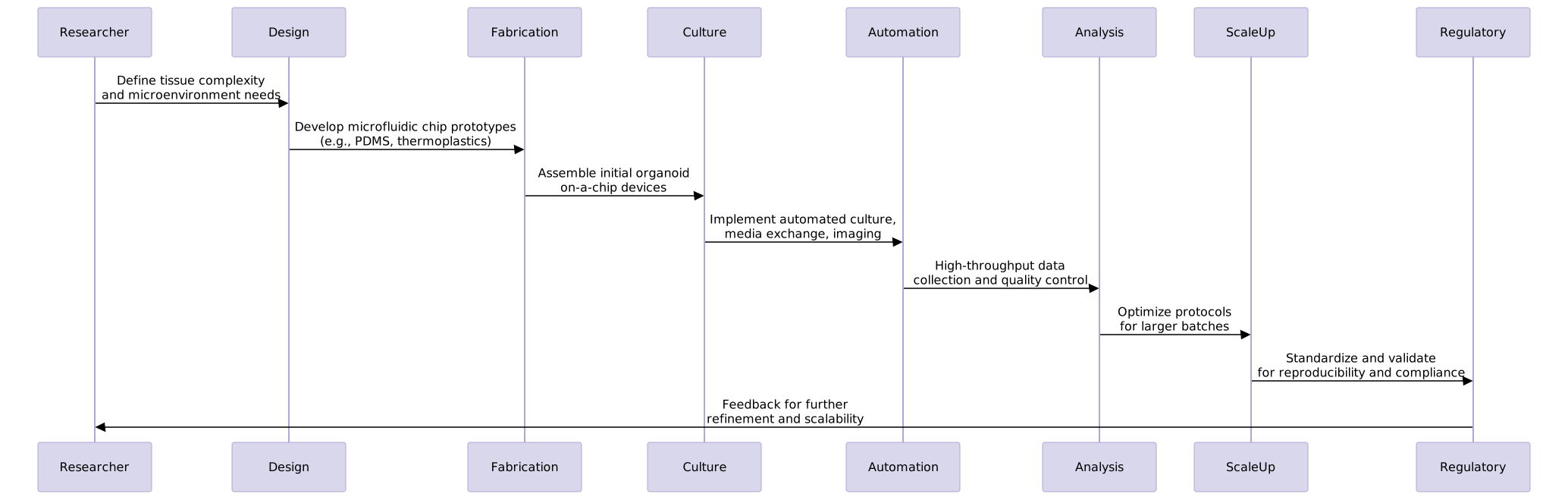
Narrative of the Sequence Chart
The process begins with detailed design specifications tailored to the tissue or organ system of interest, focusing on replicating physiological microenvironments [ 995 , 1008 ]. Fabrication involves advanced microengineering techniques—such as soft lithography, 3D bioprinting, or injection molding—aimed at creating microfluidic devices with consistent geometries and functional features [ 1014 , 1015 ]. These devices support initial culture of organoids or tissue constructs, often using biomaterials like ECM-based matrices or synthetic hydrogels [ 1071 , 1072 , 1103 ].
Automation plays a pivotal role in scaling, where robotic systems handle media exchange, cell seeding, and real-time imaging, thus reducing variability and increasing throughput [ 994 , 1048 ]. The collected data undergoes sophisticated analysis, including imaging, molecular profiling, and functional assays, to assess reproducibility and functionality across batches [ 1024 , 1057 ].
A critical step toward scalability involves protocol optimization for large-scale production, maintaining quality and consistency—addressed through process standardization and batch control measures [ 1018 , 1047 ]. Regulatory bodies increasingly demand validated and reproducible systems, prompting integration of quality management standards [ 1053 , 1054 ].
This sequential process highlights the multifaceted nature of scaling up OoC platforms, where technological, biological, and regulatory factors intertwine.
Key Concepts and Entities in Scalability
| Concept/Entity | Description | Relevance to Scalability | Supporting Citation |
|---|---|---|---|
| Microfluidic Chip Fabrication | Manufacturing devices using soft lithography, 3D bioprinting, injection molding | Enables mass production with uniformity | [ 1014 , 1015 , 1071 ] |
| Biomaterials (ECM, Hydrogels) | Matrigel, synthetic ECM, nanofibrillar cellulose hydrogels | Affects reproducibility and throughput | [ 888 , 1071 , 1103 ] |
| Automation Systems | Robotic liquid handlers, high-throughput imaging systems | Increases efficiency and reproducibility | [ 994 , 1048 , 1119 ] |
| Standardization Protocols | SOPs, quality control measures, batch validation | Critical for reproducibility and regulatory approval | [ 1018 , 1053 , 1054 ] |
| Scale-up Bioreactors | Stirred bioreactors, microfluidic arrays, large-scale culture platforms | Facilitate high-volume production | [ 1024 , 1025 ] |
| Regulatory Frameworks | FDA, EU directives, quality standards | Ensures safety, reproducibility, and commercialization | [ 1053 ~ 1055 ] |
| Bioprinting | 3D bioprinting of tissues and organoids | Enhances structural precision and scalability | [ 1073 , 1093 ] |
Challenges in Achieving Scalability
| Challenge | Description | Impact | Supporting Citation |
|---|---|---|---|
| Technical Limitations | Ensuring nutrient and oxygen diffusion in larger constructs | Risk of necrosis, inconsistent maturation | [ 1105 , 1113 , 1133 ] |
| Reproducibility and Standardization | Variability in biomaterials, cell sources, and fabrication processes | Reduced reliability across batches | [ 1018 , 1053 , 1097 ] |
| Microenvironment Control | Maintaining dynamic biochemical and mechanical cues at scale | Difficult to mimic in large systems | [ 1104 , 1106 , 1134 ] |
| Cost and Throughput | High costs of materials, equipment, and labor | Limits accessibility for widespread use | [ 1017 , 1029 , 1049 ] |
| Vascularization and Maturation | Achieving functional vasculature and organ-specific features in large models | Impedes full organ functionality and scalability | [ 1007 , 1074 , 1134 ] |
| Regulatory Approval | Meeting standards for clinical and industrial application | Delays commercialization, increases validation costs | [ 1053 , 1054 , 1089 ] |
Opportunities for Enhancing Scalability
| Opportunity | Description | Potential Impact | Supporting Citation |
|---|---|---|---|
| Standardized Modular Platforms | Use of plug-and-play modules for different organ systems | Flexibility and rapid assembly in high-throughput setups | [ 1055 , 1056 , 1115 ] |
| Automation and Robotics | Integration of automated liquid handling, imaging, and data analysis | Increased throughput, reduced human error | [ 994 , 1048 , 1119 ] |
| Advanced Biomaterials | Development of scalable, reproducible ECM substitutes | Consistent tissue models, lower batch variability | [ 1071 , 1072 , 1103 ] |
| Multi-organ Microphysiological Systems | Connecting multiple organ models via microfluidics | Better disease modeling, systemic pharmacokinetics | [ 1105 , 1106 , 1135 ] |
| AI and Machine Learning | Data-driven protocol optimization and predictive modeling | Improved reproducibility and process control | [ 1097 , 1099 , 1137 ] |
| Cost-Effective Manufacturing Techniques | Use of rapid prototyping, soft lithography, and injection molding | Lower production costs, higher scalability | [ 1014 , 1015 , 1077 ] |
Impact of Scalability on Broader Fields
| Field | Effect of Scalability | Strategic Opportunities | Supporting Citation |
|---|---|---|---|
| Drug Discovery | High-throughput screening and personalized testing enabled | More accurate and faster preclinical validation | [ 1000 , 1092 , 1116 ] |
| Regenerative Medicine | Large-scale organoid production supports transplantation and therapy | Reduced costs, increased availability of tissues | [ 1074 , 1109 , 1127 ] |
| Disease Modeling | Systematic study of complex diseases with integrated multi-organ platforms | Better understanding of systemic interactions | [ 1105 , 1113 , 1134 ] |
| Regulatory Science | Standardized, validated models streamline approval processes | Accelerate clinical translation | [ 1053 , 1054 , 1089 ] |
Conclusions
The scalability of organoid-on-a-chip platforms is a multifactorial challenge driven by technical, biological, and regulatory complexities. Addressing these challenges involves adopting modular designs, automating workflows, developing standardized biomaterials, and leveraging advanced manufacturing and analytical technologies. Progress in these areas promises to significantly accelerate the deployment of scalable, reliable, and ethically sound organoid-on-a-chip systems across biomedical research, personalized medicine, and drug development domains.
By strategically investing in these opportunities, the field can transition from proof-of-concept prototypes to robust, high-throughput platforms capable of transforming translational medicine and regenerative therapies.
Citation Links
| 888 | https://www.labnews.co.uk/article/2092189/enabling-miniaturisations-of-automated-organoid-drug-screens | labnews.co.uk | 2023-12-09T17:30:03.000Z | |
| The use of nanofibrillar cellulose hydrogels has enabled organoid drug screening that is largely animal free, automation friendly and cheap to run, as outlined by Tijmen Booij, Christian Stirnimann ... | ||||
| 994 | https://www.moleculardevices.com/applications/cell-imaging | moleculardevices.com | 2022-12-01T14:44:56.000Z | |
| Automation of the organ-on a chip assay: automated culture, imaging and analysis of angiogenesis There is a critical need for biological model systems that better resemble human biology. ... | ||||
| 995 | https://doi.org/10.3389/fcell.2022.1089970 | Cristina Marisol Castillo Bautista | 2023-01-05T00:00:00.000Z | |
| A similar study by Sances and colleagues generated a "Spinal Cord-Chip" and demonstrated that iPSC-derived brain microvascular endothelial cells interact to promote the maturation of iPSC-derived ... | ||||
| 1000 | https://www.ddw-online.com/organ-on-a-chip-models-in-drug-development-21454-202301/ | ddw-online.com | 2023-02-03T13:20:17.000Z | |
| Tagged CN Bio, Drug development, Drug screening, In vivo, Organ-on-a-chip, Organoids, SLAS This paid-for advertorial by CN Bio appeared in the SLAS 2023 Supplement, Volume 24 - Issue 1, Winter 2022/2023 Despite advancements, the drug development process remains inefficient. Existing in vivo and in vitro models aren't up to the challenge Preclinical tools exist for the evaluation and screening of potential drug candidates. Of these, in vitro 2D models are commonly used for convenience, cost, scalability and ease of adoption. | ||||
| 1007 | https://www.nature.com/articles/s41536-020-0093-4?error=cookies_not_supported&code=ebc01cd0-7520-4a01-96e2-34665f56ac6a | nature.com | 2023-03-29T10:23:19.000Z | |
| Fig. 3: Kidney organoid challenges faced today in the field of regenerative medicine. There is a current lack of full maturation, well-developed vascularization and a limitation in scalability and ... | ||||
| 1008 | https://doi.org/10.3390/life13040954 | Karthika Pushparaj | 2023-04-05T00:00:00.000Z | |
| ... of innervations and vasculature and uncontrolled microenvironments . The MF OoC models have been developed to study axon and glial cell growth, intra- and extracellular signaling, synaptogenesis and other neurovascular functions. Specifically, brain-on-a-chip (BoC) models have addressed the existing drawbacks by incorporating micrometer-scale cell layers with compartmentalized neural chambers filled with immobile or dynamic fluid conditions; all these advanced developments facilitate ample access for metabolite exchange, and maintain the variability and micro physiological function of the BoC models . Recently, a BoC-OoC model was fabricated through soft lithography 3D-BP using polydimethylsiloxane (PDMS) and neural organoids-spheroids. The model was articulated by micro-pillars and embedded with copper electrode sensors for the detection of electro-chemical stimuli . The drug development process (DDP) involves pre-and post-clinical phases which involve testing in in vitro, in vivo and in human trials. The OoC models facilitate the DDP through facilitating drug testing in the OoC models, which are bound to 3Rs principles (the Replacement, Reduction, and Refinement Directive, 2010/63/EU). Drug testing principally involves the liver, kidney and heart; thus, it is of paramount importance to devise multi-organ chips (MoC) that can dramatically contribute to lessening the costs, duration and ethical laws enforced on in vivo studies. Further, the micro physiological design restores the functional structure of the organs with natural functions and features that can benefit the drug trials . A MoC model composed of six organoid systems, viz., liver, heart, lung, vascular, testis, brain or colon was devised by Skardal et al. for dose-dependent drug studies. The MoC comprised multiple layers, viz., a lid chamber layer, a PMMA sheet, | ||||
| 1014 | https://www.aiche.org/conferences/aiche-annual-meeting/2019/proceeding/paper/507g-invited-rapid-prototyping-multilayered-thermoplastic-patient-derived-organs-on-chips | aiche.org | 2023-06-10T21:27:32.000Z | |
| Next, a dual membrane integrated, trilayer organ-on-chip ( normal">Figure 1b) was fabricated to integrate primary intestinal monolayers and intact organoids. Monolayer and organoid morphology ... | ||||
| 1015 | https://www.aiche.org/conferences/aiche-annual-meeting/2019/proceeding/paper/507g-invited-rapid-prototyping-multilayered-thermoplastic-patient-derived-organs-on-chips | aiche.org | 2023-06-10T21:27:32.000Z | |
| Monolayer and organoid morphology was visualized via confocal microscopy and cell nuclei staining. Discussion: The technique presented here rapidly (hours) produced inexpensive (~$2 per chip, cost of materials) organ chips using only a benchtop CAD-based manufacturing enabled iterative design with zero tooling or mold costs. The double sided adhesives simultaneously provided fluidic compartments and leak free bonding without additional Collectively, the technique presented here had significant advantages in cost, throughput, scalability, and equipment requirements as compared to PDMS soft lithography. Furthermore, the thermoplastic chip | ||||
| 1017 | https://www.einpresswire.com/article/644341377/cell-culture-market-is-expected-to-reach-51-3-billion-marketsandmarkets | EIN Presswire | 2023-07-13T14:00:00.000Z | |
| Scalability and cost: As the demand for cell culture expands, scaling up production to meet market needs may present challenges. Increasing the production capacity while maintaining cost-effectiveness can be a complex task, particularly when dealing with specialized cell types or complex culture systems. Standardization and reproducibility: Ensuring consistency and reproducibility across different cell culture systems, especially as three-dimensional and organoid cultures become more prevalent, may pose a challenge. | ||||
| 1018 | https://www.einpresswire.com/article/644341377/cell-culture-market-is-expected-to-reach-51-3-billion-marketsandmarkets | EIN Presswire | 2023-07-13T14:00:00.000Z | |
| Furthermore, the industry will witness a shift towards automation and high throughput screening techniques, leading to improved efficiency and scalability. Additionally, the integration of ... | ||||
| 1024 | https://www.mdpi.com/1422-0067/24/14/11427 | mdpi.com | 2023-10-02T09:41:12.000Z | |
| Stirred bioreactors (SBRs) for organoid culture have operating principles similar to that of the conventional, large-scale bioreactors used frequently for the commercial production of biomolecules. SBR cultures are characterized by their homogenous environment, simplistic monitoring, and straightforward control of key culture parameters, especially scalability. | ||||
| 1025 | https://www.mdpi.com/1422-0067/24/14/11427 | mdpi.com | 2023-10-02T09:41:12.000Z | |
| SBR cultures are characterized by their homogenous environment, simplistic monitoring, and straightforward control of key culture parameters, especially scalability. SBRs typically consist of a ... | ||||
| 1029 | https://www.globenewswire.com/news-release/2023/11/21/2784208/0/en/3D-cell-culture-Market-Size-Worth-USD-9-88-Billion-in-2032-Emergen-Research.html | GlobeNewswire News Room | 2023-11-21T00:00:00.000Z | |
| The National Science Foundation's investment in the Engineering Organoid Intelligence (EOI) program exemplifies efforts to study the complexity of the human brain through 3-dimensional brain cell cultures. Request Free Sample Copy (To Understand the Complete Structure of this Report [Summary + TOC]) @ https://www.emergenresearch.com/request-sample/2489 Organoids and Organ-on-Chip: Organoids and organ-on-chip technologies are becoming pivotal tools for drug discovery, personalized medicine, and regenerative therapies. Companies like Emulate are attracting significant funding for their Human Emulation System, providing instruments for modeling tissue from vital organs in vitro. High Implementation Cost: The high cost and complexity of implementing 3D cell culture technology pose challenges to market growth. Technical limitations, weak reproducibility, and scalability issues hinder the widespread adoption of 3D cell cultures. | ||||
| 1047 | https://www.einpresswire.com/article/682127410/3d-cell-cultures-market-to-cross-us-3-1-billion-on-by-2033-driven-by-increased-biological-relevance-and-rising-incidence-of-chronic-diseases | EIN Presswire | 2024-01-18T09:30:00.000Z | |
| These innovations enhance the reproducibility and scalability of 3D cell culture systems. Complexity and Standardization: The complexity of 3D cell culture systems poses challenges in ... | ||||
| 1048 | https://menafn.com/1107736918/3D-Cell-Cultures-Market-To-Cross-US-31-Billion-On-By-2033-Driven-By-Increased-Biological-Relevance-And-Rising-Incidence-Of-Chronic-Diseases-Persistence-Market-Research | menafn.com | 2024-01-18T11:01:35.000Z | |
| These innovations enhance the reproducibility and scalability of 3D cell culture systems. Complexity and Standardization: The complexity of 3D cell culture systems poses challenges in ... | ||||
| 1049 | https://express-press-release.net/news/2024/04/12/1579590 | express-press-release.net | 2024-04-12T00:00:00.000Z | |
| Researchers can create disease-specific organoids to study disease mechanisms, screen potential drug candidates, and evaluate therapeutic efficacy and toxicity in a disease-relevant context, ... | ||||
| 1053 | https://doi.org/10.1016/j.stemcr.2024.03.009 | David Pamies | 2024-04-25T00:00:00.000Z | |
| When MPSs involve microfabrication or microfluidics, they are often referred to as organ-on-chip (OoC) technologies (Figure 1). However, it is important to remember that models which do not include microfabrication, such as organoids, also fall under the definition of MPS. Their complexity brings advantages but also some limitations, which have been described elsewhere (Ekert et al., 2020; Pamies and Hartung 2017). | ||||
| 1054 | https://doi.org/10.1016/j.stemcr.2024.03.009 | David Pamies | 2024-04-25T00:00:00.000Z | |
| Under this bill, these alternative methods may include cell-based assays, organ chips and microphysiological systems, computer modeling, and other human biology-based test methods" (FDA 2021). In ... | ||||
| 1055 | https://doi.org/10.3390/bios14070336 | Can Li | 2024-07-10T00:00:00.000Z | |
| The stability, repeatability, scalability, and precise control of microenvironmental conditions have become issues that need to be overcome in the development of organoid co-culture technology. To create relevant co-culture systems for cell interaction research, it is necessary to integrate organoid models with standardized microdevices. Looking ahead, the development of the organoid chip model paves the way for constructing a human system on-chip through fluid connections. | ||||
| 1056 | https://doi.org/10.3390/bios14070336 | Can Li | 2024-07-10T00:00:00.000Z | |
| As technology progresses, on-chip cell co culture technology is evolving from simple multicellular models towards organoids. This shift aims to fully simulate organ-level functions necessary for ... | ||||
| 1057 | https://doi.org/10.3390/ijms25147750 | Minsung Bock | 2024-07-15T00:00:00.000Z | |
| We discuss the current challenges in the field, including issues related to reproducibility, scalability, and the accurate recapitulation of the in vivo environment. We provide an outlook on ... | ||||
| 1071 | https://doi.org/10.1186/s13287-024-04122-3 | Tianyue Zhang | 2024-12-31T00:00:00.000Z | |
| It supports cell growth with essential proteins and growth factors and has been widely utilized in stem cell differentiation and tumor organoid studies. However, Matrigel's tumor origin, batch ... | ||||
| 1072 | https://doi.org/10.1186/s13287-024-04122-3 | Tianyue Zhang | 2024-12-31T00:00:00.000Z | |
| However, Matrigel's tumor origin, batch variability, instability, immunogenicity, limited tunability, and lack of scalability limit its use in advancing organoid culture technologie . | ||||
| 1073 | https://pubmed.ncbi.nlm.nih.gov/39911371/ | Xiaojun Xia | 2025-01-21T00:00:00.000Z | |
| This review traces the evolution of cardiac organoid technology, from early stem cell differentiation protocols to advanced bioengineering approaches. We discuss the methodologies for creating ... | ||||
| 1074 | https://pubmed.ncbi.nlm.nih.gov/39911371/ | Xiaojun Xia | 2025-01-21T00:00:00.000Z | |
| We discuss the methodologies for creating cardiac organoids, including self-organization techniques, biomaterial-based scaffolds, 3D bioprinting, and organ-on-chip platforms, which have significantly enhanced the structural complexity and physiological relevance of in vitro cardiac models. We examine their applications in fundamental research and medical innovations, highlighting their potential to transform our understanding of cardiac biology and pathology. The integration of multiple cell types, vascularization strategies, and maturation protocols has led to more faithful representations of the adult human heart. However, challenges remain in achieving full functional maturity and scalability. We critically assess the current limitations and outline future directions for advancing cardiac organoid technology. | ||||
| 1077 | https://ppubs.uspto.gov/pubwebapp/external.html?q=(20250035614).pn | Christian KRAMME | 2025-01-30T15:06:23.000Z | |
| For example, epigenetic changes in human organoid replica may be analyzed to determine the effects of anti-aging interventions. The effects of anti-aging interventions may be measured in a shorter ... | ||||
| 1089 | https://www.technologynetworks.com/drug-discovery/articles/experts-discuss-how-organoids-are-the-future-of-womens-health-research-398254 | technologynetworks.com | 2025-04-09T00:25:45.000Z | |
| What I hope to see in the next 5 - 10 years is the expansion of biobanks with diverse patient-derived organoids to reflect different ethnic backgrounds, ages, lifestyles and socioeconomic factors - as well as the development of high-throughput screening platforms using organoid technology to rapidly test new drug and lifestyle interventions (e.g., exercise combined with drug treatment). In addition, it would be great to see the integration of AI and machine learning to analyze large datasets from 3D models with the aim of developing personalized treatment strategies, such as personalized exercise prescriptions. One of the biggest challenges in using organ-on-a-chip technologies to advance women's health is the complexity of accurately replicating the human microenvironment, particularly capturing the many genetic and cellular differences between different patients. The cellular interactions, tissue-specific behaviors and dynamic environments we aim to model are incredibly complex, and current technology still struggles to fully replicate these intricate systems. For instance, in our breast cancer metastasis model, replicating the interactions between cancer cells and the bone microenvironment requires precise tissue engineering and integration of multiple cell types, which can be difficult to achieve consistently. Another challenge is the scalability and reproducibility of these models. | ||||
| 1092 | https://www.globenewswire.com/news-release/2025/04/14/3061097/0/en/Drug-Discovery-Market-Size-to-Rise-USD-160-31-Billion-by-2034-Statifacts.html | GlobeNewswire News Room | 2025-04-14T15:24:50.000Z | |
| Advancements in the drug discovery process are undergoing a profound transformation, with novel technologies like organoids, nanotechnology, AI, and organs-on-a-chip models playing an important ... | ||||
| 1093 | https://www.sciencedaily.com/releases/2025/04/250423163914.htm | ScienceDaily | 2025-04-24T02:18:41.000Z | |
| Further, when combined with multi-material 3D bioprinting of ECM proteins, growth factors, and cell-laden bioinks and integration into a custom bioreactor platform, we were able to create a ... | ||||
| 1097 | https://pubmed.ncbi.nlm.nih.gov/40305163/ | Michael Ronzetti | 2025-05-05T18:28:45.000Z | |
| Additionally, it highlights advances in 3D culture systems, organoids, and organ-on-a-chip technologies, which facilitate physiologically relevant testing, improved predictive accuracy, and ... | ||||
| 1099 | https://doi.org/10.1038/s41420-025-02505-w | Qian Wang | 2025-05-07T00:00:00.000Z | |
| How can the standardization of organoid models be achieved to improve their reproducibility and scalability in preclinical and clinical ... | ||||
| 1103 | https://doi.org/10.1177/20417314251345000 | Lenie Vanhove | 2025-06-13T00:00:00.000Z | |
| 7 Advanced models, based on organoids can represent assembloids, hybrid bioelectronics, organ-on-a-chip, or more complex structures, holding promise in potentially improved scalability and producing fully autologous tissue building blocks from the same donor.8 However, the most widely used hydrogel to culture organoids, iPSC, and cancer cells, Matrigel, is sourced from Engelbreth-Holm-Swarm (EHS) mouse sarcoma tumour cells.9 Matrigel provides cues of the basement membrane (BM), which are thin layers of a specialised ECM, essential for stem cell function and organoid production. | ||||
| 1104 | https://doi.org/10.1177/20417314251345000 | Lenie Vanhove | 2025-06-13T00:00:00.000Z | |
| Sato, Clevers and co-workers4 demonstrated that adult stem cells can self-organise and reconstruct a crypt-like functional organisation when grown in a Matrigel matrix, producing the 'intestinal ... | ||||
| 1105 | https://doi.org/10.3389/fimmu.2025.1554114 | Christina R. Larson | 2025-06-23T00:00:00.000Z | |
| Recent advances in organoid and microfluidics have created tumor-on-a-chip (TOC) to model the three-dimensional complexity of TME in ... | ||||
| 1106 | https://en.wikipedia.org/?curid=2530148 | 2025-07-05T20:41:29.000Z | ||
| Modern wetware computers use similar technology derived from the brain-on-a-chip field, but medical applications from wetware computing specifically have not been established. ===Ethical and ... | ||||
| 1109 | https://doi.org/10.1016/j.bioactmat.2025.07.014 | Xiangyi Wu | 2025-07-15T00:00:00.000Z | |
| The skin, being the largest organ in the human body, has garnered significant attention in pharmaceutical , , ], cosmetic , and biomedical research , , ] due to its central role in human ... | ||||
| 1113 | https://pubmed.ncbi.nlm.nih.gov/40715728/ | Gat Rauner | 2025-07-25T00:00:00.000Z | |
| Here we outline how advanced organoid technologies now enable more faithful recapitulation of tumor heterogeneity that better mimic native tissue mechanics and biochemistry. We discuss emerging ... | ||||
| 1115 | https://doi.org/10.1016/j.identj.2025.100925 | Sizheng Fan | 2025-07-30T00:00:00.000Z | |
| Scientists quickly saw the potential to combine these organoids with microfluidic chips, giving rise to organoid-on-a-chip. The organoid-on-a-chip and tumour-on-a-chip (ToC) are advanced forms of ... | ||||
| 1116 | https://arxiv.org/abs/2507.21149 | https://arxiv.org | 2025-07-30T04:00:39.000Z | |
| Despite challenges in standardization, scalability, and integration of complex tumor components, ongoing advances in hydrogel engineering, automation, and artificial intelligence are poised to ... | ||||
| 1119 | https://doi.org/10.1063/5.0262536 | Hiba Aljayyousi | 2025-08-13T00:00:00.000Z | |
| 37 Commercial solutions such as the ibidi micro slide spheroid perfusion chip offer standardized continuous flow environments, but their closed design, rigid internal architecture, and limited ... | ||||
| 1127 | https://doi.org/10.1016/j.jot.2025.08.008 | Deju Gao | 2025-09-05T00:00:00.000Z | |
| However, limited availability of autologous UC-MSCs - constrained by sparse cord blood banking infrastructure and neonatal donors - currently restricts clinical scalability. Nevertheless, UC-MSCs represent a promising candidate for future personalized bone/cartilage organoid biofabrication. | ||||
| 1133 | https://doi.org/10.3390/biomimetics10090624 | Seif Ehab | 2025-09-16T00:00:00.000Z | |
| Despite these advances, organoid research still faces challenges in scalability, reproducibility, vascularization, and clinical standardization areas that continue to be intensively explored. ... | ||||
| 1134 | https://doi.org/10.1167/tvst.14.9.27 | Jonathan R. Soucy | 2025-09-18T00:00:00.000Z | |
| Therefore, supplementing transplanted cells with BDNF and GDNF could not only enhance the survival of these cells but also potentially rejuvenate the surrounding retinal tissue, creating a more ... | ||||
| 1135 | https://doi.org/10.1007/s12672-025-03322-4 | Neeha Sinai Borker | 2025-09-18T00:00:00.000Z | |
| Some of the model systems like PDX, genetically engineered mouse models (GEMM), bioprinting models, organoids, biomimetic tumor models and chip-on-chip models have also been modified to account for ... | ||||
| 1137 | https://doi.org/10.3390/biomedicines13092313 | Alvaro Plaza Reyes | 2025-09-22T00:00:00.000Z | |
| At the same time, challenges remain in reproducibility, safety, scalability, and ethical oversight. Looking forward, collaborative work and harmonized global standards will be important to bring ... |