Comprehensive Report on Clinical Trials in Epigenetic Reprogramming Therapies
1. Clinical Trials in Epigenetic Reprogramming Therapies
Introduction
Clinical trials are the cornerstone for translating epigenetic reprogramming therapies from bench to bedside. These trials systematically evaluate the safety, efficacy, dosage, and mechanisms of novel interventions that leverage epigenetic modifications to treat various diseases, including cancers, neurological disorders, infectious diseases, and reproductive conditions. Given the reversible and dynamic nature of epigenetic marks such as DNA methylation, histone modifications, and non-coding RNAs, clinical trials focus on both manipulating these marks and monitoring their effects in vivo.
The Role of Epigenetic Reprogramming in Clinical Trials
Epigenetic reprogramming involves resetting the epigenetic landscape of cells to a pluripotent or therapeutic state. This is achieved via pharmacological agents, gene editing, or cell-based therapies such as induced pluripotent stem cells (iPSCs) and engineered immune cells. Clinical trials explore these interventions to:
- Restore normal gene expression in diseases caused by aberrant epigenetic states.
- Enhance immune responses against tumors and infections.
- Rejuvenate aged tissues and modulate developmental programming.
- Improve reproductive outcomes via embryo epigenetic screening.
Sequence of Key Events in Epigenetic Clinical Trials
Below is a detailed sequence chart illustrating the typical progression of a clinical trial involving epigenetic reprogramming:
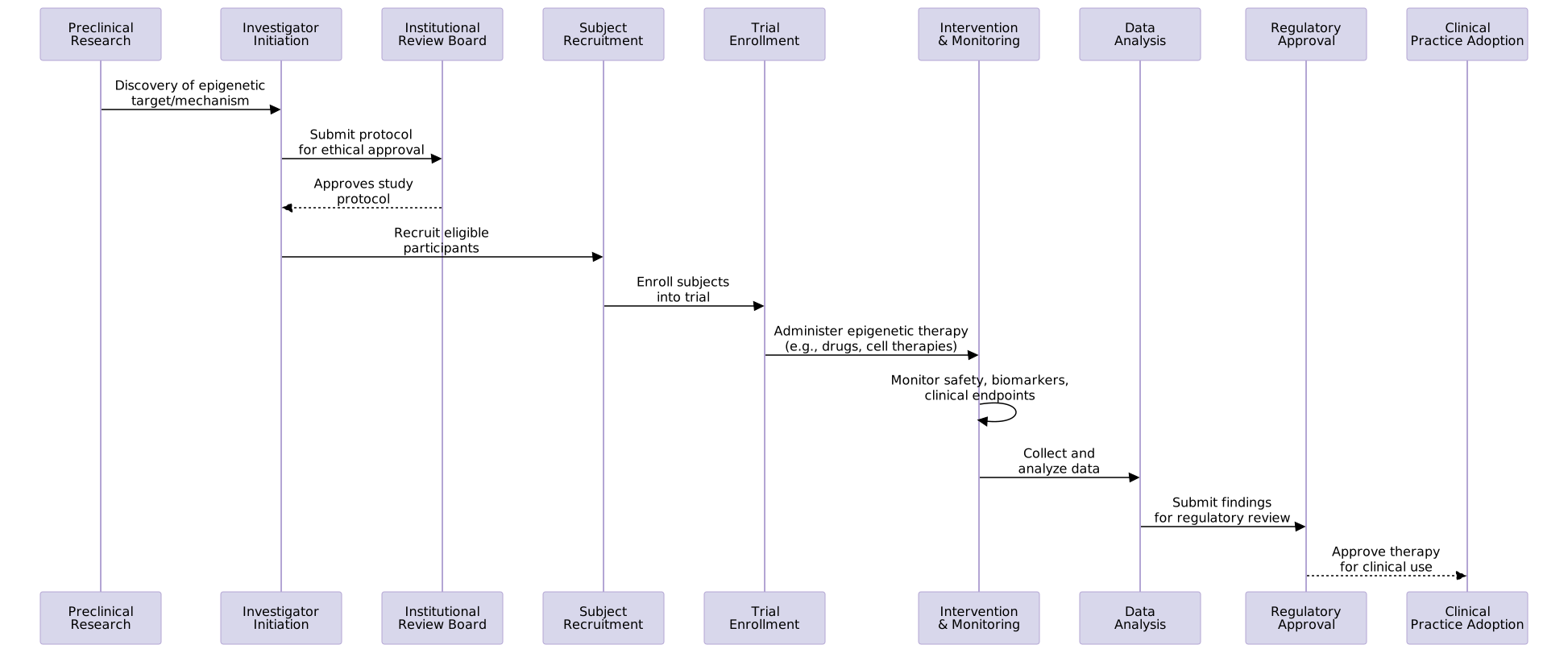
Core Processes in Clinical Trials
| Stage | Description | Key Considerations | Outcomes |
|---|---|---|---|
| Preclinical Studies | Laboratory and animal testing for safety and efficacy | Molecular mechanisms, dosage, toxicity | Data supporting human trials |
| Phase 1 | Safety and dose-ranging in small human cohort | Adverse effects, pharmacodynamics | Safety profile, optimal dose |
| Phase 2 | Efficacy assessment in a larger group | Biomarkers, preliminary efficacy | Therapeutic effect confirmation |
| Phase 3 | Large-scale validation | Randomization, control groups | Confirmation of efficacy and safety |
| Regulatory Submission | Approval process | Regulatory standards, data completeness | Market authorization |
Major Challenges and Opportunities
| Challenges | Opportunities |
|---|---|
| Variability in epigenetic responses | Personalized epigenetic therapies |
| Monitoring epigenetic changes in vivo | Development of robust biomarkers |
| Off-target effects | Precision delivery methods |
| Long-term safety | Understanding reversibility and stability of modifications |
2. Key Concepts in Epigenetic Reprogramming within Clinical Trials
| Concept | Explanation | Relevance to Clinical Trials |
|---|---|---|
| DNA Methylation | Addition/removal of methyl groups on cytosine residues | Used for reprogramming tumor cells, embryo quality |
| Histone Modifications | Acetylation, methylation affecting chromatin accessibility | Targeted by drugs (e.g., HDAC inhibitors) |
| Non-coding RNAs | miRNAs, lncRNAs modulating gene expression | Emerging targets in immune and cancer therapies |
| Cell Reprogramming | Converting somatic cells to pluripotent states | Used in regenerative medicine, modeling |
| Epigenetic Drugs | Agents like decitabine, valproic acid | Employed in clinical trials for cancer and neurological disorders |
Entities in Epigenetic Reprogramming Clinical Trials
| Entity | Description | Examples from Extracts |
|---|---|---|
| iPS Cells | Induced pluripotent stem cells derived via reprogramming | [ 1970 ~ 1974 ] |
| Epigenetic Reprogramming Agents | Drugs that modify epigenetic marks | Decitabine, valproic acid, epigenetic inhibitors [ 1972 , 1985 ] |
| Biomarkers | Indicators of epigenetic state or treatment response | DNA methylation status, gene expression profiles [ 1979 , 1982 ] |
| Immune Cells | T cells, monocytes reprogrammed epigenetically | TILs, TREG/Th2 stem cells [ 1986 ] |
| Therapeutic Technologies | Platforms employing reprogramming | Epi-R, proprietary reprogramming, TIL enhancement [1970s-1980s] |
3. Complexities and Insights
Factors Influencing Clinical Trial Outcomes
- Timing and Windows of Reprogramming: Critical periods such as preimplantation (e.g., in embryo development) influence DNA methylation and epigenetic stability [ 1966 ~ 1969 ].
- Environmental and Lifestyle Factors: Diet, stress, and exposures modify epigenetic landscapes, affecting therapy responses [ 1983 ~ 1985 ].
- Interindividual Variability: Genetic background influences the efficacy and safety of epigenetic therapies [ 1981 ~ 1983 ].
- Reversibility and Stability: Ensuring durable epigenetic modifications without unintended effects remains challenging [ 1959 , 1960 ].
Major Insights from Extracts
| Insight | Explanation | Supporting Extracts |
|---|---|---|
| Developmental Timing is Critical | Epigenetic programming occurs during specific windows like preimplantation, affecting long-term outcomes [ 1966 ~ 1969 ] | |
| Reprogramming Enhances Immunotherapy | Epigenetic reprogramming of immune cells can improve responses to cancer and infections [ 1961 , 1973 , 1986 ] | |
| Epigenetic Therapies Are Multifaceted | They involve drugs, cell therapies, and gene editing, each with unique challenges and potentials [ 1970 1974 , 1985 1987 ] | |
| Reversibility Offers Therapeutic Flexibility | Epigenetic modifications can be dynamically altered, enabling reversibility in treatments [ 1959 , 1960 ] |
4. Major Challenges and Opportunities
Challenges
- Off-target and Long-term Effects: Potential for unintended epigenetic alterations leading to adverse events.
- Standardization of Biomarkers: Difficulties in reliably measuring epigenetic changes across patients.
- Patient Heterogeneity: Variations in genetic and environmental backgrounds complicate trial designs.
- Ethical Considerations: Especially pertinent in germline reprogramming and embryo studies.
Opportunities
- Personalized Epigenetic Medicine: Tailoring interventions based on individual epigenetic profiles.
- Integration with Other Modalities: Combining epigenetic therapies with immunotherapy, gene editing, or conventional treatments.
- Development of Novel Reprogramming Technologies: Improving efficiency, specificity, and safety.
- Biomarker-Driven Trials: Enhancing predictive accuracy and monitoring capabilities.
5. Concluding Perspectives
Clinical trials are vital to harnessing the full potential of epigenetic reprogramming therapies. They facilitate understanding of the complex, reversible, and context-dependent nature of epigenetic marks. The ongoing and future trials, as exemplified in the provided extracts, indicate a promising trajectory towards personalized, safe, and effective epigenetic interventions for a range of diseases, notably cancers, neurological conditions, and reproductive health. Emphasizing rigorous design, biomarker development, and safety monitoring will be key to translating these innovative approaches into standard clinical practice.
This report offers a detailed synthesis of current knowledge, processes, challenges, and future directions in clinical trials for epigenetic reprogramming therapies, supporting an informed understanding for researchers, clinicians, and stakeholders engaged in this transformative field.
Citation Links
| 1959 | https://clinicaltrials.gov/show/NCT03962699 | Valerie Grandjean, Dr | 2019-05-24T00:00:00.000Z | |
| Although epigenetic modifications are mitotically heritable, they are erased and re-established twice during development . This reprogramming takes place early in embryogenesis and during ... | ||||
| 1960 | https://clinicaltrials.gov/show/NCT03962699 | Valerie Grandjean, Dr | 2019-05-24T00:00:00.000Z | |
| It is not understood whether there is a relationship between developmental reprogramming and reversibility of environmentally induced phenotypic states. Although the erasure of these newly ... | ||||
| 1961 | https://clinicaltrials.gov/show/NCT04375176 | Giulio Carcano, Professor | 2020-05-05T00:00:00.000Z | |
| According to the medical hypothesis on which the protocol is based on, young people could benefit from a functional adaptation of innate immune cells induced through epigenetic reprogramming and, ... | ||||
| 1966 | https://clinicaltrials.gov/show/NCT05733065 | 2024-02-29T00:00:00.000Z | ||
| Furthermore, the preimplantation period is likely to represent a critical window for the establishment of optimal DNA methylation as epigenetic reprogramming takes place during this ... | ||||
| 1969 | https://clinicaltrials.gov/show/NCT05733065 | 2024-02-29T00:00:00.000Z | ||
| ... periconception period, can perturb DNA methylation signatures of the offspring. Furthermore, the preimplantation period is likely to represent a critical window for the establishment of optimal DNA methylation as epigenetic reprogramming takes place during this time. The precise influence of environmental factors during this time is incompletely understood; human studies of the preimplantation period are complicated by | ||||
| 1970 | https://clinicaltrials.gov/show/NCT00874783 | Benjamin E Reubinoff, MD, PhD | 2024-03-01T00:00:00.000Z | |
| In addition to the great potential of iPS cells for disease modelling and transplantation therapy, the cells may have broad applications in basic research in various areas such as reprogramming, ... | ||||
| 1972 | https://clinicaltrials.gov/show/NCT06454448 | 2024-06-28T00:00:00.000Z | ||
| Epigenetic inhibitors may enhance the efficacy of immunotherapy by enhancing antigenicity and presentation of tumor-associated antigens, reprogramming the tumor microenvironment to ... | ||||
| 1973 | https://clinicaltrials.gov/show/NCT04542330 | Anne Marie Rosendahl Madsen, MD | 2024-08-22T00:00:00.000Z | |
| ... induces epigenetic and metabolic reprogramming of innate immune cells such as myeloid cells and Natural Killer cells, leading to an increased antimicrobial activity, a process | ||||
| 1979 | https://clinicaltrials.gov/show/NCT00874783 | Benjamin E Reubinoff, MD, PhD | 2025-03-04T00:00:00.000Z | |
| their phenotype, epigenetic status of pluripotent self-specific genes, telomerase activity, gene expression profile and in their capability to differentiate into progeny of the three germ layers ... | ||||
| 1980 | https://clinicaltrials.gov/show/NCT00874783 | Benjamin E Reubinoff, MD, PhD | 2025-03-04T00:00:00.000Z | |
| ... their phenotype, epigenetic status of pluripotent self-specific genes, telomerase activity, gene expression profile and in their capability to differentiate into progeny of the three germ layers both in vitro and in vivo in teratomas (2, 3, 5). In the mouse system, directed differentiation of iPS cells into bone marrow repopulating hematopoietic stem cells and functional dopaminergic neurons was demonstrated (6, 7). However, incomplete silencing of the constitutive expression of the transcription factors that were used to induce reprogramming can probably interfere with differentiation (1). | ||||
| 1981 | https://clinicaltrials.gov/show/NCT06887881 | Zhou Canquan | 2025-05-09T00:00:00.000Z | |
| ... important role during embryogenesis, global abnormal methylome reprogramming often occurs in human embryos, and DNA methylome pattern is associated with live birth rate. The endocrine metabolic disorders of polycystic ovarian syndrome (PCOS) patients may affect the epigenetic status of embryos and lead to the increase of early pregnancy loss rate in | ||||
| 1982 | https://clinicaltrials.gov/show/NCT06887881 | Zhou Canquan | 2025-05-09T00:00:00.000Z | |
| important role during embryogenesis, global abnormal methylome reprogramming often occurs in human embryos, and DNA methylome pattern is associated with live birth rate. The endocrine metabolic ... | ||||
| 1983 | https://clinicaltrials.gov/show/NCT04926181 | Rahul Aggarwal, MD | 2025-05-15T00:00:00.000Z | |
| This indicates that epigenetic dysregulation leads to reprogramming away from an AR-driven transcriptional ... | ||||
| 1985 | https://clinicaltrials.gov/show/NCT06714357 | Michele Orditura, MD | 2025-06-03T00:00:00.000Z | |
| The investigators hypothesize that the epigenetic agent valproic acid improve the activity of anti-EGFR agents, prevent and revert the emergence of EGFR resistance, in ... | ||||
| 1986 | https://clinicaltrials.gov/show/NCT06169176 | Daniel H Fowler, M.D | 2025-06-08T00:00:00.000Z | |
| cells are manufactured ex vivo using epigenetic reprogramming to yield a T stem cell population that is enriched for a dual anti-inflammatory phenotype based on hybrid TREG | ||||
| 1987 | https://clinicaltrials.gov/show/NCT06601998 | Prof. Evangelos Giamarellos-Bourboulis | 2025-06-22T00:00:00.000Z | |
| metabolites also participate in the long-term immune reprogramming observed after sepsis. In the healthy state, respiratory mucosal immunity actively controls the ... |